Max Ernst Museum
The Max Ernst Museum is a worthy setting for the work of the artist in his home town of Brühl. The modern extension of a listed old building received a prize in the 2005 Light Architecture Awards.
Architect:
Architektenarbeitsgemeinschaft Van den Valentyn Architektur, smo Architektur, Köln
Lighting designer:
Licht Kunst Licht, Bonn / Berlin
Photographer:
Alexandra Lechner, Darmstadt
Place:
Brühl
Lighting solutions
The conversion of the classical Benedictus Home of 1844 into the Max Ernst Museum began in November 2002. The supporting organisation is a foundation comprised of the town of Brühl, the Kreissparkasse (regional bank) and the Landschaftsverband (regional authority) as partners. The principal items of the museum collection are works collected by the town of Brühl since 1969 as well as sizeable bundles of pieces from the estate of Max Ernst and the holdings of other private collectors, which the Cologne Kreissparkasse acquired in 1999.
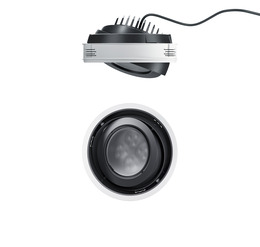
Of the substantial volume of the extension, the only part visible initially is the light, delicate pavilion with entrance and cash desk, harmonising with the U-shape of the old building. From here, stairs lead down to the lower level. The room for temporary exhibitions and an auditorium stretch underneath almost the entire new forecourt. Walkable glass areas establish a connection with the outside and allow daylight to penetrate into the exhibition room. The entrance area is illuminated by Lightcast downlights for low-voltage halogen lamps to provide glare-free, brilliant light.
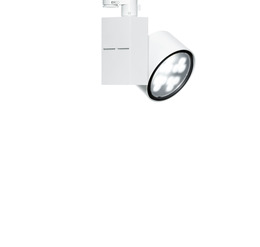
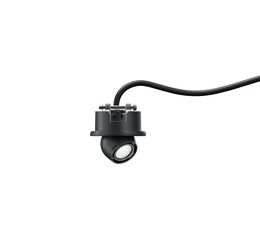
The lighting technology in the exhibition room is fitted in installation ducts in the concrete ceiling. Diffuse light emission luminaires behind burnished covers have been combined by the lighting designers of "Licht Kunst Licht" with cardanic directional luminaire inserts to provide accent lighting. ERCO 3-circuit tracks provide additional assembly options for spotlights and floodlights, while roller blinds allow daylight to flood in through the roof lights in measured doses. Thus the room is also suitable for media presentations.
The old building houses the permanent exhibition with paintings, graphic art, and sculptures from the different creative phases of the artist. The collection is rounded off by documents from the life of Max Ernst. White walls and light wooden flooring create a bright atmosphere. Most of the gallery rooms are naturally lit through the windows. Semi-transparent roller blinds dim the incoming daylight to a level that is conducive to the proper conservation of the works.
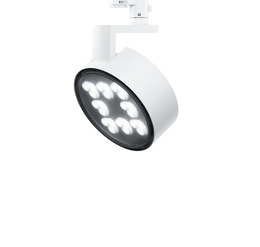
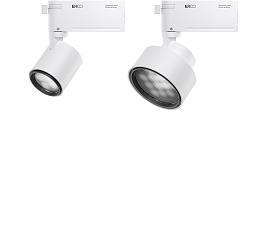
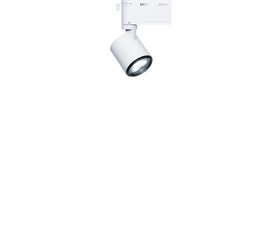
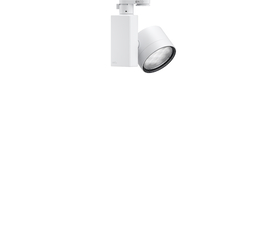
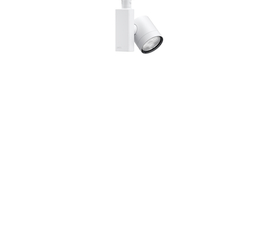
This natural basic lighting is complemented by a classic gallery lighting concept: ERCO tracks are fitted with Optec spotlights and wallwashers to set off the exhibits by means of accent lighting. The central, former dance hall" with well-known, large sculptures such as the figure ensemble "Capricorn" (photo left) is also fitted with Lightcast low-voltage halogen downlights for glare-free general lighting.
High-quality lighting technology and compact dimensions qualify the Optec spotlights range for use in galleries with a more intimate atmosphere, such as in the old building of the Max Ernst Museum. As wallwashers, they ensure a consistent and largely reflection-free illumination even of works that are hung behind acrylic glass for security reasons. The spotlights are available with optional accessories such as protection filters or sculpture lenses. The dimming potentiometer at the electronic transformer of the low-voltage spotlights is used to keep to precise illuminance specifications as required for proper conservation of the works.
Factsheet
Max-Ernst-Museum
Comesstraße 42
50321 Brühl
Germany
Tel: 0049 (0) 2232-5793110
Fax: 0049 (0) 2232-5793130
E-mail: info(at)maxernstmuseum.de
www.maxernstmuseum.de
Completion: September 2004
Client: Town of Brühl
Permanent exhibition (old building): 1000m²
Temporary exhibition (LL new building): 500m², 5m clearance
Event room: capacity of approx. 350 persons
Architects:
Architektenarbeitsgemeinschaft Van den Valentyn Architektur, smo Architektur, Cologne
Thomas van den Valentyn, Gloria Amling, Seyed Mohammad Oreyzi
www.vandenvalentyn.de
Lighting design:
Licht Kunst Licht, Bonn
www.lichtkunstlicht.de
www.licht-architektur-preis.de
Lighting tools used
ERCO track
Introduction
Product overview
Guide
The Guide section provides thorough information on everything from the physical bases of lighting to suggested solutions for different lighting situations. The interactive knowledge modules vividly illustrate lighting solutions that are possible with this product range.
General
Providing ambient luminescence
Washlighting
Illuminating objects and emphasising surfaces in the room
Accentuation
Emphasising objects to attract attention
Track
Tracks as the basis for flexible lighting design
Spotlights
Flexible luminaires for tracks to produce accent lighting
Wallwasher
Lighting technology for vertical surfaces
Downlights
Recessed ceiling luminaires with different light distributions
Working plane
Lighting for workstations through to large rooms
Wall
From scenic wall illumination through to vertical visual tasks
Object
Eye-catching lighting effects for objects in the room and pictures
Tungsten halogen lamps
Lamps with halogens for increased luminous efficacy
Other projects of the type: Museums
Next project type
National Gallery
London
L'Almoina Archaeological Centre
Valencia
Grimm Brothers' House Museum
Steinau an der Straße


Museo Superior de Bellas Artes Palacio Ferreyra
British Museum, Elizabeth II. Court
Exhibitions and galleries