Neues Museum, Berlin
David Chipperfield sets new standards for the treatment of the historical substance of a building in Berlin's "Neues Museum". The lighting optimally brings out the effect of both architecture and exhibits - including the world-famous Nefertiti bust.
Architect:
David Chipperfield, London/Berlin
Lighting designer:
Kardorff Ingenieure, Berlin
Photographer:
Rudi Meisel, Berlin
Place:
Berlin
Lighting solutions
With five buildings and world-famous collections, Berlin's Museum Island has achieved UNESCO World Heritage status. After lying in ruins for decades, the Neues Museum has now been resurrected. The radical implementation of the listed building legislation polarises the critics, yet people can't quite escape the fascination of this building. The museum takes pre-history, proto-history and Ancient Egypt as its subject matter. In keeping with this, the method of British architect David Chipperfield was to practise architectural archaeology. Instead of speculating on achieving the maximum contrast between old and new, he took the concepts of Friedrich August Stüler (1800-1865) - the museum's original architect - and further developed them in abstract form. The result is a building that, rather than denying its history, demonstratively presents it.
The museum's monumental staircase was extensively destroyed by the ravages of war and dereliction. Chipperfield's makeover was based on the original layout, while avoiding a reconstruction of the décor. Vertical lighting on the over 16-meter tall wall surfaces emphasises the uniformity of the architecture. The lens wallwashers for metal halide lamps are grouped together, mounted in housings that can be lowered from the ceiling on cables to allow maintenance.
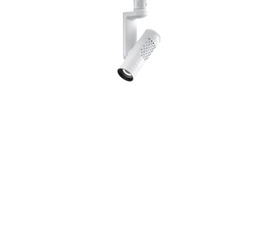
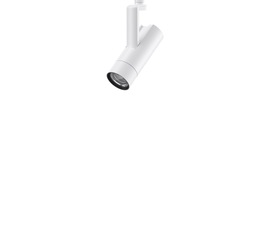
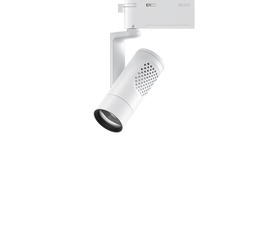
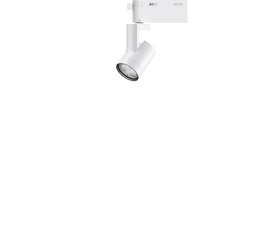
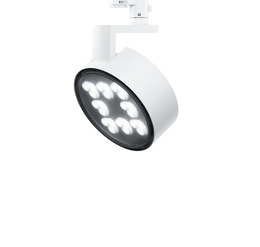
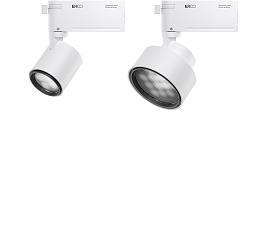
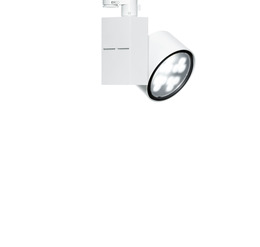
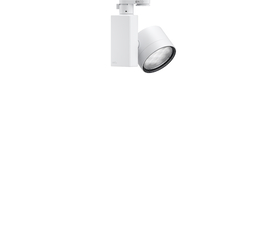
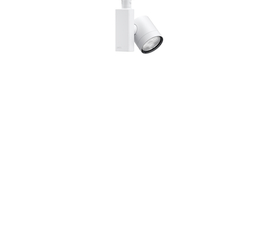
The strict concept following listed building legislation prohibited the integration of lighting in the historical substance of the building. In the galleries concerned, the lighting designers therefore opted for additive lighting solutions such as track-mounted spotlights. The Medieval gallery with its ceramic, vaulted domes, also features a track solution with Hi-trac spanned between the columns and fitted with Parscan spotlights to highlight the exhibits.
The museum's most famous exhibit is without a doubt the Ancient Egyptian bust of Queen Nefertiti (circa 1340BC). Protected behind armoured glass, the timeless beauty now presents herself to 21st century visitors. She is perfectly illuminated by a number of carefully focussed Parscan spotlights mounted around the perimeter of the North Dome gallery on the room's all-round cornice.
The methodology of the designers is particularly apparent in the renovated Majolikasaal gallery. A structure that was highly innovative for its day, using steal arches and lightweight vaulting, had come to light beneath the forever-lost original décor and was carefully exposed in the restoration work. The lighting with Hi-trac track and Parscan spotlights optimally blends in with the aesthetics of the galleries, leaving nothing to be desired as far as function is concerned.
Factsheet
AddressBodestraße 1-3
10178 Berlin
Opening times: Mon-Sat 10am-8pm, Sun-Mon 10pm-6pm
Further information:
www.neues-museum.de
Building dataBuilding sponsor: Foundation Stiftung Preußischer Kulturbesitz, Staatliche Museen Berlin
www.smb.spk-berlin.de
Architects:
David Chipperfield Architects, London/Berlin
www.davidchipperfield.co.uk
Conservation planning:
Julian Harrap Architects, London
www.julianharraparchitects.co.uk
Lighting design:
Kardorff Ingenieure, Berlin
www.kardorff.de
Site management:
Lubic & Woehrlin Architekten, Berlin
www.rlw-architekten.de
Restoration planning:
Pro Denkmal GmbH, Bamberg
www.prodenkmal.de
Structural planning:
Ingenieurgruppe Bauen, Berlin
www.ingenieurgruppe-bauen.de
Start of design work: 1999
Start of construction: 2003
Completion: 1/2009
Opening: 10/2009
Construction costs: approx. EUR 200m
Gross floor area: 19,600sqm
Exhibition area: 8,550sqm
(Source: Staatliche Museen Berlin)
Lighting tools used
Parscan
Introduction
Product overview
Hi-trac track and light structure
Introduction
Product overview
Guide
The Guide section provides thorough information on everything from the physical bases of lighting to suggested solutions for different lighting situations. The interactive knowledge modules vividly illustrate lighting solutions that are possible with this product range.
General
Providing ambient luminescence
Washlighting
Illuminating objects and emphasising surfaces in the room
Accentuation
Emphasising objects to attract attention
Spotlights
Flexible luminaires for tracks to produce accent lighting
Wallwasher
Lighting technology for vertical surfaces
Light structures
Profile systems for lighting suspended from the ceiling
Downlights
Recessed ceiling luminaires with different light distributions
Working plane
Lighting for workstations through to large rooms
Wall
From scenic wall illumination through to vertical visual tasks
Object
Eye-catching lighting effects for objects in the room and pictures
Tungsten halogen lamps
Lamps with halogens for increased luminous efficacy
Metal vapour lamps
Efficient lamps for brilliant light
Other projects of the type: Museums
Next project type
Fondation Beyeler
Riehen, Basel
Salt Mine Museum
Wieliczka
Max Ernst Museum
Brühl
K21 Art Gallery (Former Parliament Building)
Düsseldorf


Trautmannsdorff Castle Touriseum
Exhibitions and galleries