Effectivity

The most effective lighting tools on the market
We develop luminaires and other types of lighting that are absolutely effective. Light should only be used where it is needed – meaning not all over the place and thus wastefully throughout the complete room.
The effectiveness of a lighting installation considers the light in its application and is defined by the precision of the luminaires used. It is distinct from efficiency as an indicator of the pure energy conversion from electricity to light. The high efficiency of a luminaire alone, expressed in lumens per watt (lm/W), does not by itself make it an ideal tool for sustainable lighting concepts. ERCO considers both metrics within product development: Efficiency through the use of the best LEDs and in-house developed operating electronics for especially low energy consumption. Coupled with effectiveness from high-precision photometric systems also developed by us. The crucial factor here is the quantity of light reaching the surface to be illuminated for a given connected load – i.e. the ratio of illuminance to connected load in lux per watt (lx/W).
To make an efficient luminaire into a luminaire that is effective in its application, precise, dedicated optical systems are needed that direct the light precisely onto the target surface without light spill. Only in this way is it possible to implement effective zonal lighting concepts that, in contrast to normal planar lighting, only use light where human perception requires it. The lighting technology of almost all our luminaires is based on the principle of projecting the light via lenses. This makes them up to 20% more effective than conventional luminaires with reflector technology.
50% more light on the target surface
Sustainable lighting is more than just looking at the efficiency of a luminaire in lm/W. Whether for accent lighting, uniform wallwashing or the illumination of office workstations—the decisive factor is how effectively the expended electrical energy is utilized, i.e. how much light reaches the target surface (in Fc/W).
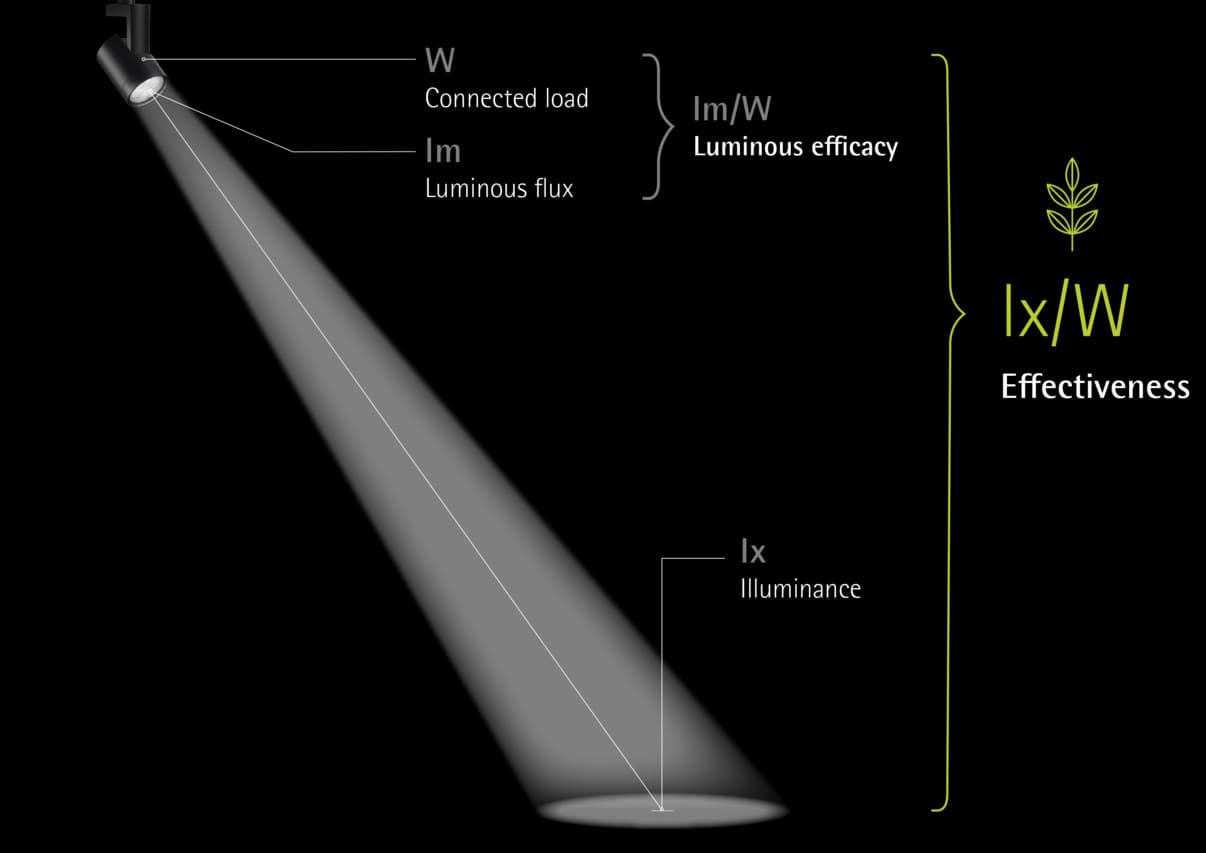

ERCO represents the most effective lighting tools and methods of lighting on the market. A comparison with the competition shows: with a similar connected load, Parscan for example achieves a significantly higher illuminance. This means Parscan brings visibly and measurably more light to the target surface and is therefore more effective than other spotlights.
Learn more about the use of effective lighting: Read more about why wallwashing is a key part of sustainable lighting design and get to know the significant advantages of zoned office lighting in this specialist article.

No spill light, no wasted light
Electric lighting supplements natural daylight, and energy is needed for the purpose. This resource must be used responsibly. Our proprietary lens technology is the basis for optics that project light precisely onto the target surface. The distribution of the luminaire thus has no disturbing spill light and is therefore up to 60% more effective than conventional methods of light control which use reflector technology.

How can we support you?
Let's approach the realization of sustainable and effective lighting concepts together.
Case studies: Sustainable lighting in practice
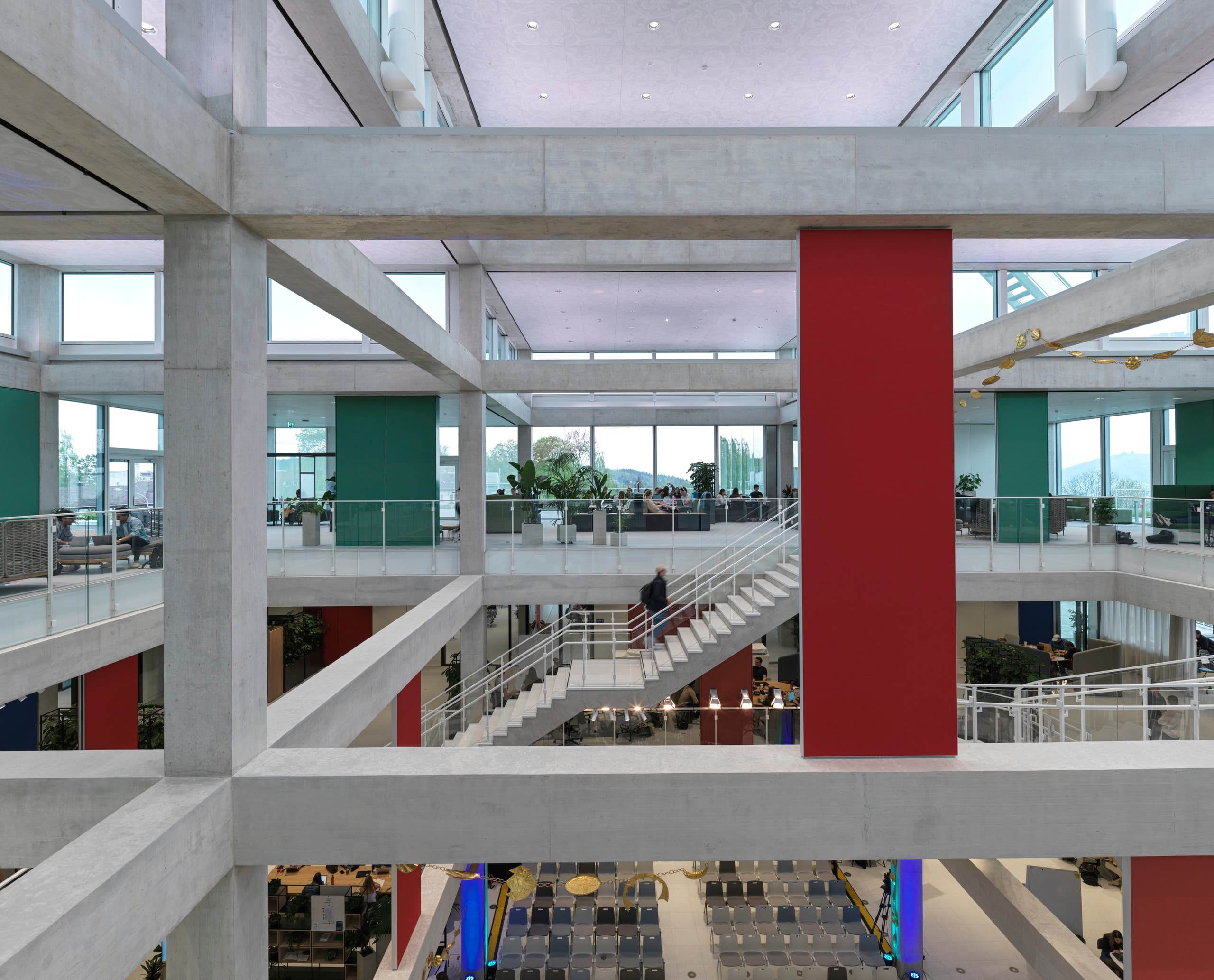
SQUARE Learning Center, University of St. Gallen:
The glass and concrete building by Japanese architect Sou Fujimoto adds a place of encounter and dialogue to the university campus. Sustainability and energy efficiency aspects played a role in construction. Lighting had to meet the Minergie standard, a Swiss construction standard for new and upgraded buildings. Precise optical systems of ERCO luminaires ensure glare-free lighting. The light is only used where it is needed: for reading, learning and collaborating. The concept supports person-to-person communication by achieving harmonious lighting ratios on faces – lighting design according to the principles of Human Centric Lighting. The resulting effective lighting with energy-efficient luminaires leads to an improved ecological footprint of a sustainable building.
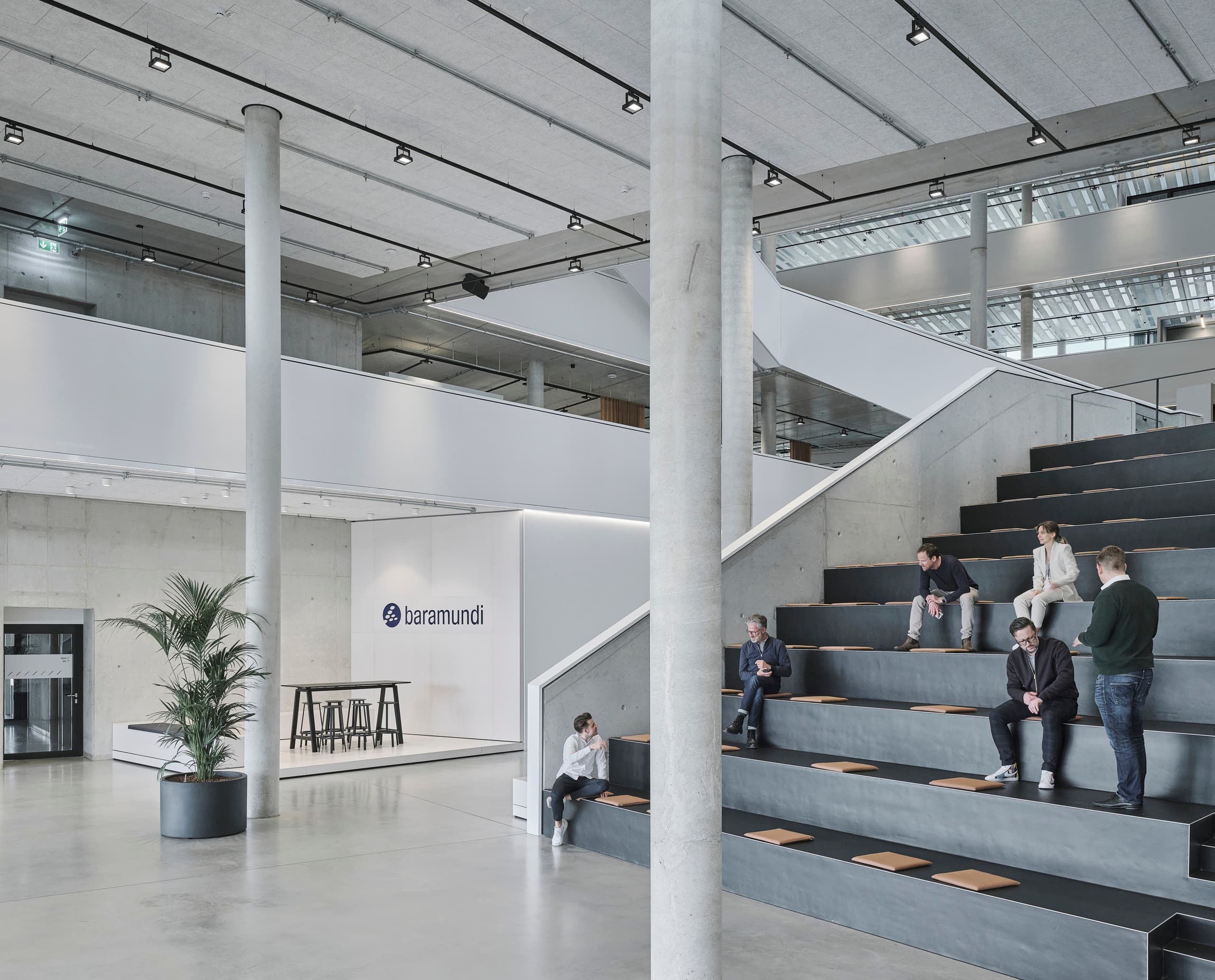
Baramundi Software AG Augsburg:
Sustainable office lighting with downlights for tracks. In contrast to classic office lighting concepts with 'fixed' luminaires, the arrangement of the downlights can be adapted any time to modified office layouts thanks to track mounting. The luminaires provide a very high level of visual comfort and ensure optimum task lighting thanks to their wide flood distribution, which averages approximately 300lx. Even at room heights of 8 to 20 meters, the required illuminance of >300lx is achieved. Additional illumination of the walls supports visual tasks in the vertical plane such as computer screen work. The room appears brighter than when the floor is illuminated over its entire area.
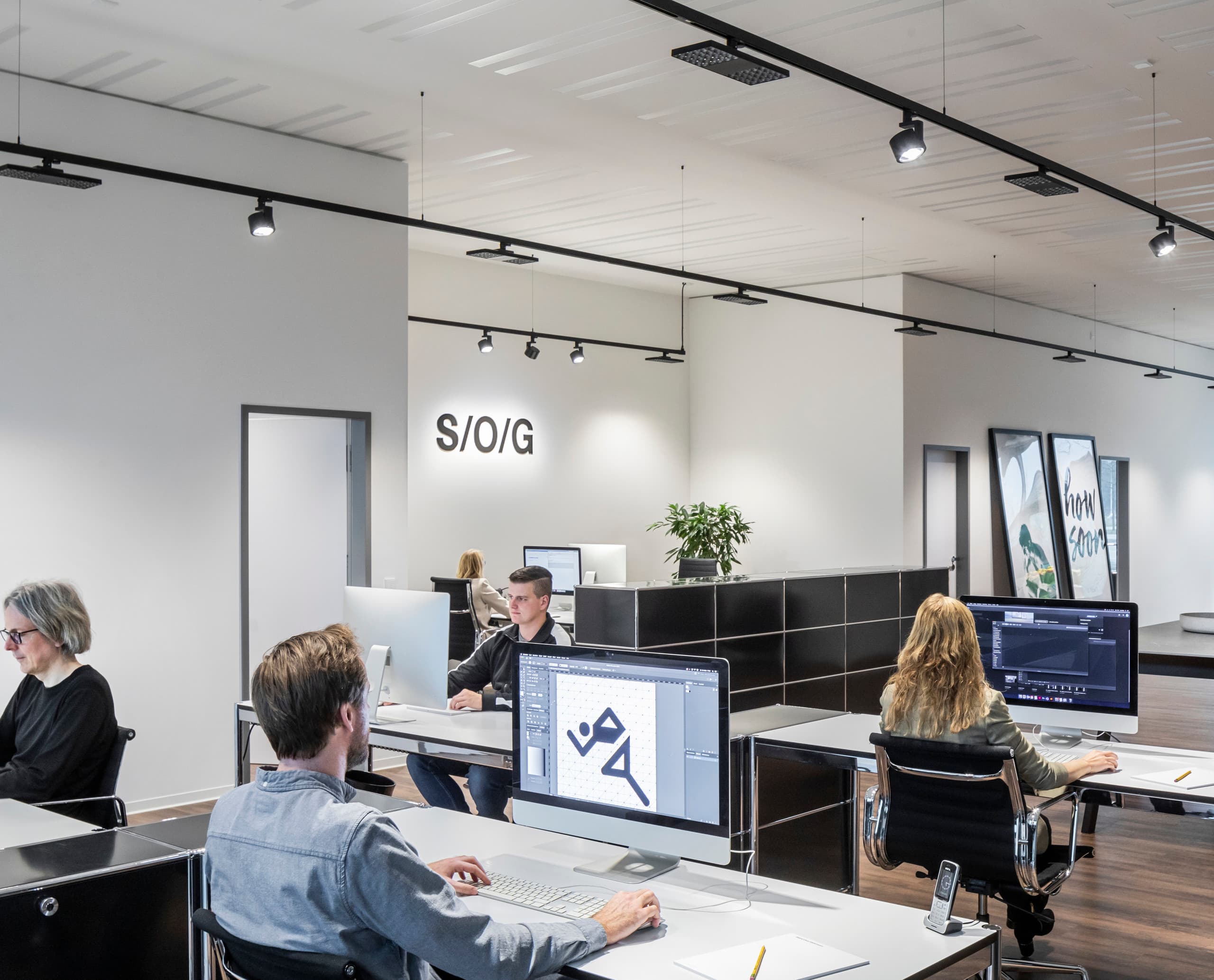
Stiehl/Over/Gehrmann, Osnabrück:
A conscious use of light as a resource. Track systems are ideal for implementing a zoned lighting concept in the agency for market communication. Light is only used where it is needed: directed at the desks. This also means that it is omitted where it is not needed – a lighting design approach that promotes the resource-saving use of light and thus energy. With zoned lighting, energy consumption can be reduced by around 50% in general, as opposed to illuminating the entire room.
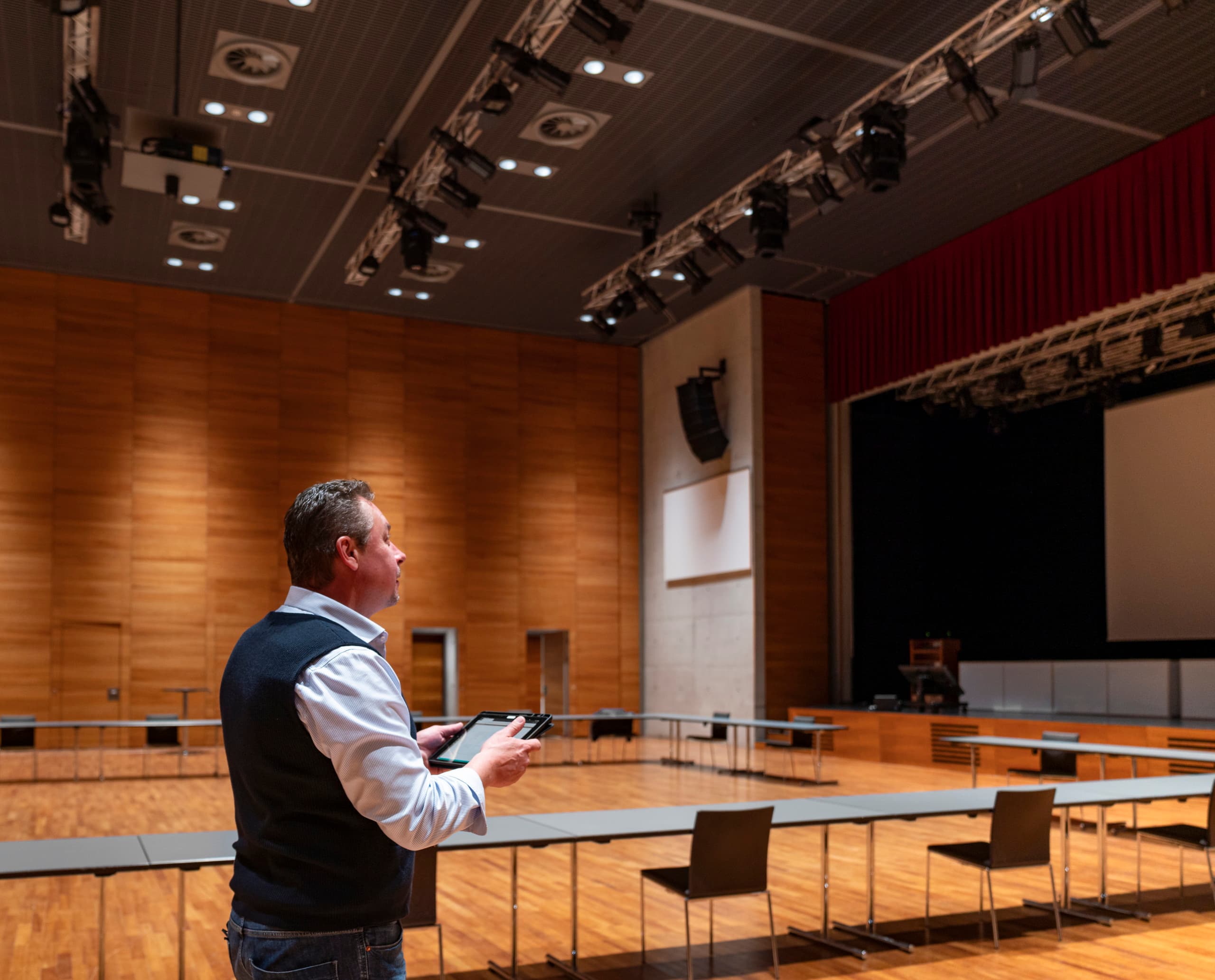
Ferry Porsche Congress Center, Zell am See:
In 2020, LED re-lighting was implemented, justified by procurement problems of conventional light sources. The new LED lighting led to an enormous increase in efficiency. In fact, the new lighting system requires merely a quarter of the energy previously required and, thanks to its lower heat generation, also reduces the building’s cooling load – resulting in energy savings of 75%. Although the connected load of the new luminaires has been reduced from 500W to only 76W, the horizontal illuminance of up to 1200lx is even 20% higher.
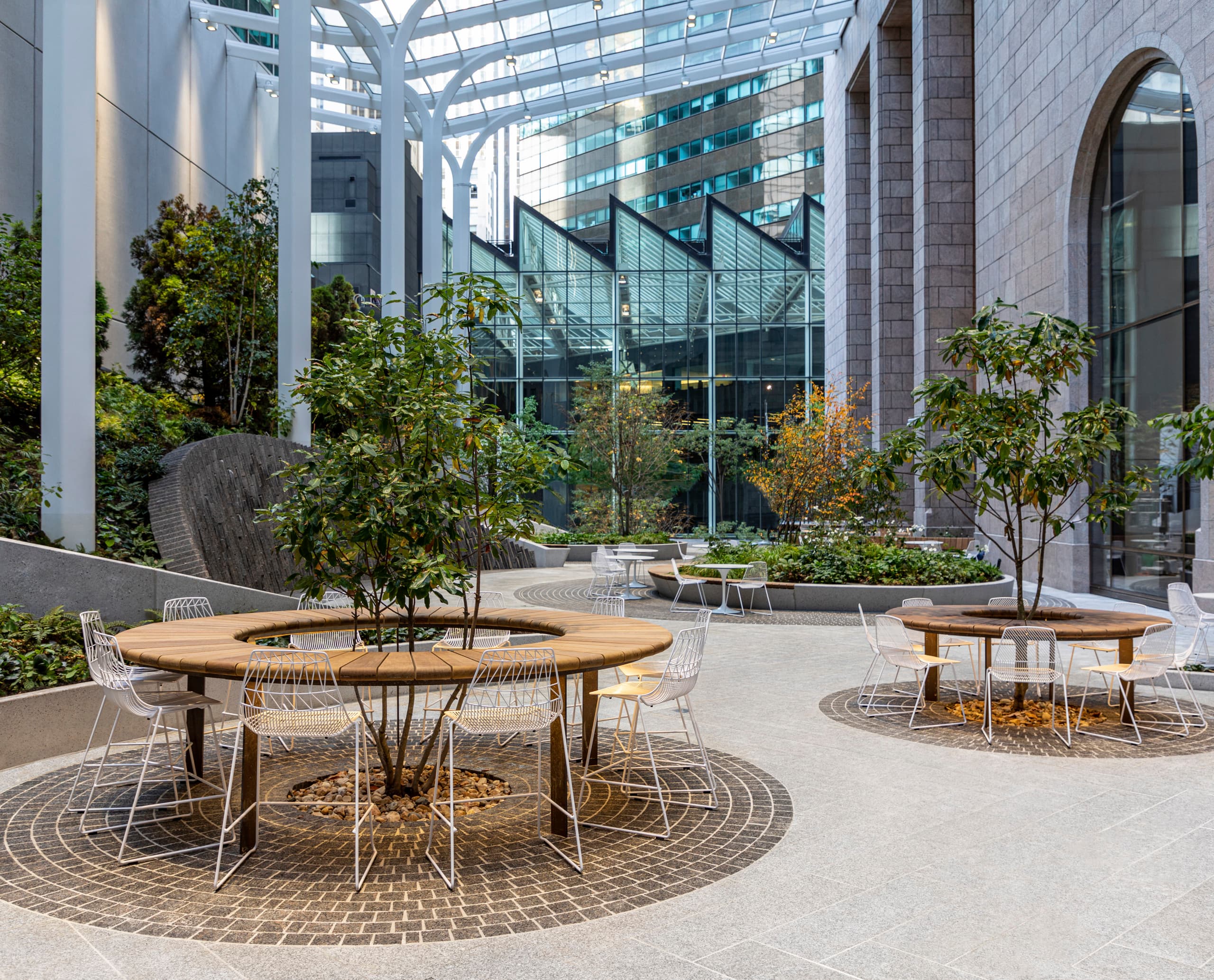
550 Madison Avenue Garden, New York:
Sophisticated experience of nature with effective lighting. The urban oasis of 2000m² is surrounded by New York's skyscrapers. To generate enough brightness for plants, it needed a high, energy-efficient light output. 80 custom-made Kona outdoor projectors with 96W LED were installed. The lighting technology developed by ERCO is based on the principle of projection. Lenses direct the light precisely onto the target surface, even over long distances, and without relevant losses from spill light. The energy consumed is thus used as effectively as possible. With a light point height of around 20m as planned in the project, this results in an outstanding ratio of illuminance to connected load of 1.6lx/W.
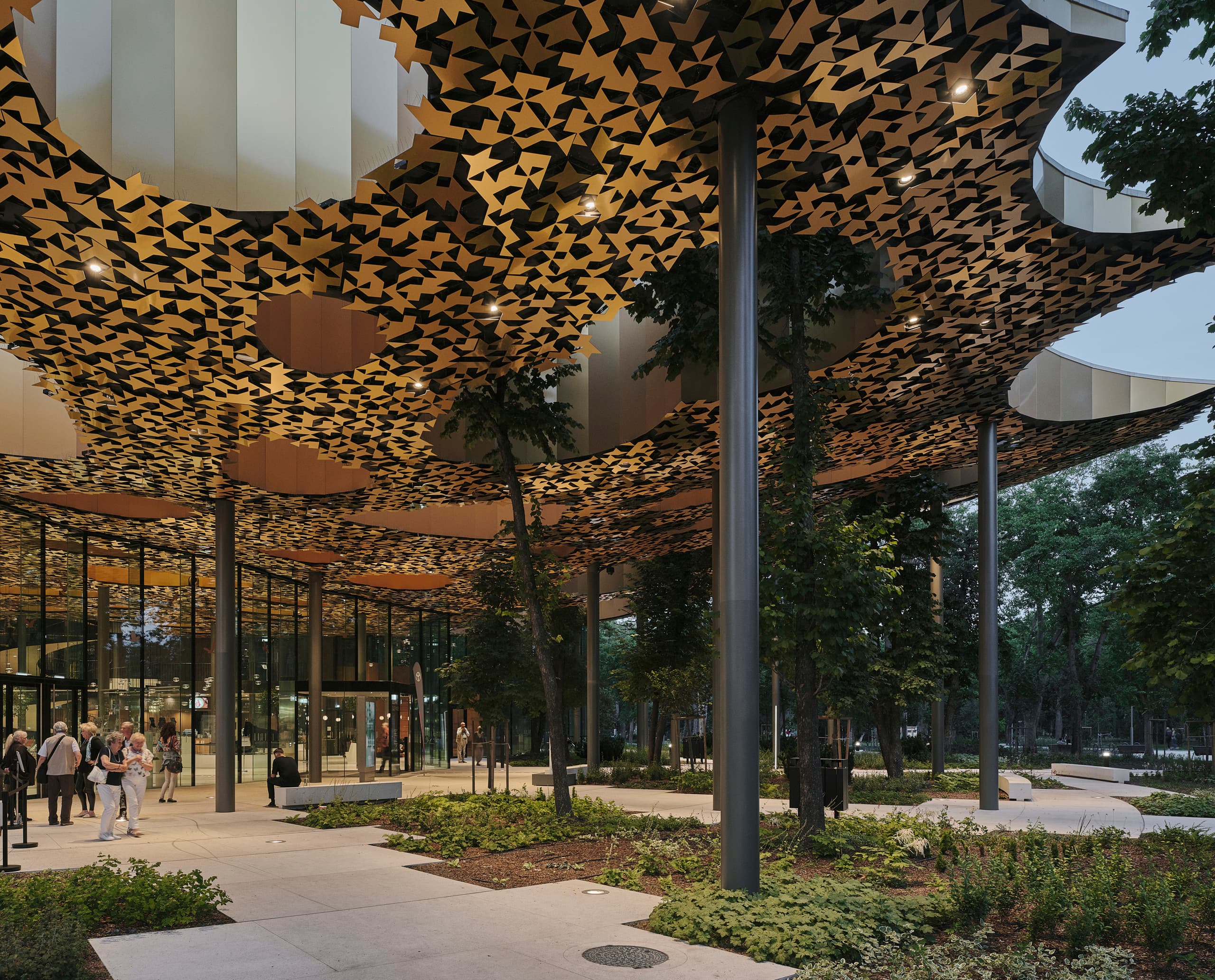
House of Hungarian Music, Budapest:
Precise illumination without light spill. With a ceiling height of 12 meters, precisely directed light is essential. This is the only way to prevent light spill, which on the one hand causes glare and thus destroys the atmosphere of the architecture, and on the other hand also means wasted energy. ERCO luminaires function with projecting optical systems that direct the light with high precision – and thus still achieve high illuminance levels (lx/W) from large distances even with a low connected load. This creates the basis for sustainable lighting in which light is only used where it is needed, i.e. where human perception requires it.


