Danubiana Meulensteen Art Museum

Opened in 2000 as a result of the initiative of Slovakian gallery owner Vincent Polakovic and Dutch entrepreneur and art patron Gerard H. Meulensteen, it is the first and currently only museum of modern and contemporary art in Slovakia. Despite its international recognition, its collection features distinctly regional focal points – pertinent to the roots of its founders. Paintings and drawings are joined by a variety of sculptures, many of which are displayed outside the museum in its surrounding parkland.
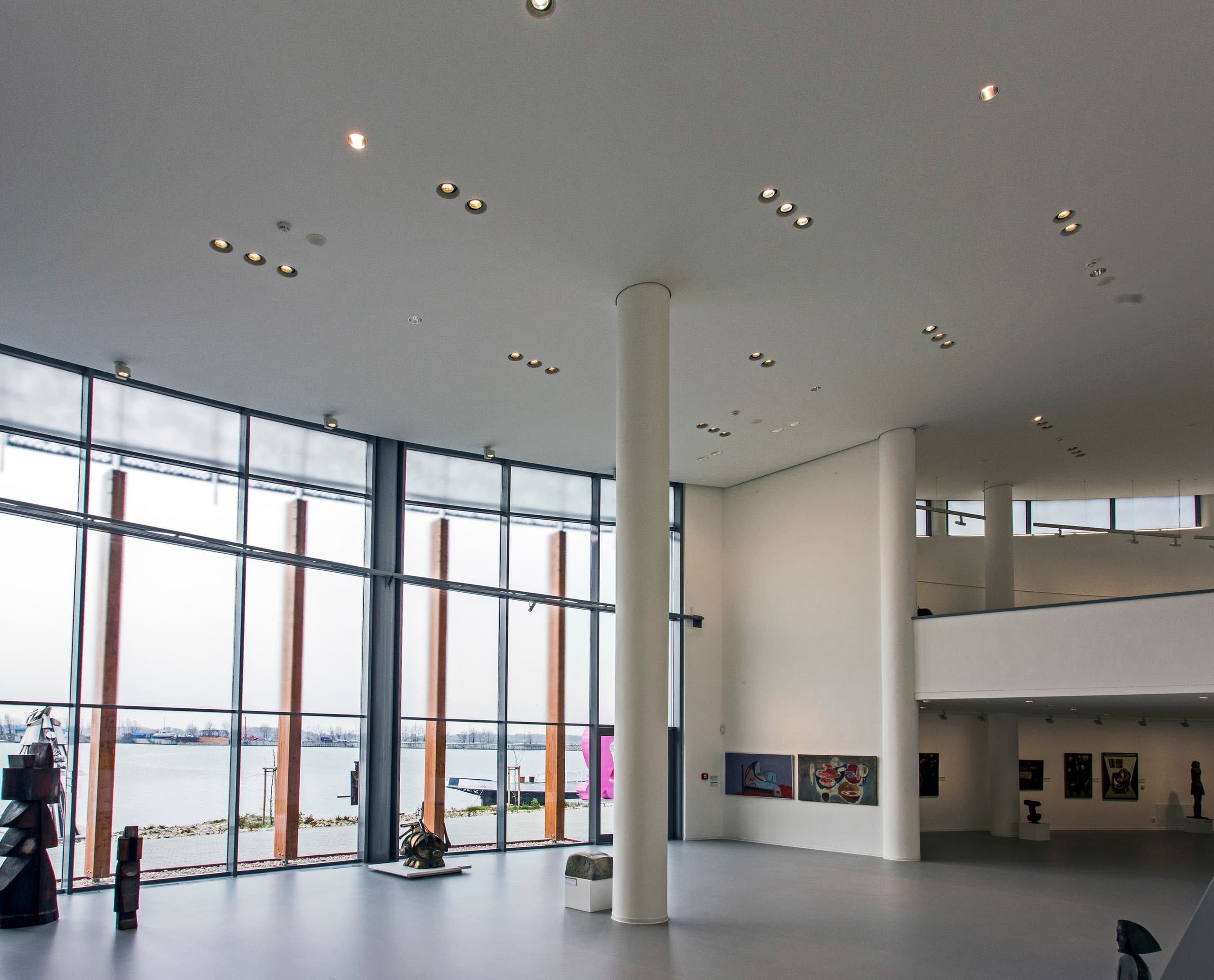
The privately operated museum amazes with an impressive collection complemented frequently by special exhibitions; its architecture is as stunning as its unique and spectacular location. Situated on a narrow stretch of peninsula amid the Danube, the museum complex is surrounded on three sides by the eponymous river, which at this point of its course reaches a width of several kilometres. The Danubiana evokes the shape of a ship bound in the shallows of the current. The river is very much present at points inside the museum as it is outside, with many of the galleries opening out to it through sprawling windows, so it appears to be part of the exhibition setting.



The museum was recently extended quite substantially based on plans by architect Jan Kukula and Bratislava based design office Atelier 008. Inaugurated in September 2014, the new annexe – voted “Building of the Year” in Slovakia just a short while ago – is equipped throughout with ERCO lighting tools, much like the original museum building. Next to the actual exhibition rooms, this includes the shop, the cafeteria and the outdoor area.
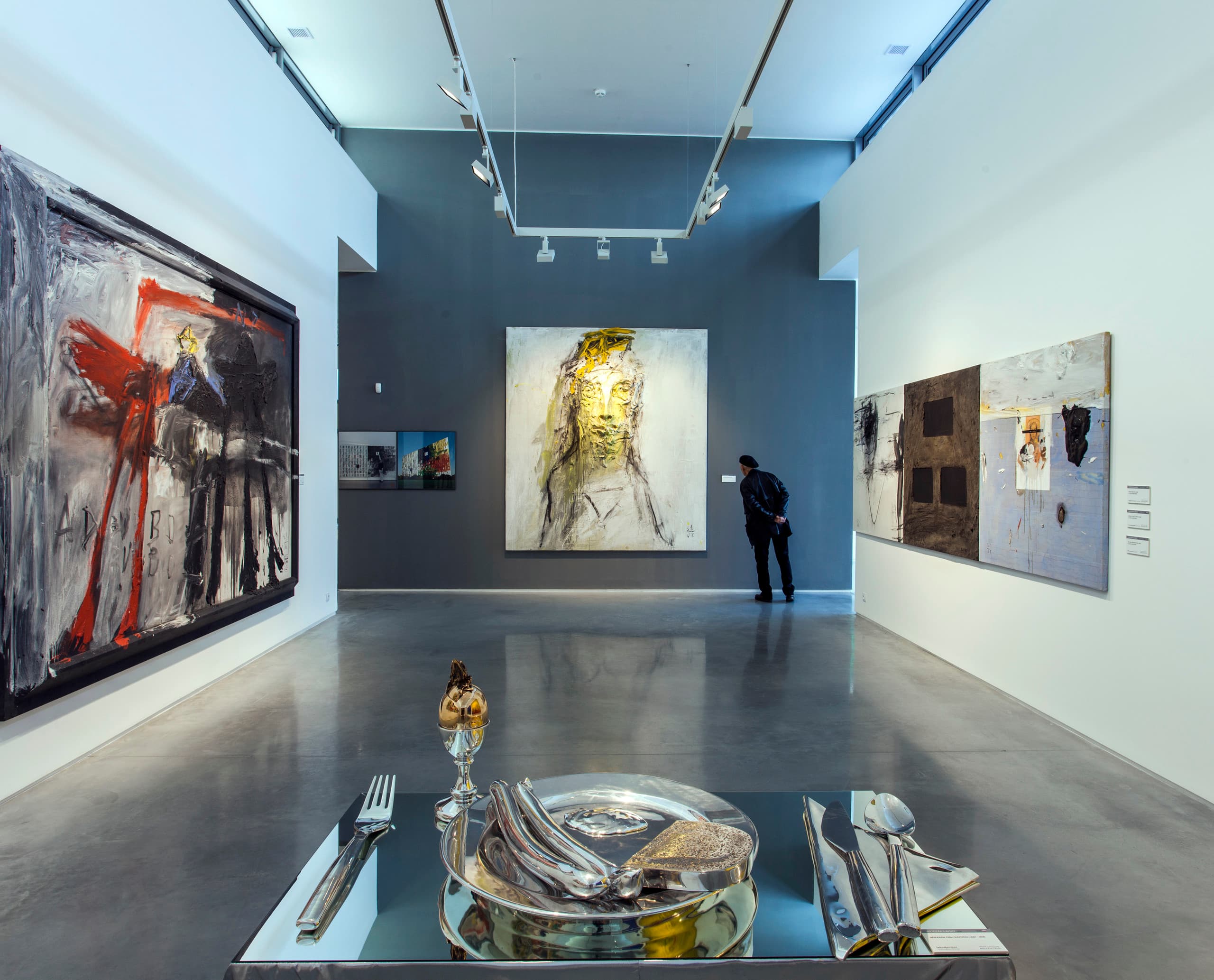
In most of the exhibition rooms, Pantrac and Light Board luminaires combine to ensure optimum illumination of the artwork. Where Pantrac lens wallwashers with neutral white light provide perfectly uniform lighting for the walls, Light Board spotlights focused on the individual paintings add warm white accents, allowing the masterpieces to come to the fore. All at once, their colors and surface textures are revealed strikingly in the light. Pantrac and Light Board blend well in terms of their effect, but fuse just easily with regard to their simple and straightforward design. It is precisely this combination of efficiency and formal understatement that makes these luminaires a complete success in a museum setting.
As the galleries of the Danubiana are smaller in size, the Light Board luminaires are occasionally used solo as lens wallwashers or in partnership with Pollux contour spotlights. One such place is a narrow, elongated exhibition room that primarily displays relatively small paintings and sculptures. Using Pollux here for sharp-edged illumination allows the richness of detail in the artwork to stand out in brilliant contrast. The larger sized exhibition hall in the old building, meanwhile, required an altogether different lighting solution. Here, the synergy of Compact and Quintessence as recessed luminaires achieves uniform ambient lighting, but still manages to illuminate each object precisely despite the ceiling height.
In the museum shop, Light Board is used as a wallwasher for the shelving and as a spotlight for the product displays. In the cafeteria, finally, it is Parscan luminaires that illuminate the room unobtrusively for a pleasant ambience.



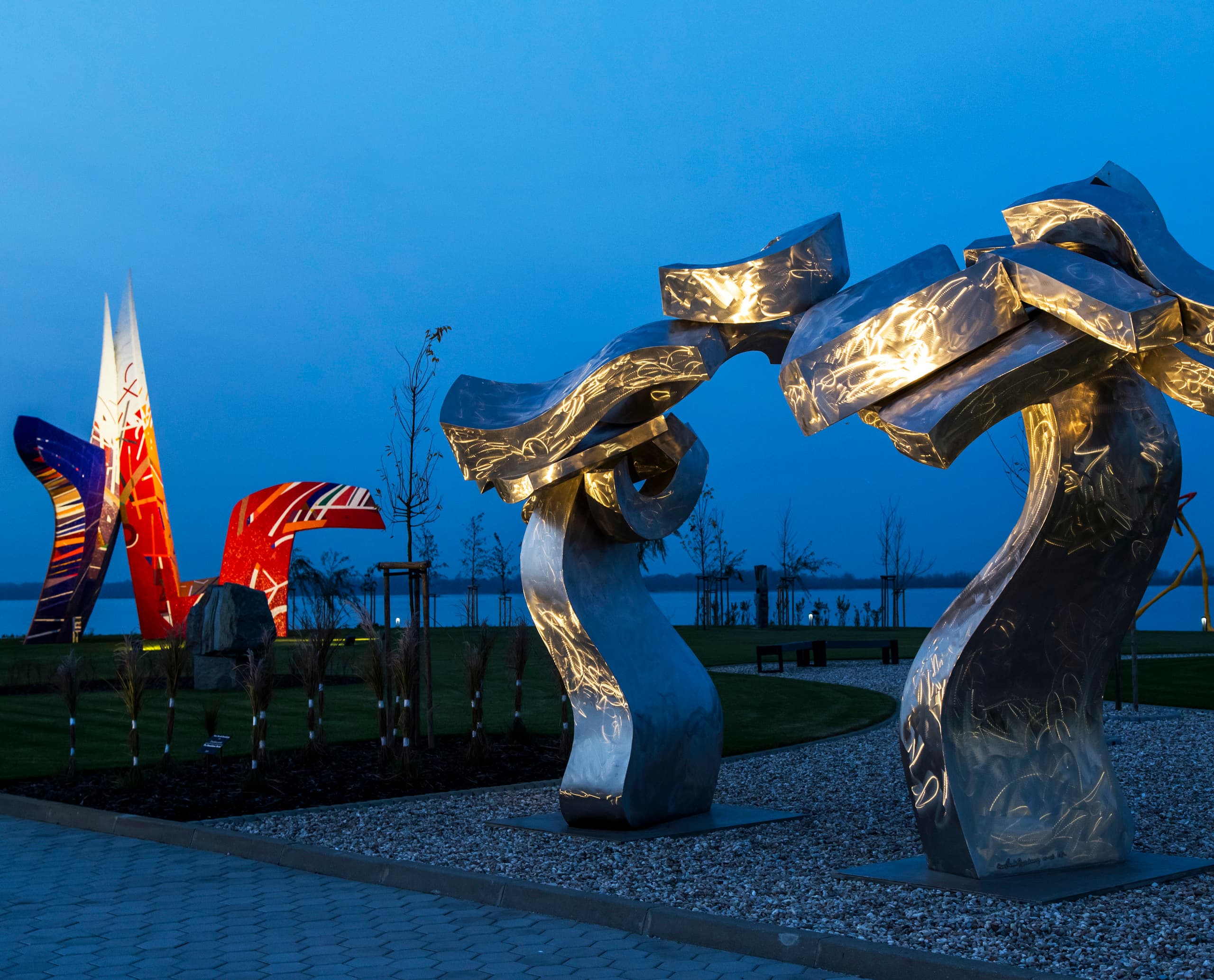
Measuring around 8000sqm, the sculpture park makes up a significant part of the Danubiana Meulensteen Art Museum. The largely sizeable sculptures presented here strike a formidable presence and effect – especially as night falls. This is due not least to their illumination provided by the special outdoor projectors and floodlights of the Lightscan and Grasshopper ranges, which are individually optimized for use against the size of each object. A most striking feature emerges in the long-distance effect of the art embedded in grandiose nature and architecture, produced by the powerful light of Lightscan. It is here that the ERCO luminaires display their particular strengths: precise light guidance and excellent energy efficiency. And to enable visitors enjoying the sculpture park at night to find their bearings, Kubus bollard luminaires provide reliable orientation. As Dark Sky technology ensures that no light is emitted above the horizontal plane, the luminaires themselves remain unobtrusive so as not to upstage the sculptures, but neatly mark the way through the park.
Providing the Danubiana with various different product configurations, ERCO proves once more that its flexible LED lighting tools offer the ideal solution for diverse lighting tasks. This applies as much to the strict requirement of precise accent lighting for the museum as to the stipulation of attention-directing, attractive product presentations or the preference of scenic and cosy café lighting with good visual comfort. Combining different ERCO products in the Danubiana enables the implementation of a sophisticated lighting concept that reacts flexibly to changing spatial situations and focuses the light very naturally to produce the required result.


Mathias Remmele works in Berlin as a freelance publicist and exhibition curator for topics relating to architectural and design history. As a critic he focuses on contemporary developments in these areas. He is also a lecturer at the School of Art and Design in Basel.