Customized museum lighting for large scale architecture

Jackie Chan
M+ Museum of Visual Culture, Hong Kong
The M+ building in the West Kowloon Cultural District is one of the largest museums of modern and contemporary visual culture in the world. Located at the southernmost edge of Kowloon overlooking Victoria Harbour, it is among Hong Kong’s most iconic landmarks, both monumental in its architectural form and radically open in its position in the urban landscape.
Designed by Herzog & de Meuron in partnership with TFP Farrells and Arup, the building is composed of a podium and a slender tower that fuse into the shape of an upside-down ‘T’. The expansive podium cantilevers above ground and includes 17,000 square meters of exhibition space across thirty-three galleries, three cinema houses, the Mediatheque, Learning Hub, and Roof Garden that faces Victoria Harbour. The tower houses the museum’s Research Centre, offices, restaurants, and the M+ Lounge on level 11.
This video is hosted on YouTube. Loading it connects to Google and may set cookies.
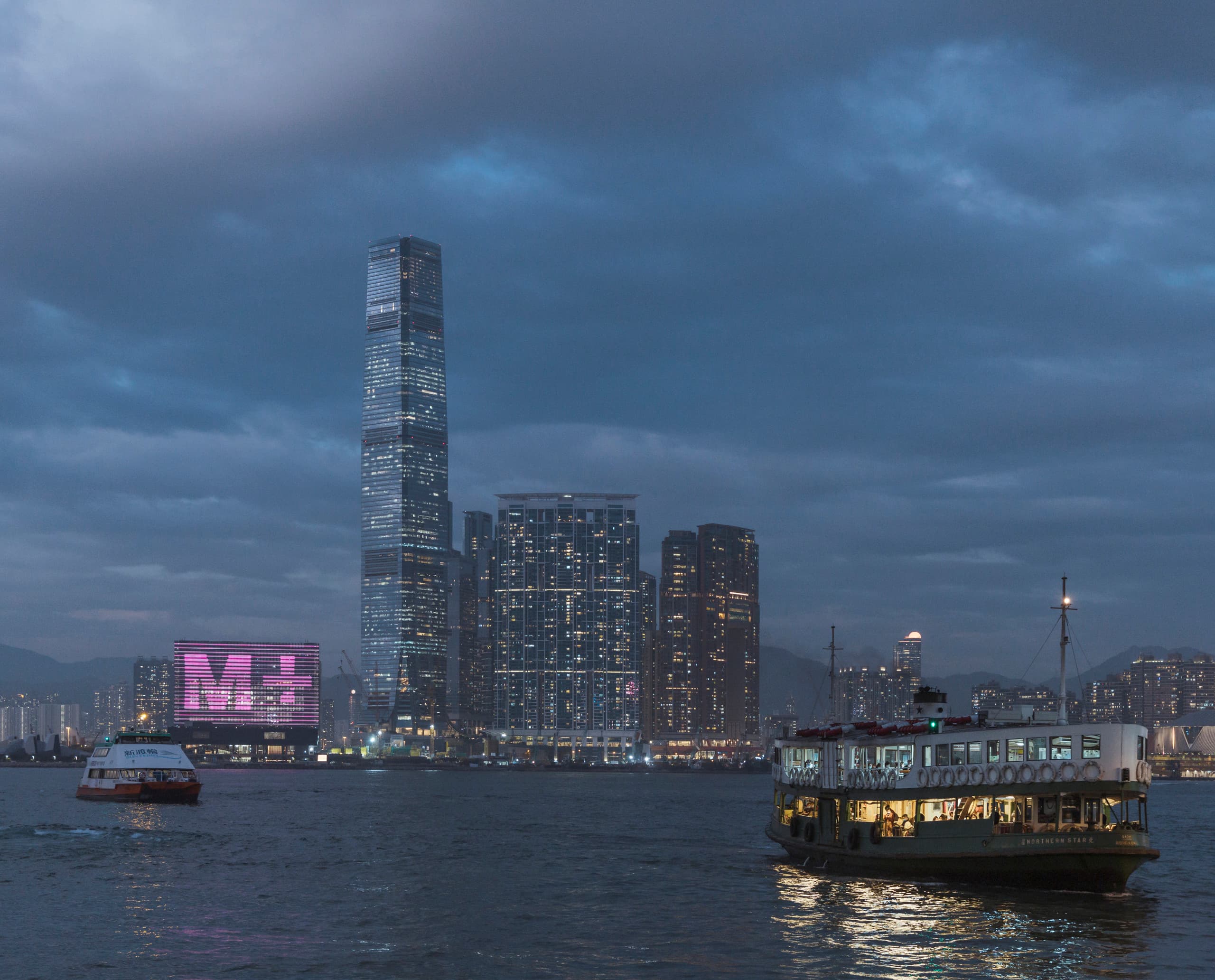
The M+ Facade, facing the harbor, is embedded with LEDs for screening moving image works, which can be seen from the West Kowloon waterfront promenade and Hong Kong Island. Visitors can enter the museum from various points on the ground and lower floors, creating a highly accessible space that offers a continuity between indoor and outdoor areas. The tower's louvered facade is embedded with LEDs that can be used to display moving image works. This transforms the building's facade into a giant screen that can be seen from the West Kowloon waterfront promenade and Hong Kong Island.
"The resulting structure is not simply anchored in its surroundings; it is also formed by them. This is a universal place with an inner organization whose openness and transparency make it possible to link the complexities of the content and the space in many different ways.” (Herzog & de Meuron, 2015)

The lighting for M+ was designed and conceptualized over several years by director of MEGS Lighting, Adam Meredith. There was a need to balance the architect's vision for the circulation spaces with the curator's vision for the exhibition spaces. With 33 gallery spaces, there was an opportunity to create some dynamic environments as per the curator's instructions.


At M+, the gallery spaces had different architectural challenges. To address these challenges, custom items were designed to make the lighting fixtures uniform and flexible enough to be moved anywhere in the building. ERCO provided customization and followed up to ensure that the fixtures arrived on time and within the budget, which allowed the team to plan their installation and begin work on the exhibition.

The Anthony Gormley: Asian Field at M+ was a large-scale installation of 80,000 terracotta sculptures. The artist had strict requirements for the lighting, including lux levels, color temperature, and individual control. Casambi was a good tool to control the luminaires, especially for this area, as the luminaires were inaccessible once the installation of the artwork was completed.

Flexibility and ease of use are key considerations when choosing luminaires for a museum with evolving spaces. The luminaires must be adaptable to different exhibitions and lightweight for the maintenance team to handle, especially in large quantities. After several mock-ups and tests, the Parscan 24-Watt spotlight was chosen for its size, weight, and versatility. The museum also had to be both visually appealing and functional, while respecting the conservation levels of certain areas and avoiding over-lit or under-lit spaces. The goal was to create the best possible visitor experience.
“The Parscan 24 Watt was quite versatile, it spun on the central axis, it didn't have a left or right yoke or pan or tilt in the old terms of theatre, so the Parscan was compact, it rotated on its base, it was uniformed accessories, the optics was easy to change.”
Adam Meredith, MEGS Lighting


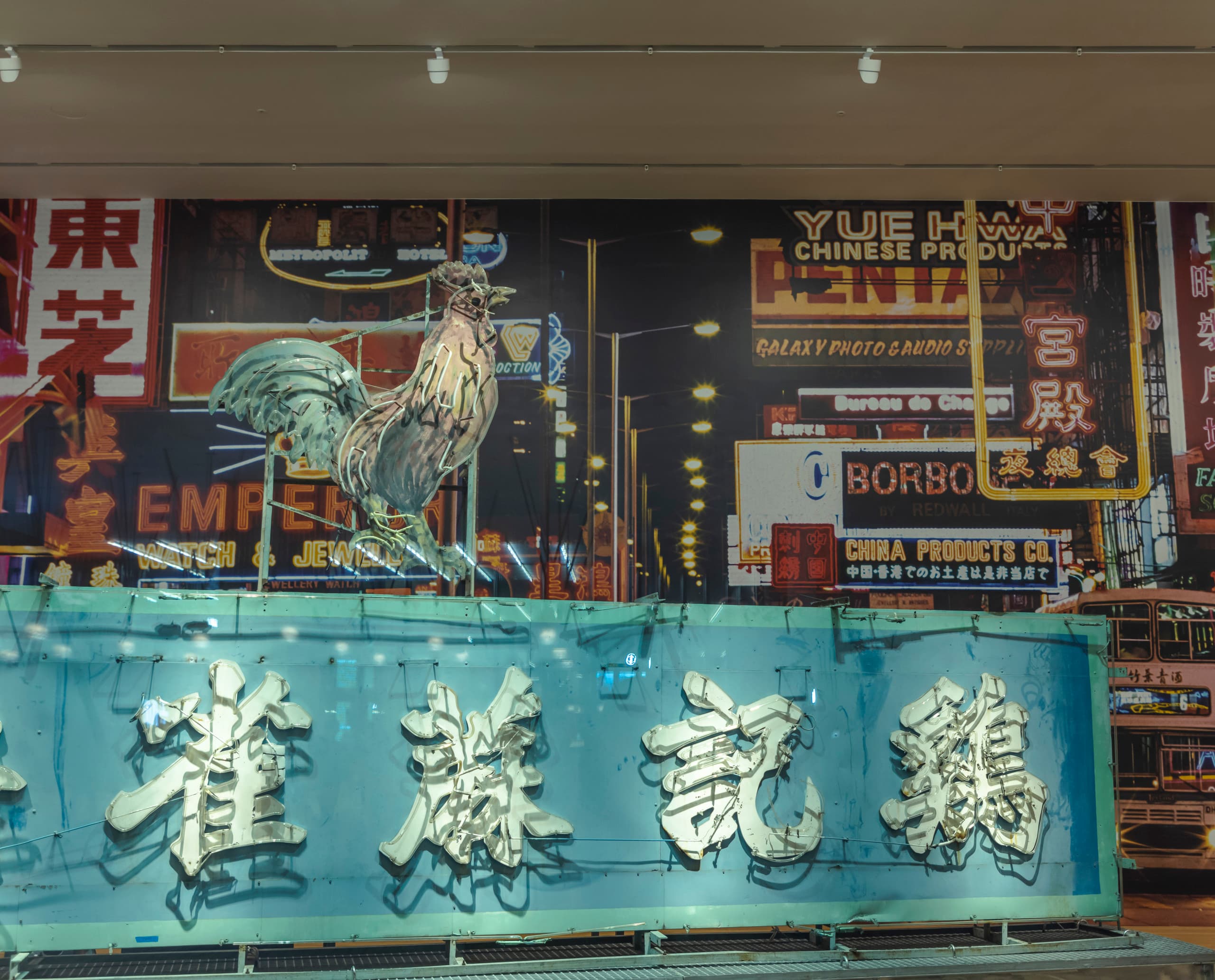
At M+, Adam Meredith had the opportunity to light some of the museum's vintage neon signs from the collection. This was a humorous challenge, as the original light sources could not be powered, so he used contemporary LED lights instead. When choosing a lighting solution, Meredith considered the heritage value of the signs and the need for a durable system that would last 10-20 years. He chose ERCO track lighting, confident in its high quality and lifespan.
