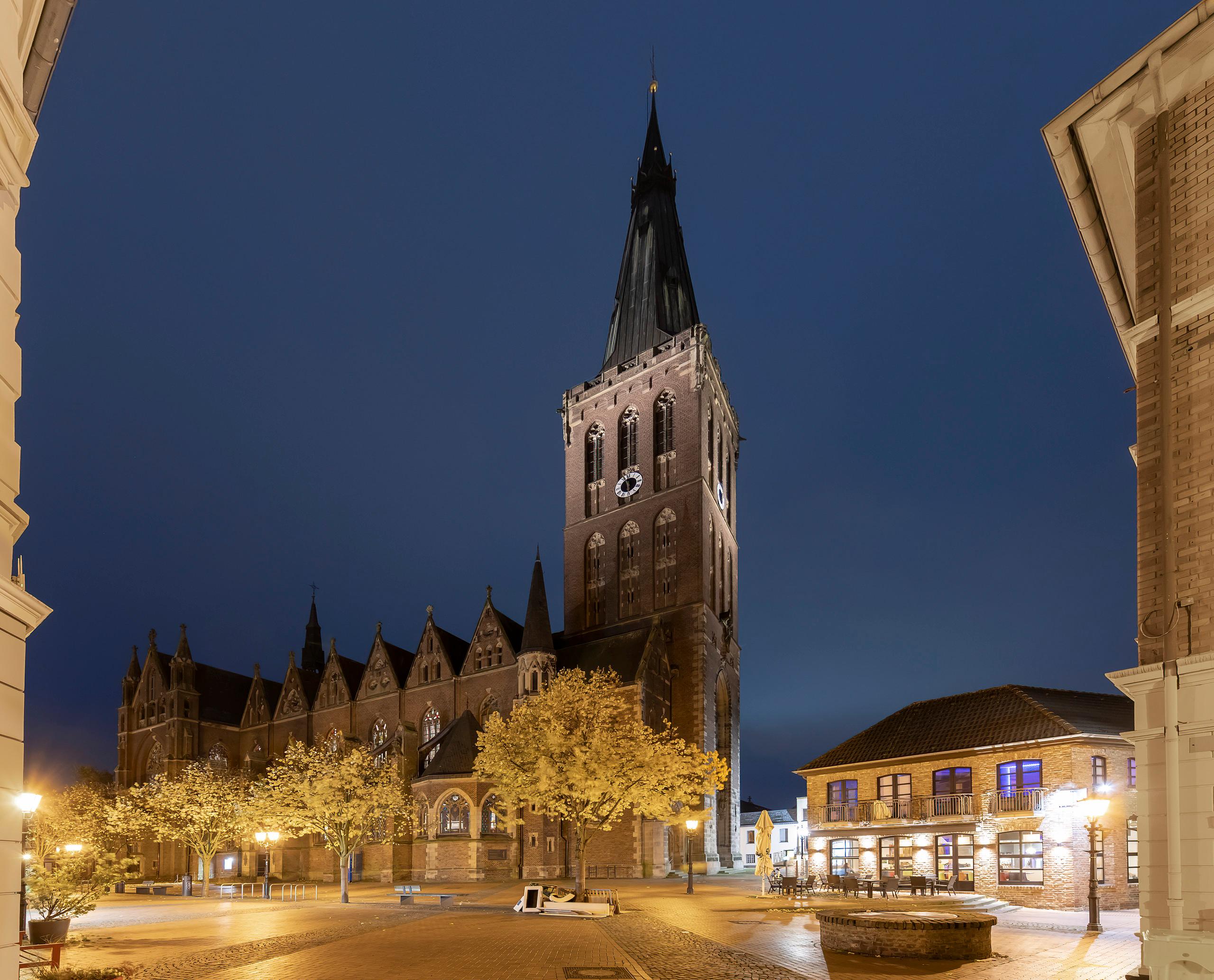
Light for liturgy, architecture, and culture: St. Cornelius Parish Church in Viersen-Dülken
Frieder Blickle
Monumental brick architecture, soaring vaults, and a church tower visible from afar define St. Cornelius Parish Church in Viersen-Dülken. The neo-Gothic church was built according to plans by Cologne architect Heinrich Wiethase in two construction phases, from 1873 to 1875 and from 1905 to 1906. Its five-aisled nave combines elements of a hall church with those of a basilica. The bell tower, standing around 85 meters tall, makes the heritage-protected building a landmark in the Dülken townscape to this day.
Yet St. Cornelius is far more than a historic monument. As the parish church of the St. Cornelius and St. Peter parish, it is both a spiritual center and an open place of encounter. Alongside religious services, it hosts exhibitions, readings, and concerts featuring sacred and secular music. The lighting therefore had to meet a range of requirements: it needed to showcase the neo-Gothic architecture with sensitivity, clearly bring out the liturgical areas, and at the same time remain flexible enough for changing events.
Five aisles, soaring vaults, piers, arches, and large window surfaces give St. Cornelius a pronounced spatial depth. The challenge lay in making these dimensions tangible in darkness without dominating the historic interior with visible technology. In a heritage-defined church interior in particular, it is not the luminaire itself but its lighting effect that should take center stage.
Rather than simply illuminating the interior evenly, the lighting therefore follows a differentiated approach: the light models the architecture, provides orientation, and draws attention to the essential areas and elements of the sacred space. The altar and ambo, the cross, the chancel, and works of art can be highlighted specifically, while other zones are illuminated more discreetly by design. This creates a hierarchy of perception that frames the chancel as the spiritual center of the church interior.
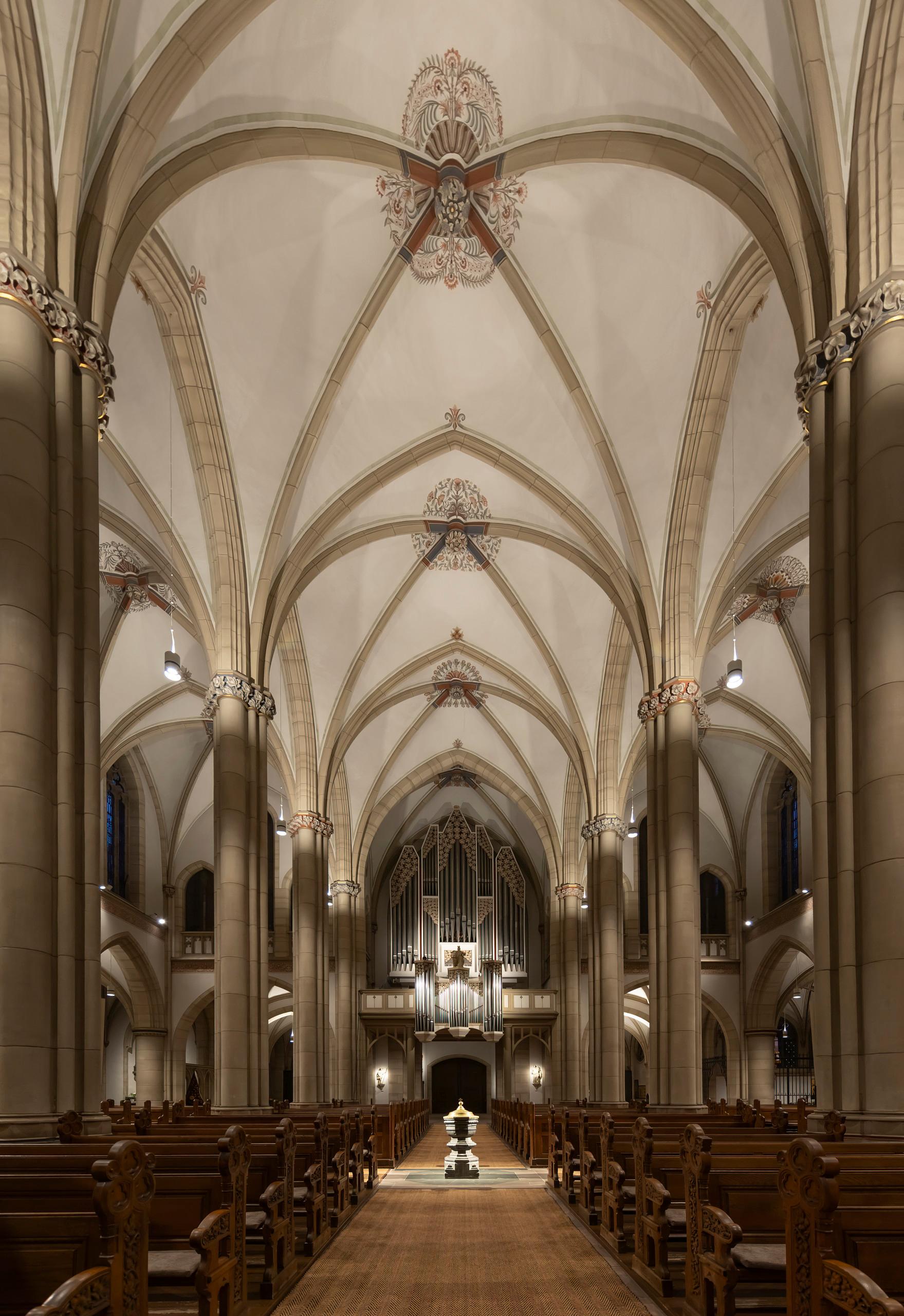

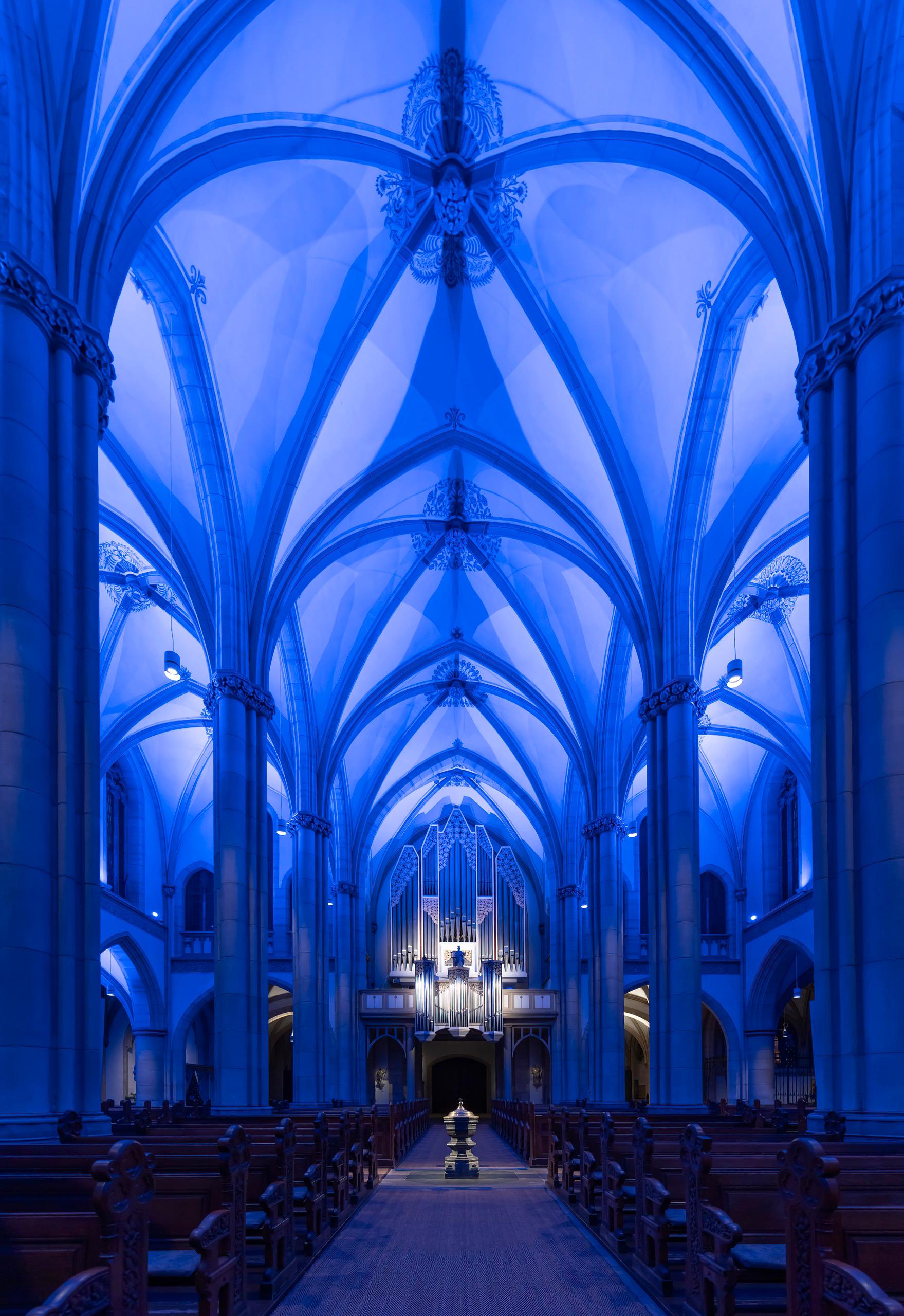
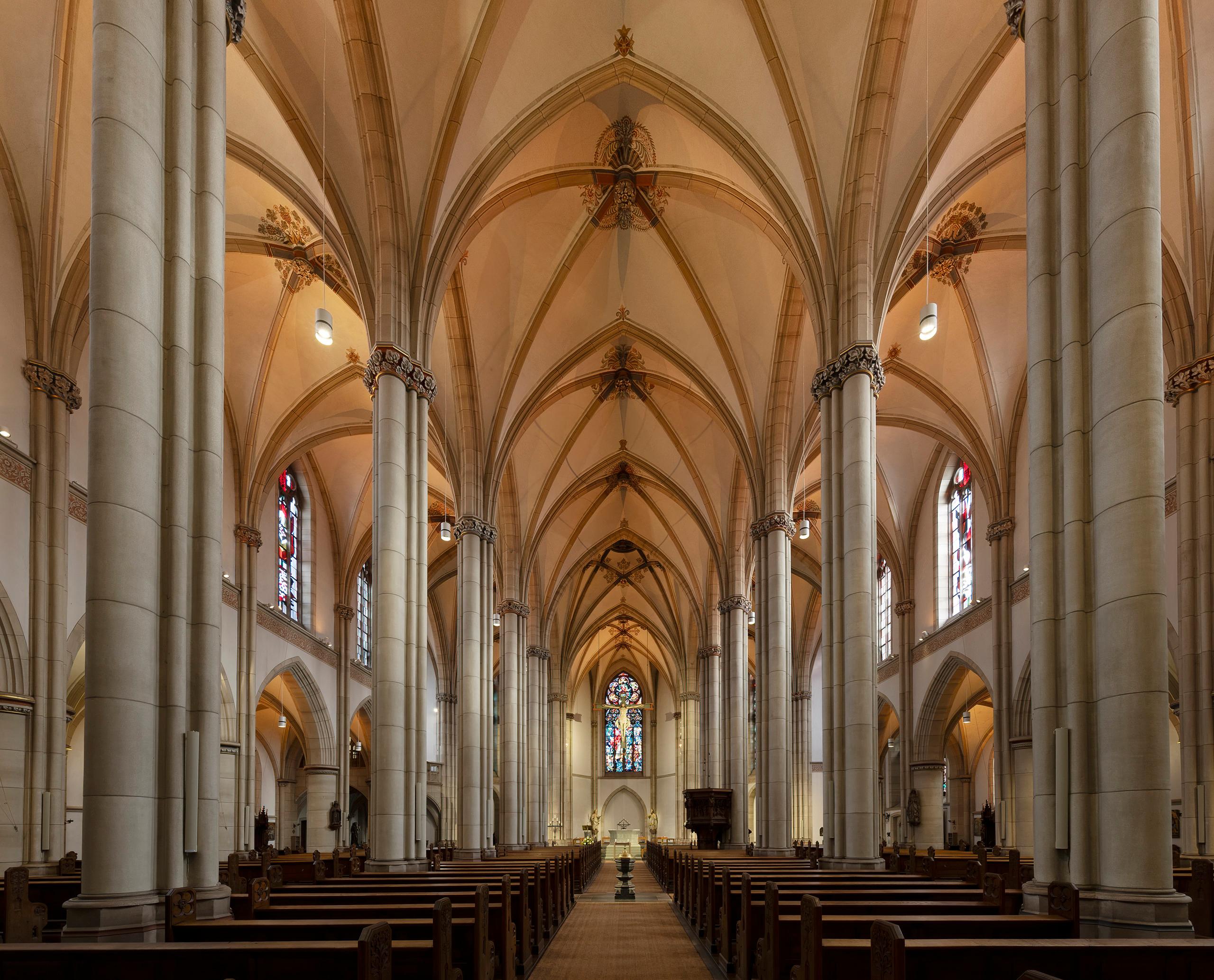
The lighting solution is based on a combination of tracks with spotlights and Atrium double focus pendant luminaires. Warm white light at 3000K forms the foundation of the lighting. The precise optics of the ERCO lighting tools direct the light specifically onto the surfaces and areas where it is needed. Unwanted stray light is reduced, while carefully chosen brightness contrasts can highlight the architecture and the liturgically important elements. In a sacred space in particular, this controlled lighting is crucial. Brightness that is too high or undifferentiated would disturb the contemplative atmosphere. Differentiated lighting, by contrast, supports both the perception of the room's proportions and orientation, and makes it possible to set different spatial focal points with light.
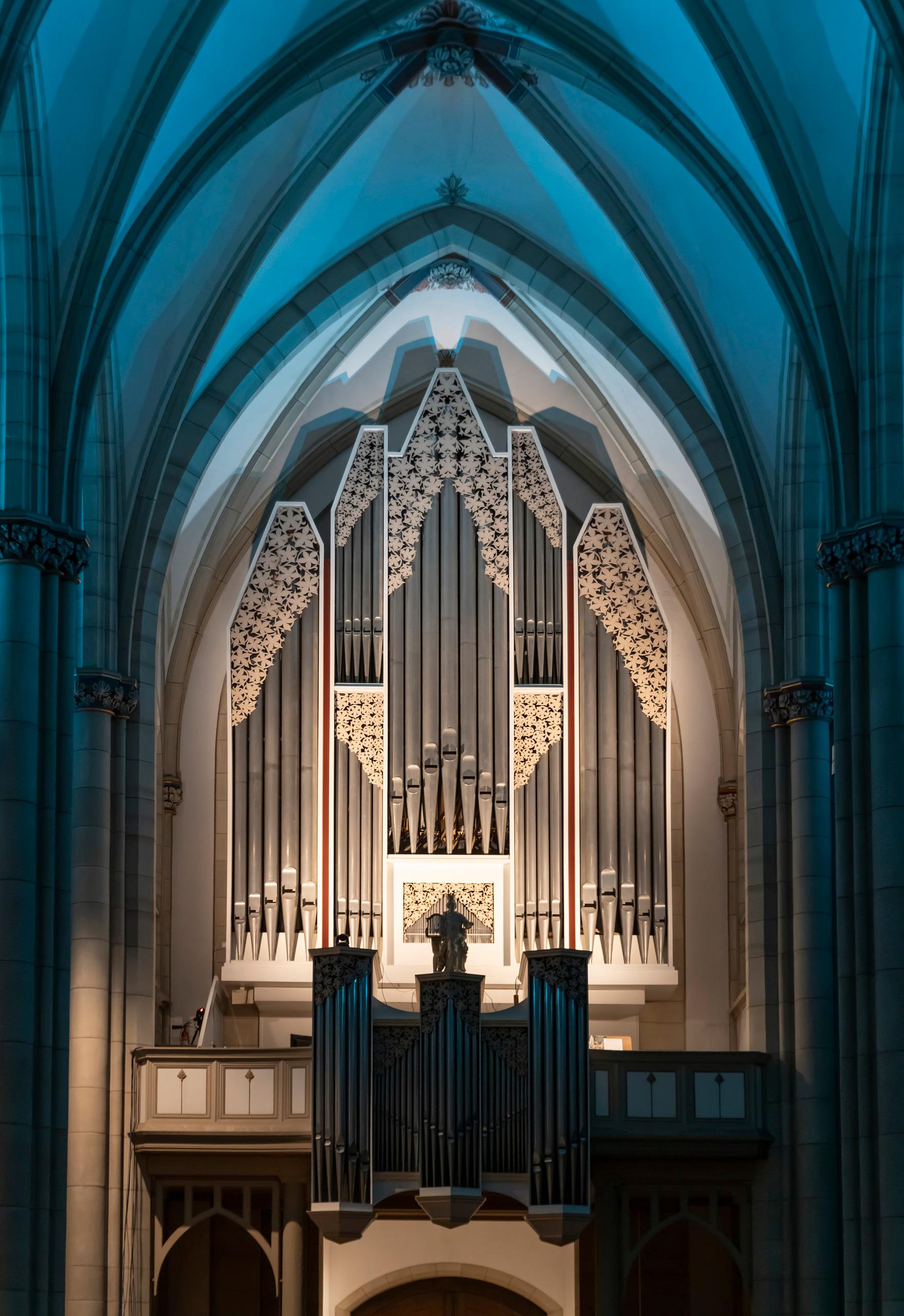
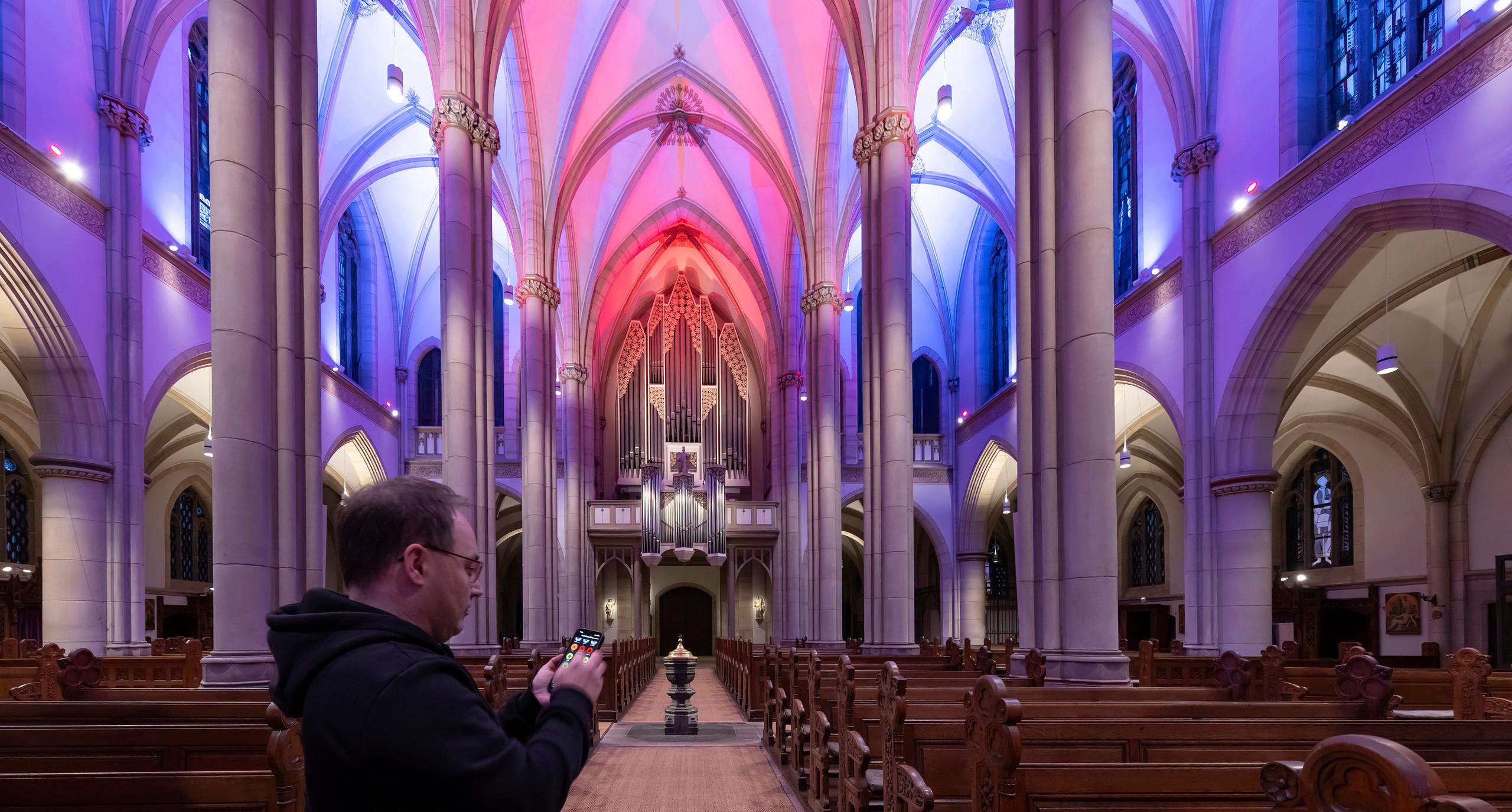
A 21st-century church, however, requires more than a single static lighting scenario. St. Cornelius is used for religious services as well as for exhibitions, readings, and concerts. The atmosphere should therefore be able to change with corresponding flexibility. For services and moments of personal reflection, a calm and focused light mood can be created. For concerts or readings, on the other hand, the respective area of action can be brought more sharply into focus. The luminaires can be dimmed for this purpose, and different lighting scenes can also be produced. In this way, the church interior changes its character without losing its architectural identity.
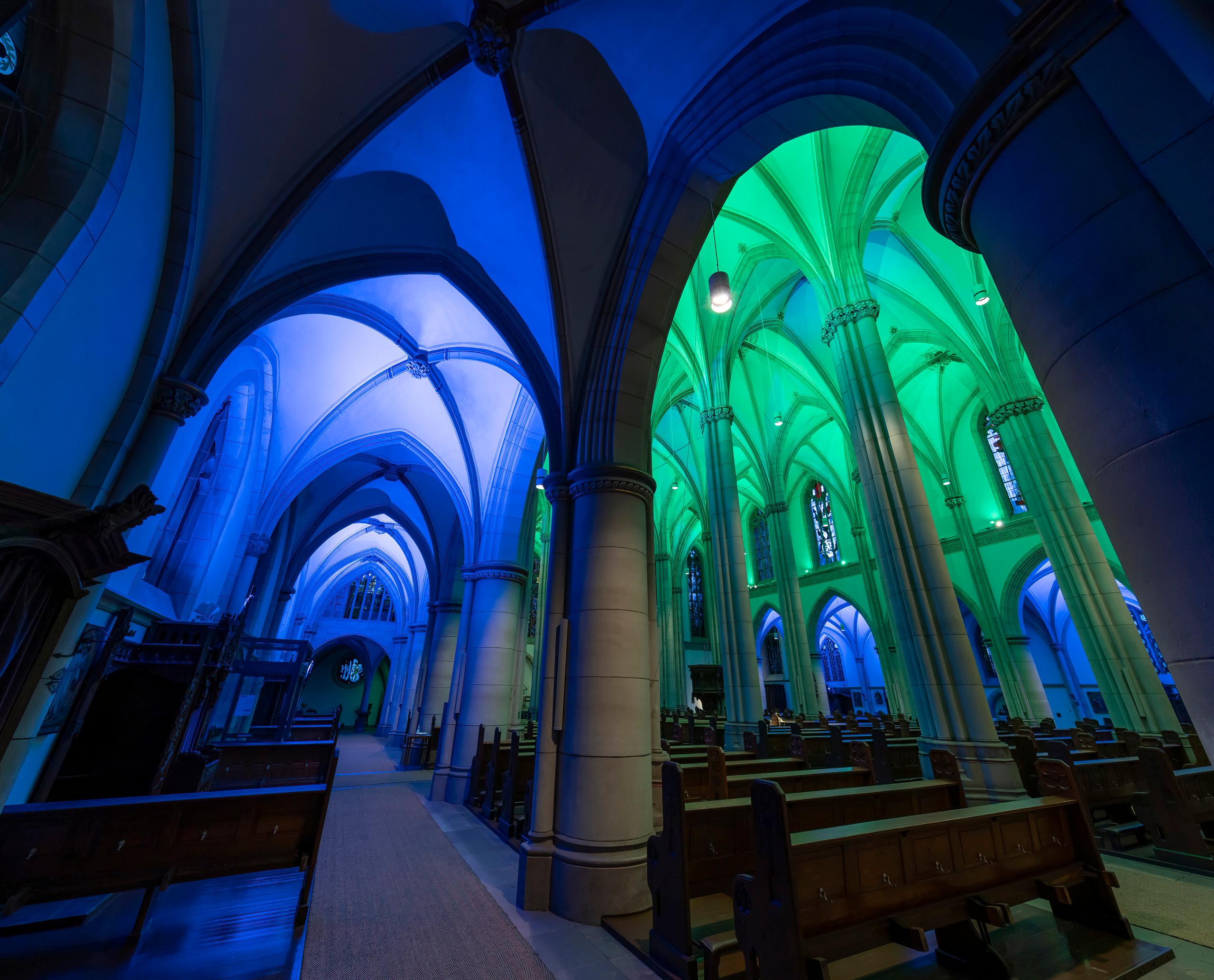
An additional layer is opened up by the indirect RGBW lighting with spotlights from the Parscan New family. It is used in particular for concerts and special events and makes a variety of colored light moods possible. This gives the historic church an intentionally contemporary tool for its wide range of uses: the light can appear discreet and contemplative, but it can equally become an atmospheric component of a staging.
Decisive for the choice of ERCO was the interplay of precision, flexibility, and high lighting quality. Different light distributions make it possible to direct light specifically onto individual areas, objects, or architectural elements. At the same time, the luminaires themselves recede visually behind the architecture and let their effect do the talking.
Long-term quality also played a role. High-quality, durable luminaires were required. Efficient LED technology, a long service life, and precise light control therefore combine the design requirements with the demand for an economical lighting solution usable over the long term.
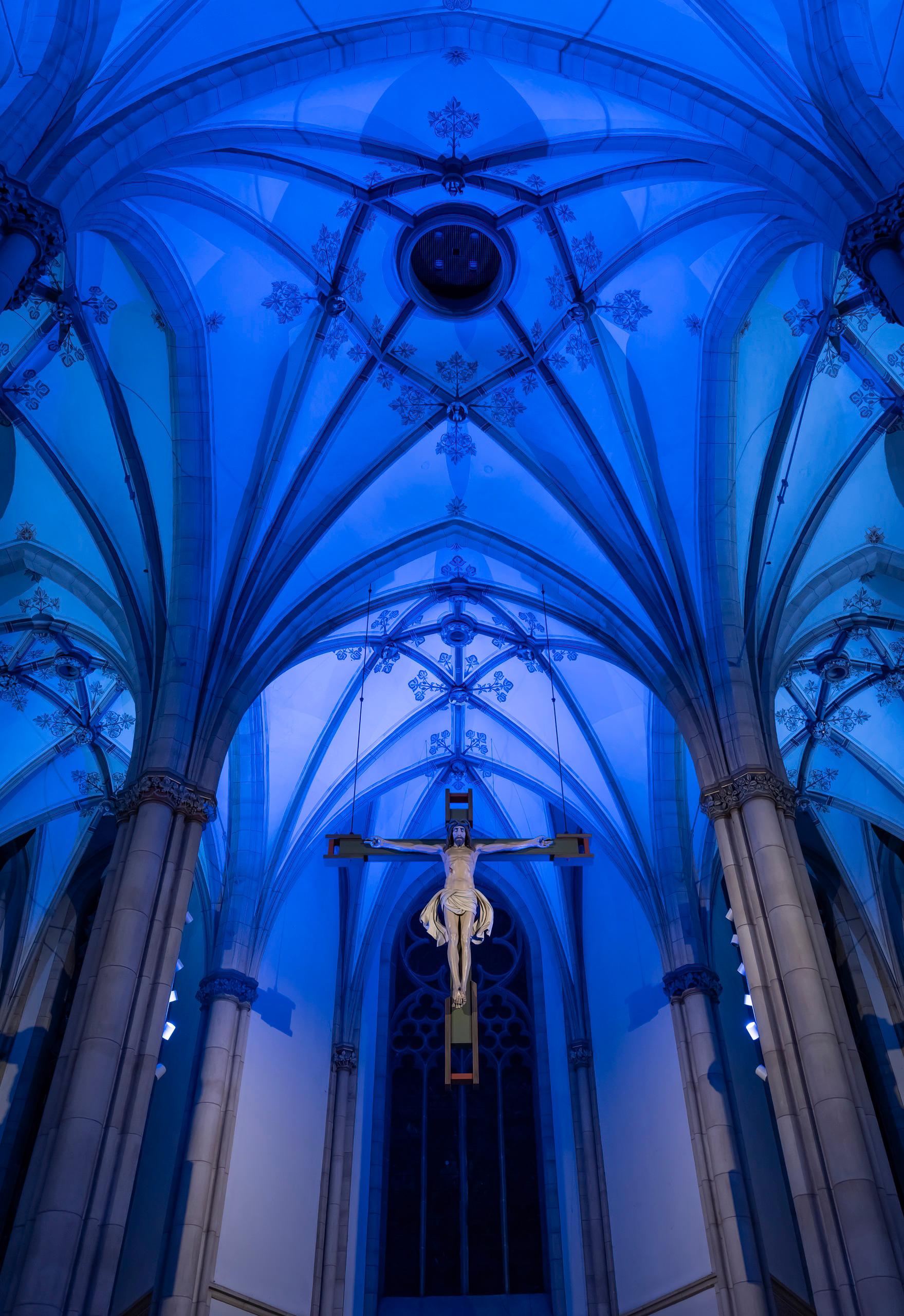

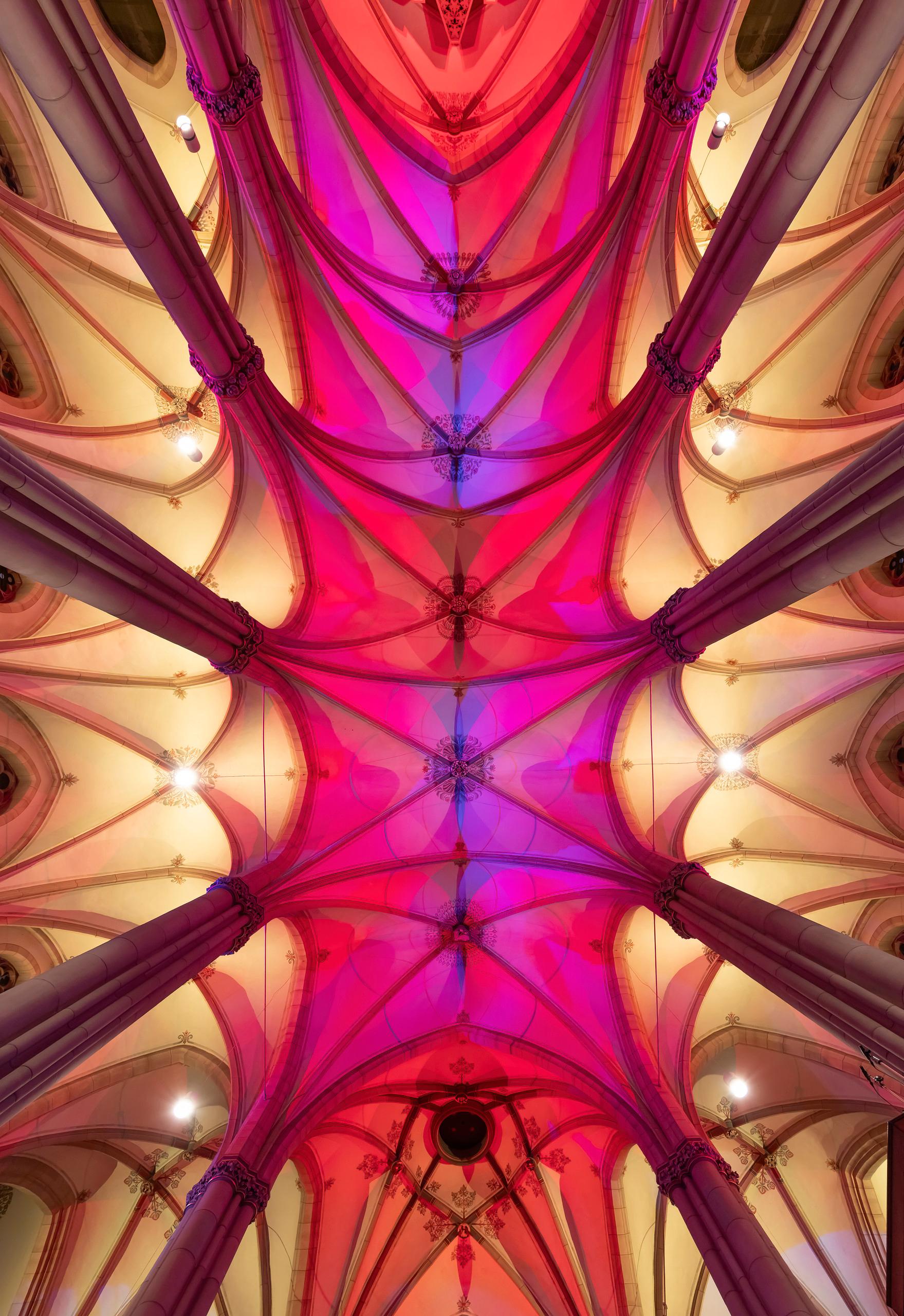
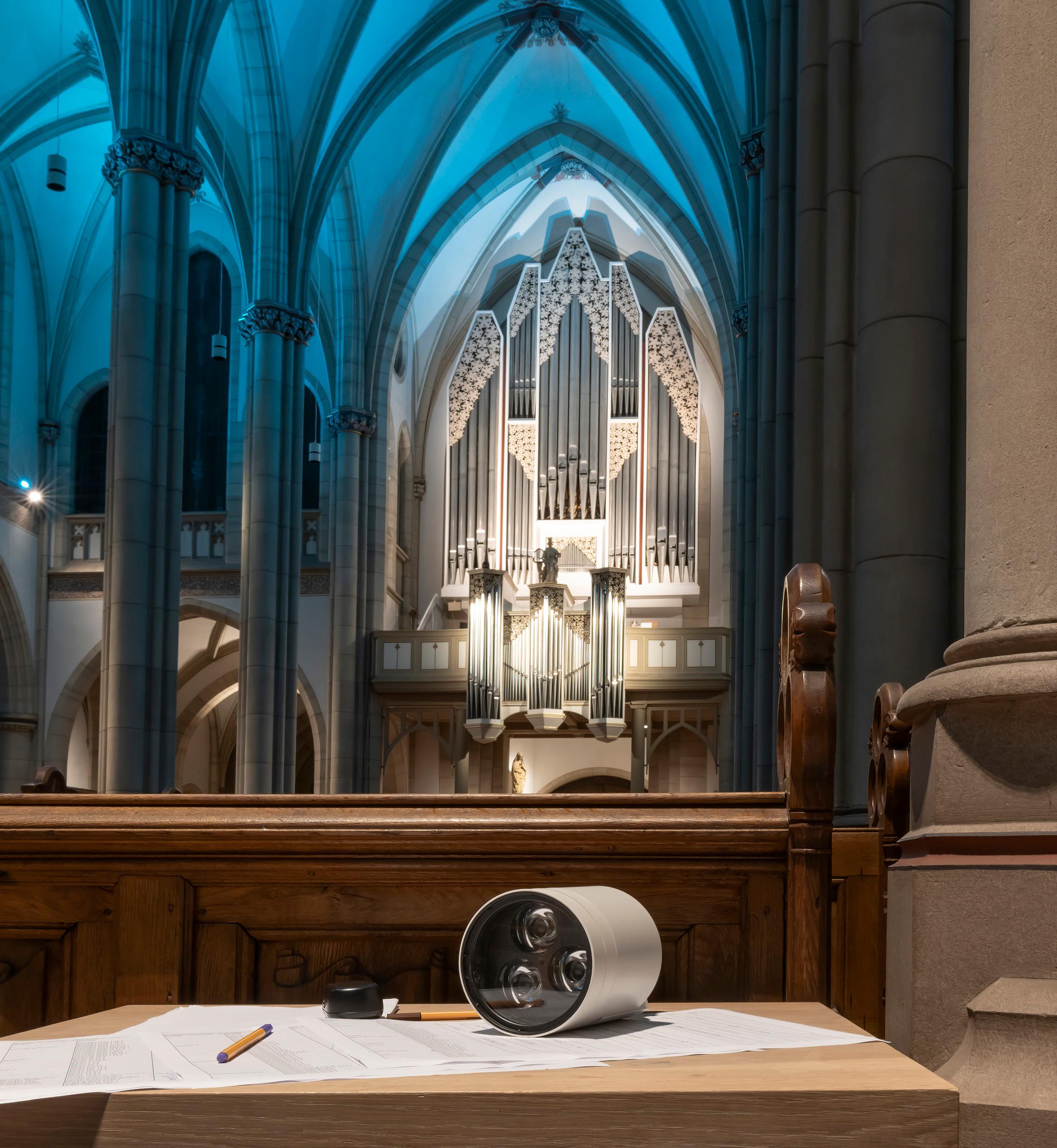
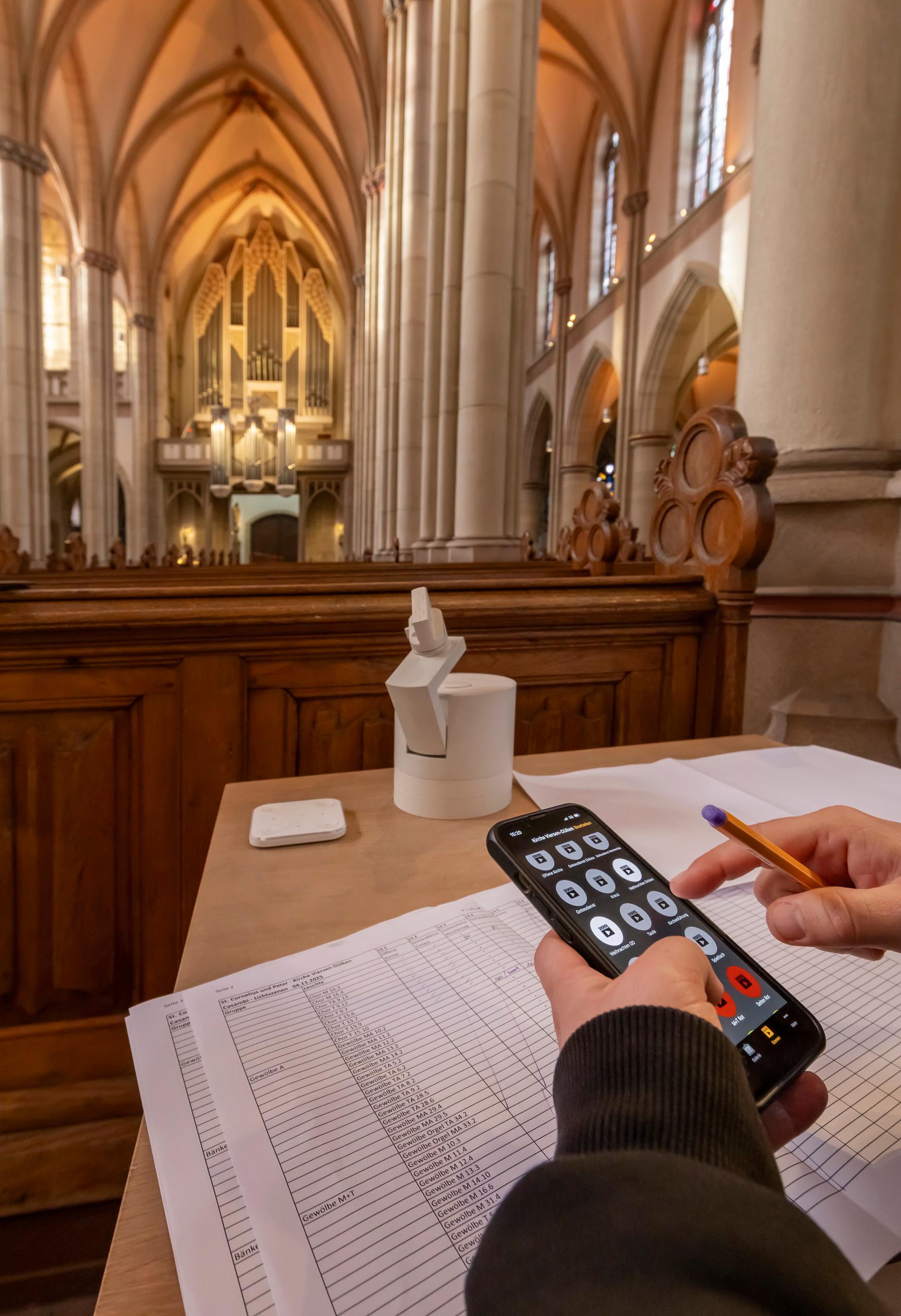
The new lighting concept makes the different facets of St. Cornelius visible. Light structures the monumental architecture, emphasizes the liturgically important places, and creates the flexibility needed for a diverse parish life. Depending on the occasion, the space can be staged as quiet and contemplative, clearly oriented toward the liturgy, or atmospheric for cultural events.
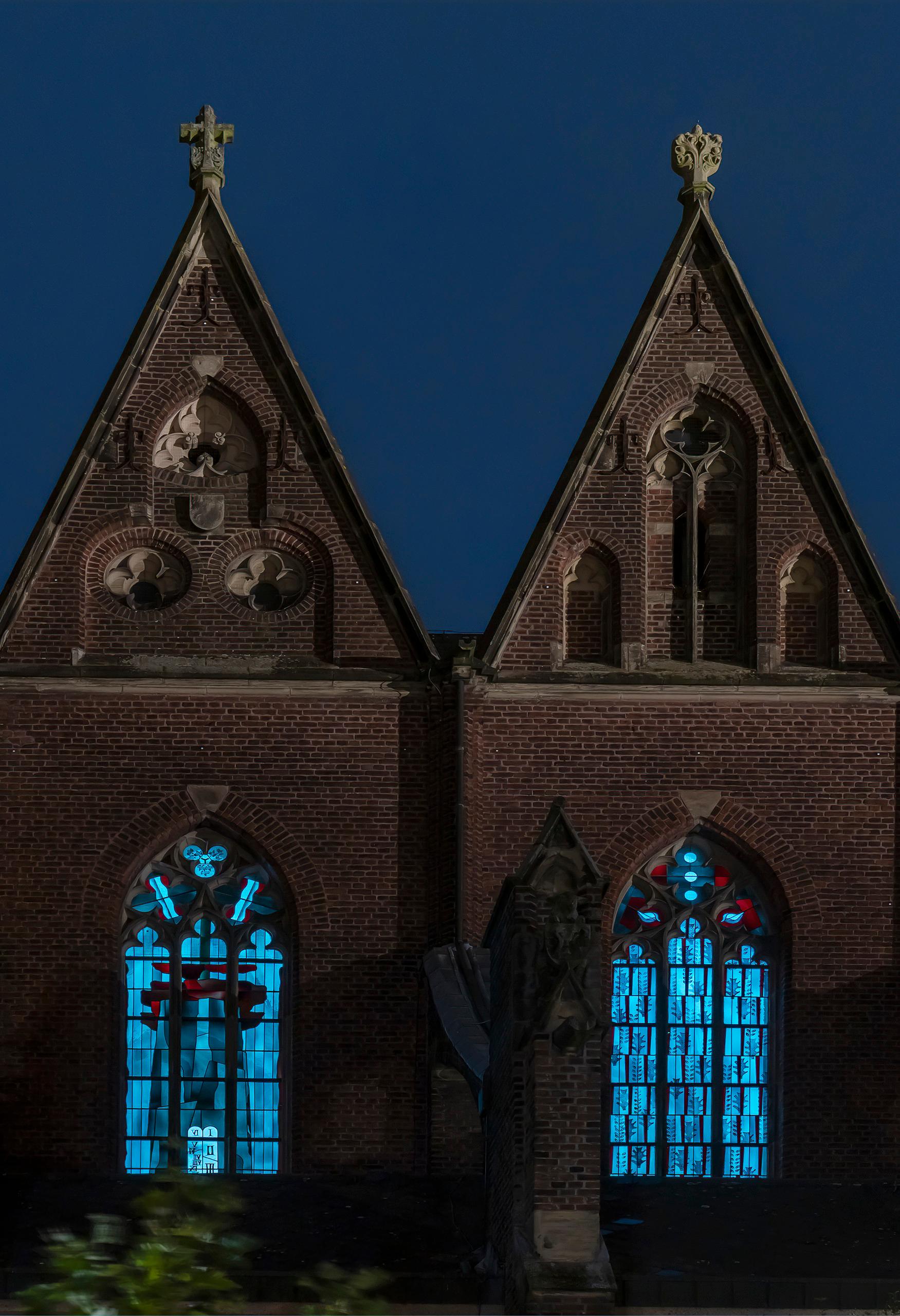
In this way, the lighting supports a fundamental idea of the project: to preserve the historic identity of St. Cornelius while at the same time opening the church interior to present-day and future uses. The ERCO lighting tools intentionally recede into the background. What becomes visible is the light, and with it the distinctive architecture of the space.