Assessing lighting quality: more than just illuminance
Don't plan lighting on the basis of measured values alone. Illuminance offers guidance, but it does not describe the quality of a space.
So ask your customers how they want to experience the space. Where and how do they feel safe, focused, or at ease?
Only when you combine measurable requirements with perception, atmosphere, and use does light create quality of life.
Test the difference
Ask your clients questions!
Good light in the project
- Are there requirements for glare control, contrast, modeling, and color rendering?
- Where do you need particularly good visual comfort?
- Goal: a shared understanding of lighting quality
A good lighting designer can answer these questions clearly, concretely, and vividly—not only in technical terms, but also in images and effects.
Good light with low life-cycle costs
Define early on what "good light" means in your customer's project.
Talk not only about luminaires, but also about the quality of perception.
Which areas should be clearly visible? Where is calm, orientation, or concentration required?
Which zones of the space should be modeled, emphasized, or intentionally held back?
Define the requirements for glare control. Examine the viewing directions from which users look toward luminaires, bright surfaces, or reflective surfaces.


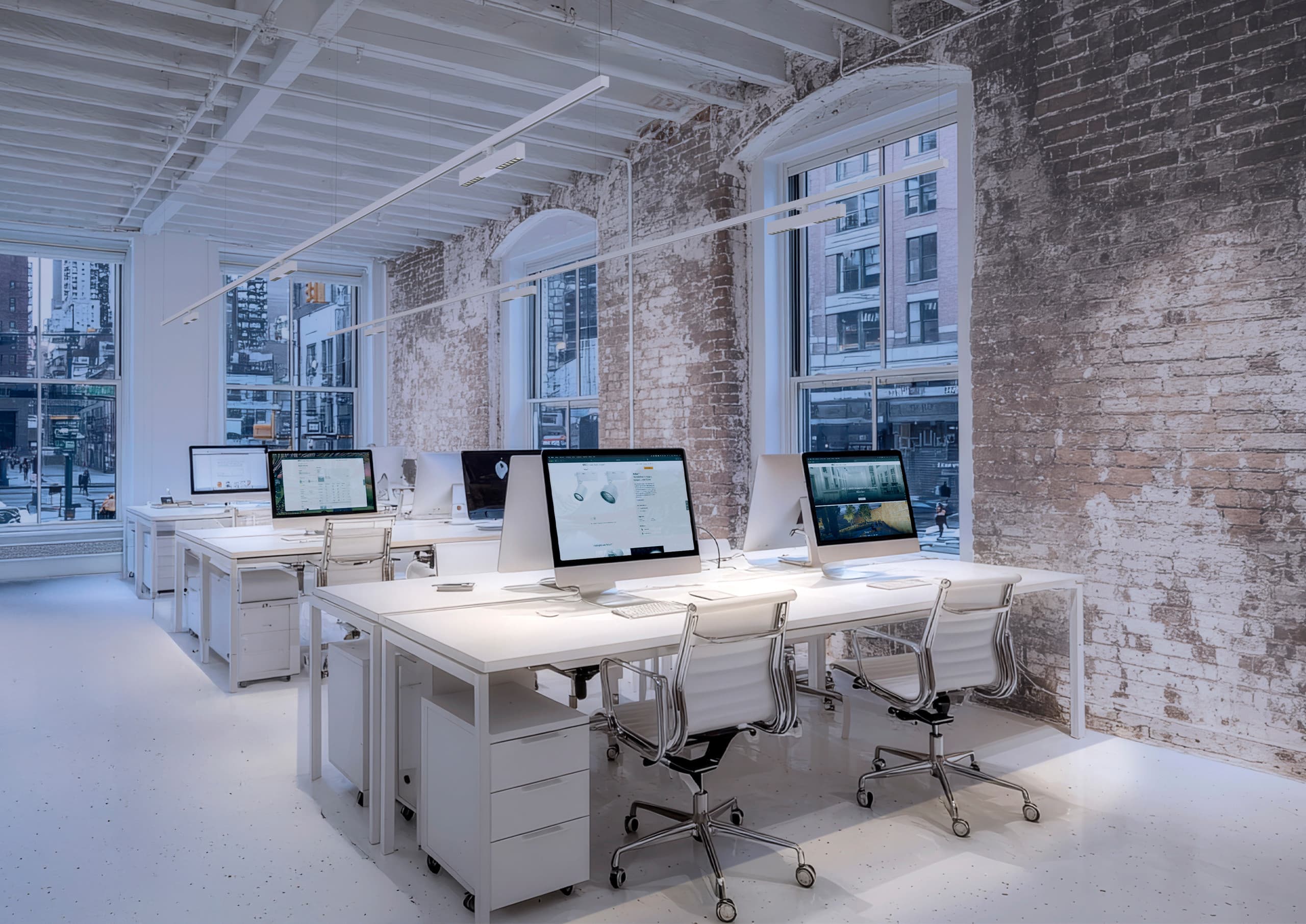
Workstations
Define the requirements for glare control. Examine the viewing directions from which users look toward luminaires, bright surfaces, or reflective surfaces. Pay particular attention to workstations, screens, glossy materials, mirrors, and glass surfaces. Good lighting remains pleasant even when a space is used for extended periods. Assess contrast and modeling. Too little contrast makes spaces appear flat, while shadows that are too strong can be distracting.
Test the lighting effect
Combine it with a soft general lighting when the space needs to provide both orientation and atmosphere.
Pay attention to color rendering. Colors, materials, skin tones, food, merchandise, or works of art must appear natural and of high quality.
Match light color and color rendering to the use, the architecture, and the desired atmosphere.
Take normative requirements into account, for example for workplaces, circulation areas, or safety-relevant areas.
Standards should be used as a minimum benchmark, not as a design objective.
Visual comfort only arises when measured values, visual tasks, spatial impact, and well-being come together.
Work with your clients to develop a shared understanding of lighting quality.
Show examples, visualizations, or samples. This makes lighting quality tangible, easier to evaluate, and part of the architectural design.
Explain the life cycle costs transparently.
You can now evaluate lighting quality!
The most important points
- 1Evaluate lighting quality not by illuminance alone, but together with perception, atmosphere, and use.
- 2Combine directional light for contrast and modeling with a soft general lighting for orientation and atmosphere.
- 3Use standards as a minimum benchmark, not as a design objective – visual comfort only begins beyond them.
Next lesson