Luminance: definition and unit of measure
Luminance (L) describes the brightness perceived by the human eye of a surface that, as a light source or through transmission or reflection, emits light. Luminance is defined as the ratio of luminous intensity (I) to the area projected perpendicular to the direction of observation (Ap). The photometric unit is candela per square foot meter (cd/ sq ft)

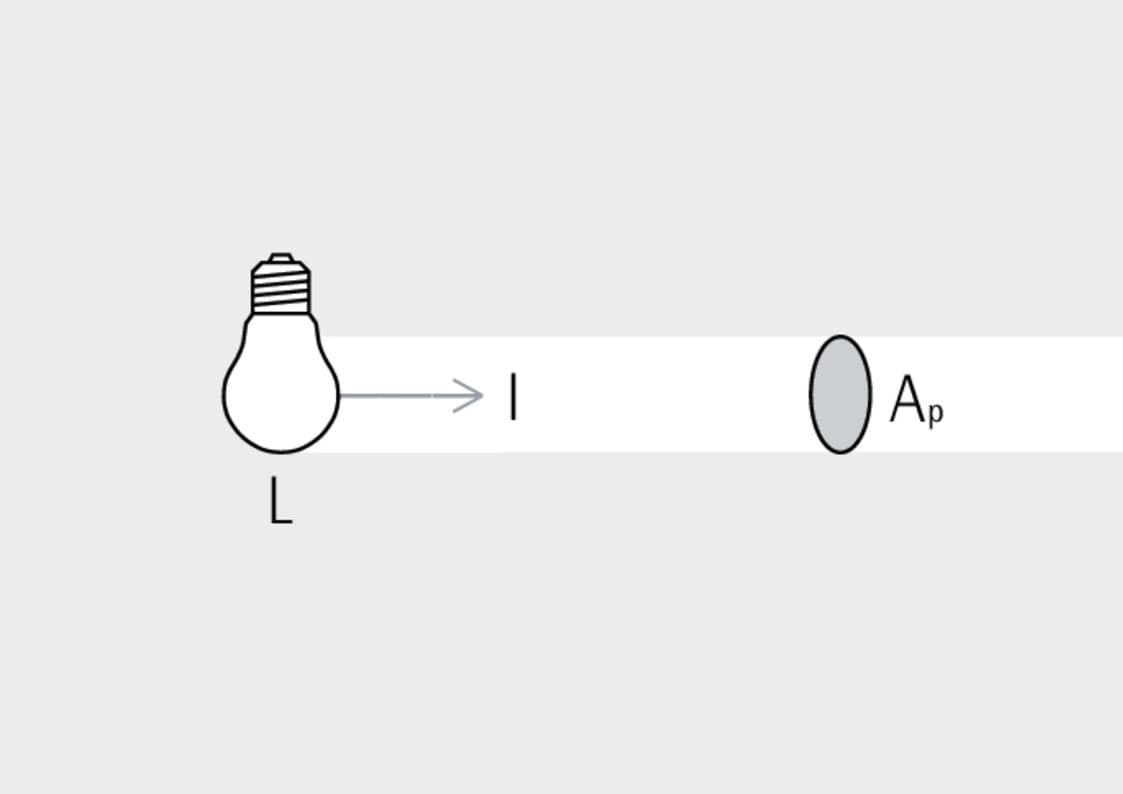


What is luminance?
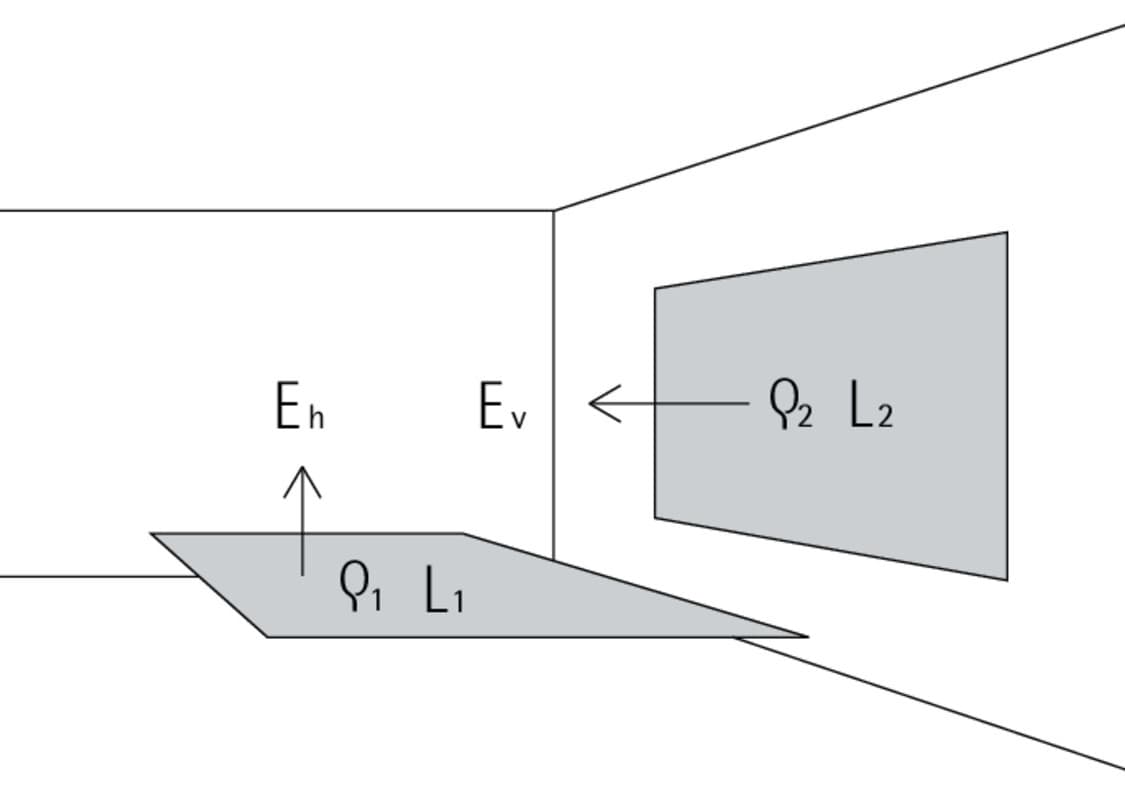
While illuminance (E) is the light incident on a surface, the luminance (L) describes the light radiating from this surface. The light can radiate from the surface itself, for example from a lamp, but it can also be reflected or transmitted from a surface. For diffuse reflecting (matt) and diffuse transmitting (opaque) materials, the luminance can be calculated from the illuminance and the reflectivity- or transmittance factor.
Luminance thus forms the basis of the perceived brightness; however, the actual impression of brightness is still influenced by the state of adaptation of the eye, the peripheral contrast ratios and the information content of the surface seen.
Interesting!
Luminance is the only photometric parameter perceived directly by the human eye.


