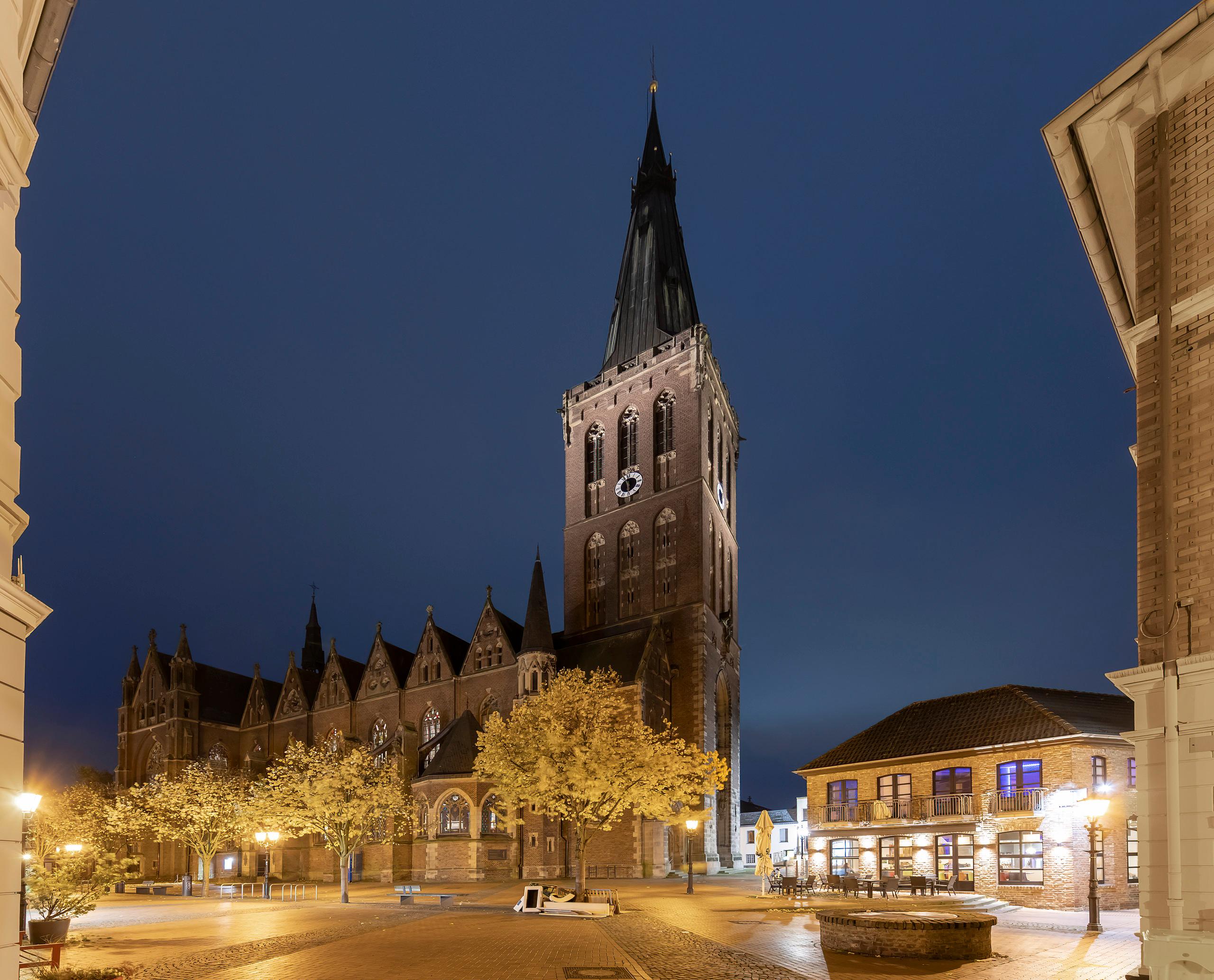
Light for liturgy, architecture, and culture: St. Cornelius Parish Church in Viersen-Dülken
Frieder Blickle
Monumental brick architecture, lofty vaults, and a church tower visible from afar define St. Cornelius Parish Church in Viersen-Dülken. Built to designs by Cologne architect Heinrich Wiethase, the neo-Gothic church was erected in two construction phases, from 1873 to 1875 and from 1905 to 1906. Its five-aisled nave combines elements of a hall church with those of a basilica. The bell tower, standing around 85 metres tall, keeps this heritage-protected building a landmark in Dülken's townscape to this day.
Yet St. Cornelius is far more than a historic monument. As the parish church of the St. Cornelius and Peter parish, it is both a spiritual centre and an open place of encounter. Alongside church services, it hosts exhibitions, readings, and concerts of sacred and secular music. The lighting therefore had to meet a range of requirements: it was to showcase the neo-Gothic architecture with sensitivity, clearly define the liturgical areas, and remain flexible enough for changing events.
Five aisles, lofty vaults, piers, arches, and large window surfaces lend St. Cornelius a pronounced sense of spatial depth. The challenge lay in making these dimensions perceptible after dark without dominating the historic space with visible technology. In a church interior shaped by heritage, in particular, it should not be the luminaire itself that takes centre stage, but rather the effect of its light.
Rather than merely illuminating the interior evenly, the lighting therefore follows a differentiated approach: the light models the architecture, provides orientation, and draws attention to the key areas and elements of the sacred space. The altar and ambo, cross, chancel, or artworks can be specifically highlighted, while other zones are illuminated with greater restraint. This creates a hierarchy of perception that frames the chancel as the spiritual centre of the church interior.
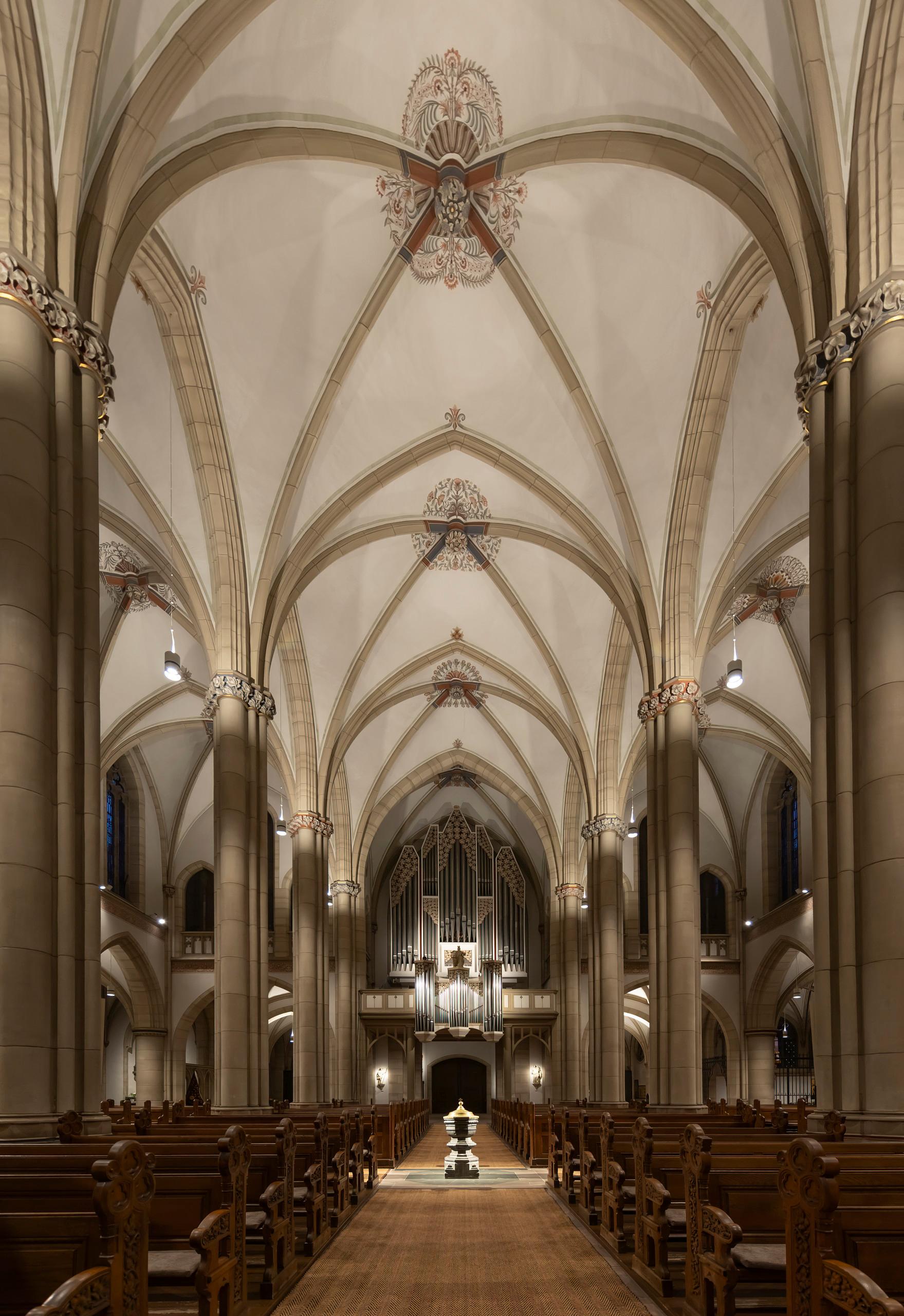

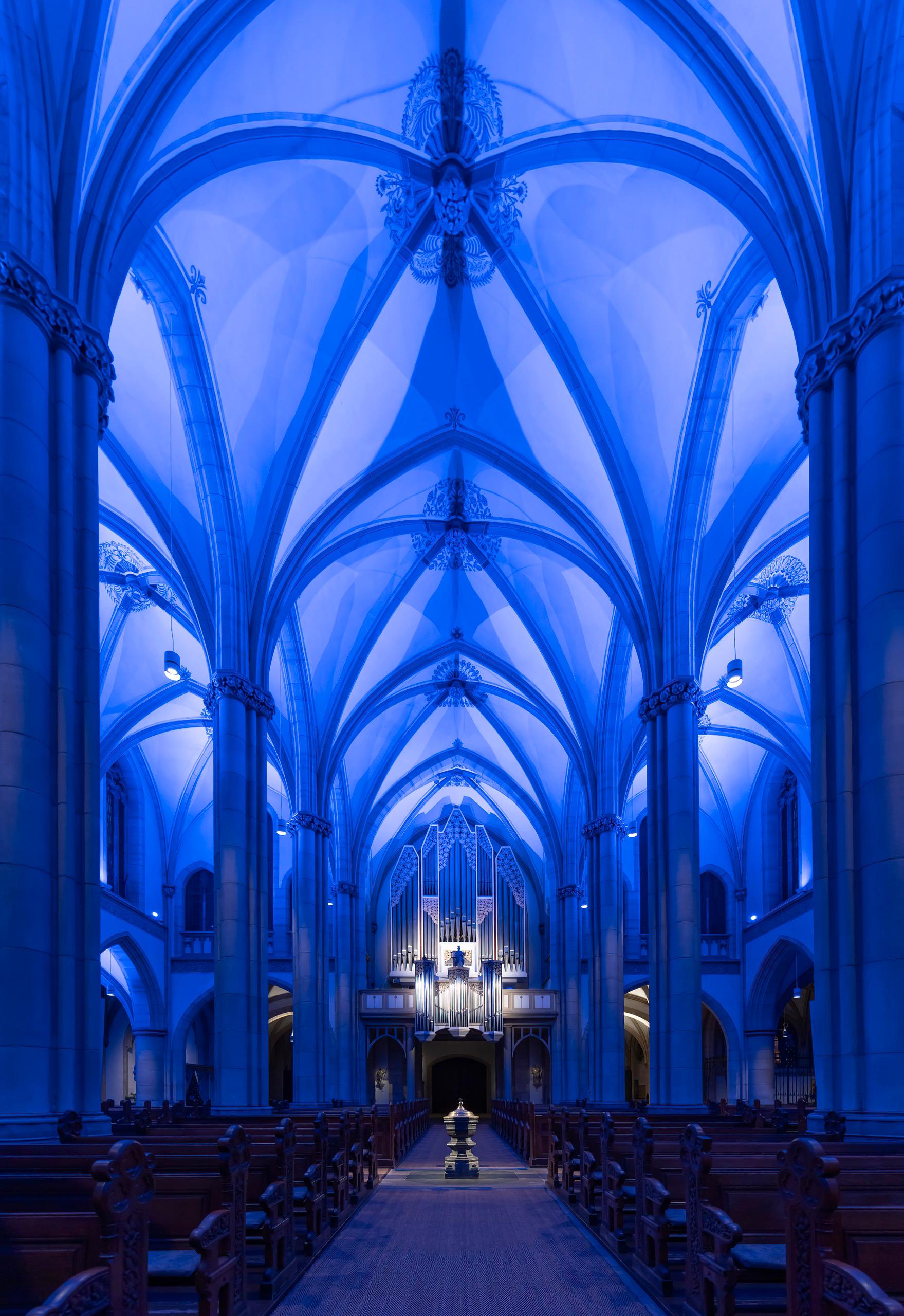
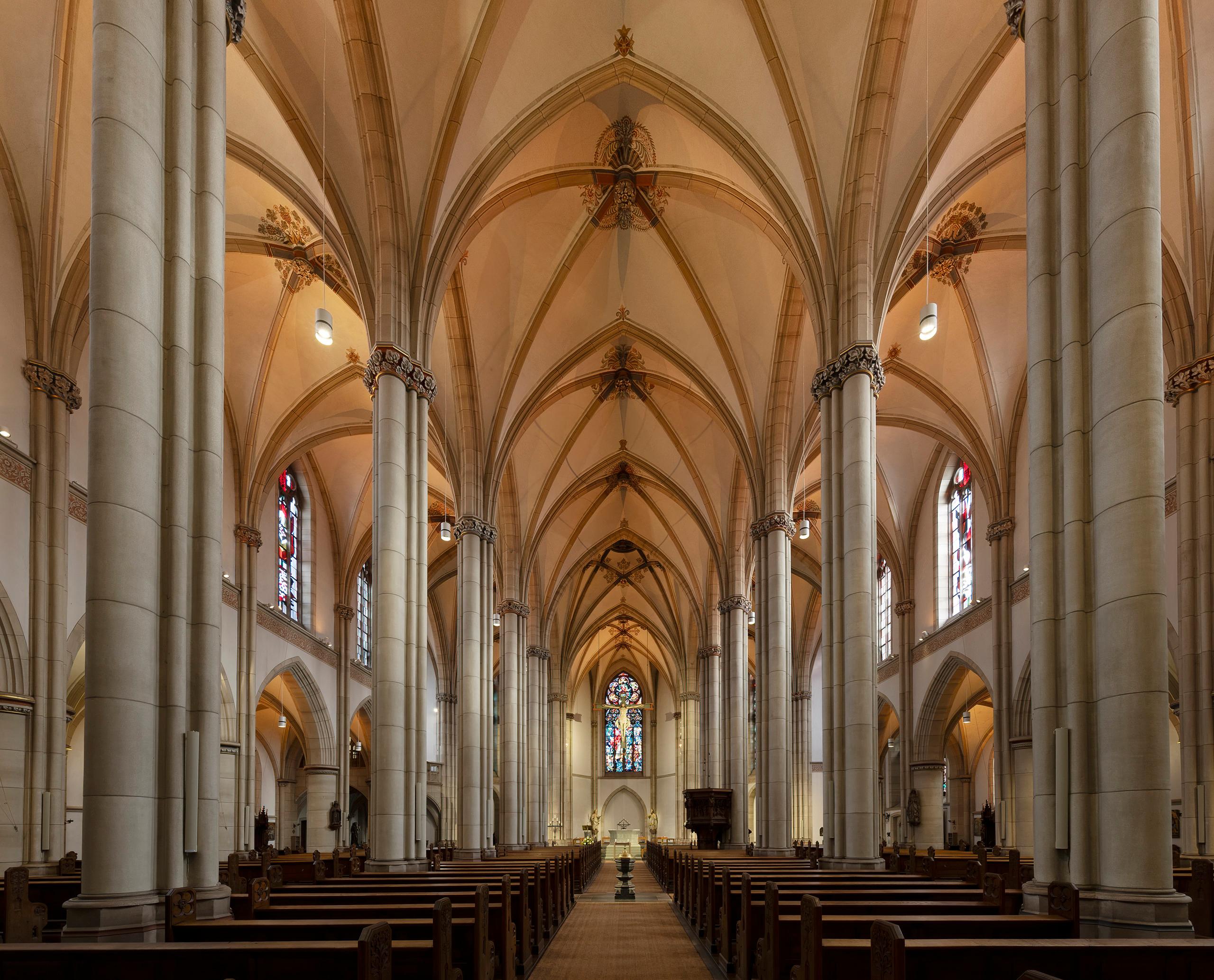
The lighting solution is based on a combination of tracks with spotlights and Atrium double focus pendant luminaires. Warm white light at 3000K forms the foundation of the lighting. The precise optics of the ERCO lighting tools direct the light specifically onto the surfaces and areas where it is needed. Unwanted stray light is reduced, while carefully considered contrasts in brightness can emphasise the architecture and the liturgically significant elements. In a sacred space in particular, this controlled handling of light is crucial. Excessive or undifferentiated brightness would disturb the contemplative atmosphere. The differentiated lighting, by contrast, supports both the perception of the spatial proportions and orientation, and makes it possible to set varying spatial focal points with light.
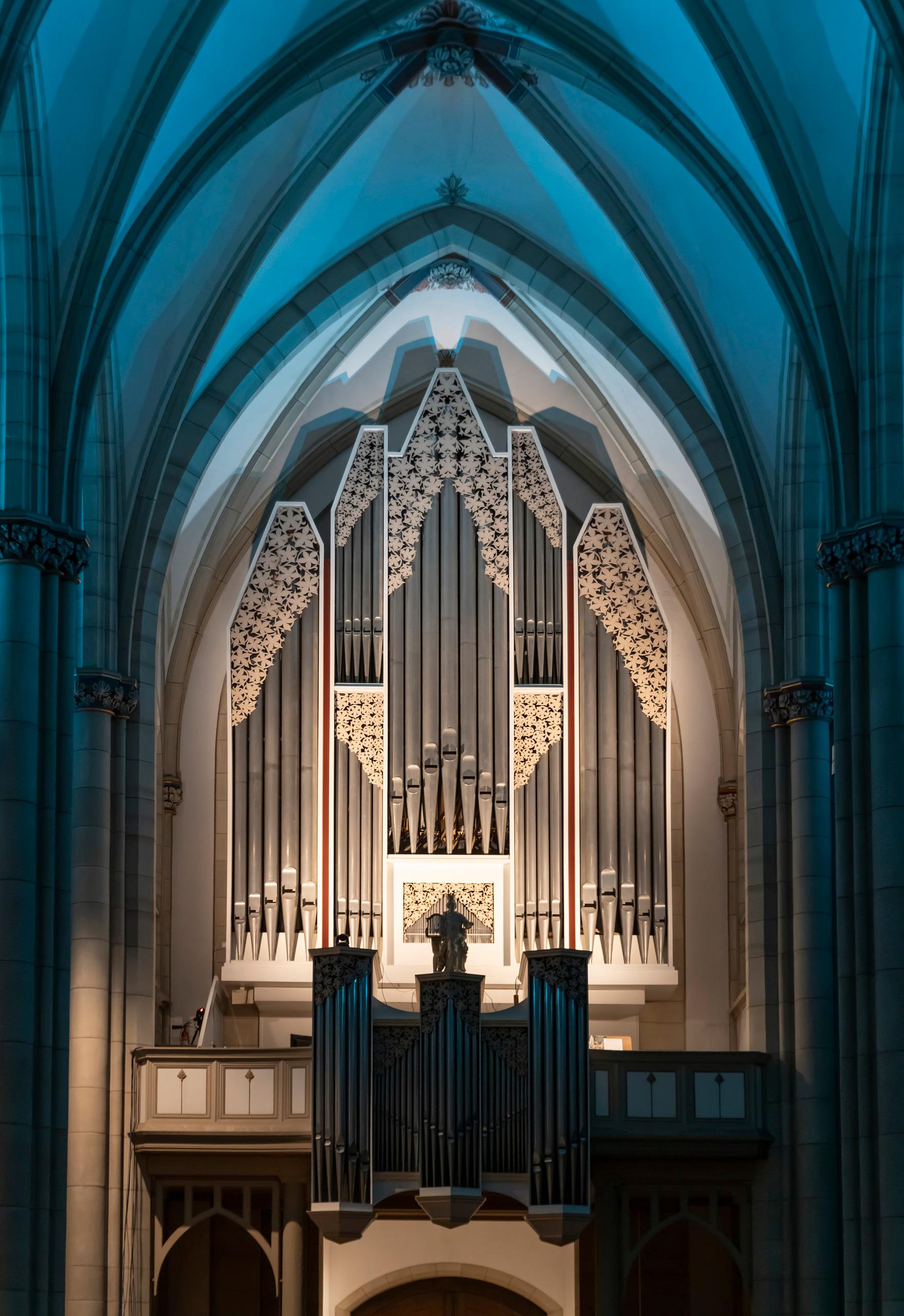
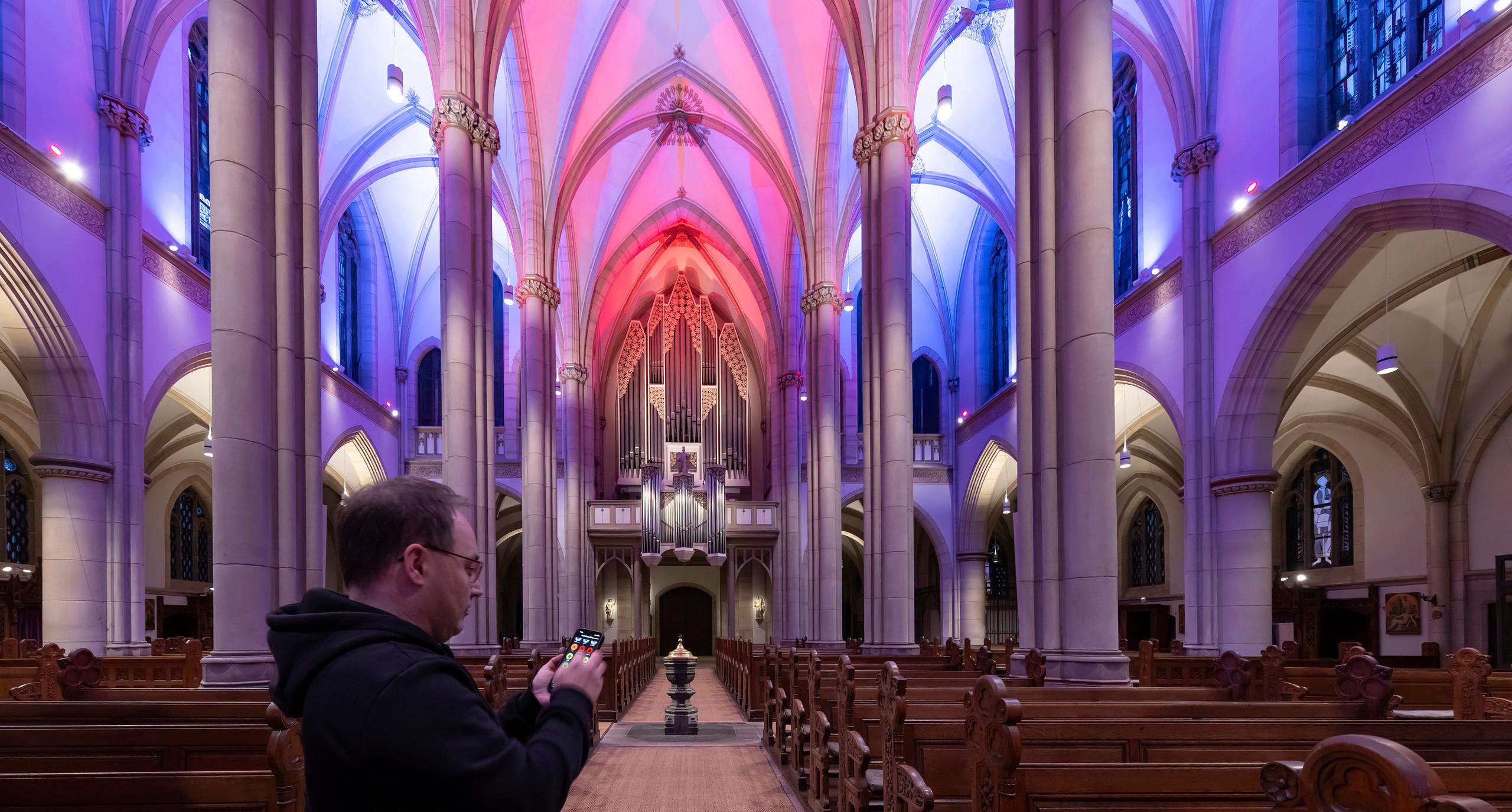
A church of the 21st century, however, requires more than a single static lighting scenario. St. Cornelius is used for church services just as it is for exhibitions, readings, and concerts. The atmosphere should likewise be able to change with corresponding flexibility. For services and moments of personal reflection, a calm and focused light mood can be created. For concerts or readings, by contrast, the respective area of activity can be placed more strongly at the centre. The luminaires can be dimmed for this purpose, and a variety of light scenes can be produced. The church interior thus changes its character without losing its architectural identity.
An additional dimension is opened up by the indirect RGBW lighting using spotlights from the Parscan New family. It is employed in particular for concerts and special events and enables a variety of coloured light moods. This gives the historic church an intentionally contemporary tool for its varied use: the light can appear restrained and contemplative, yet equally become an atmospheric component of a staging.
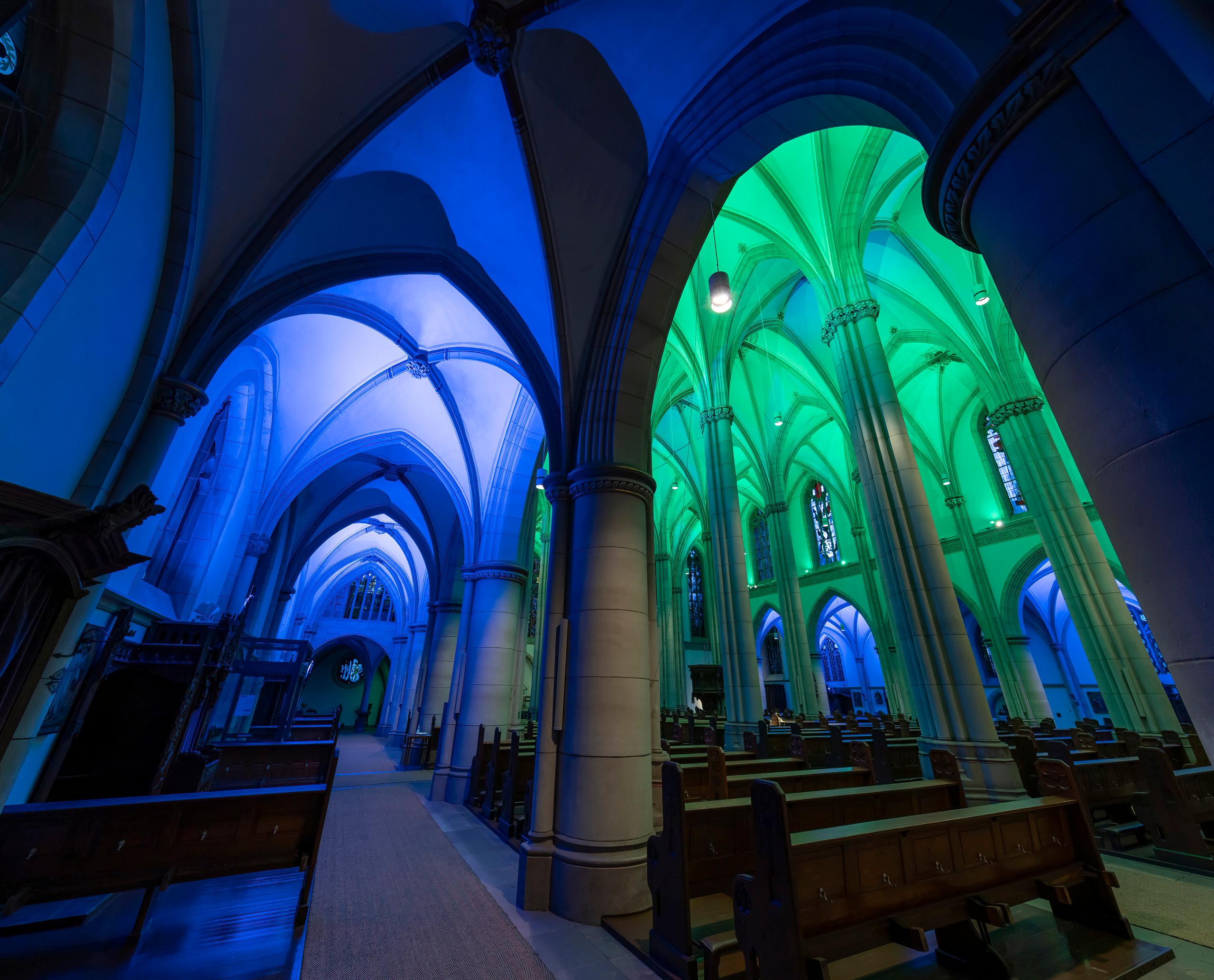
Decisive in the choice of ERCO was the interplay of precision, flexibility, and high light quality. Different light distributions make it possible to direct light specifically onto individual areas, objects, or architectural elements. At the same time, the luminaires themselves visually recede behind the architecture and let their effect do the talking above all.
Long-term quality also played a role. High-quality, durable luminaires were called for. Efficient LED technology, a long service life, and precise light control therefore combine the design requirements with the demand for an economical lighting solution that can be used over the long term.
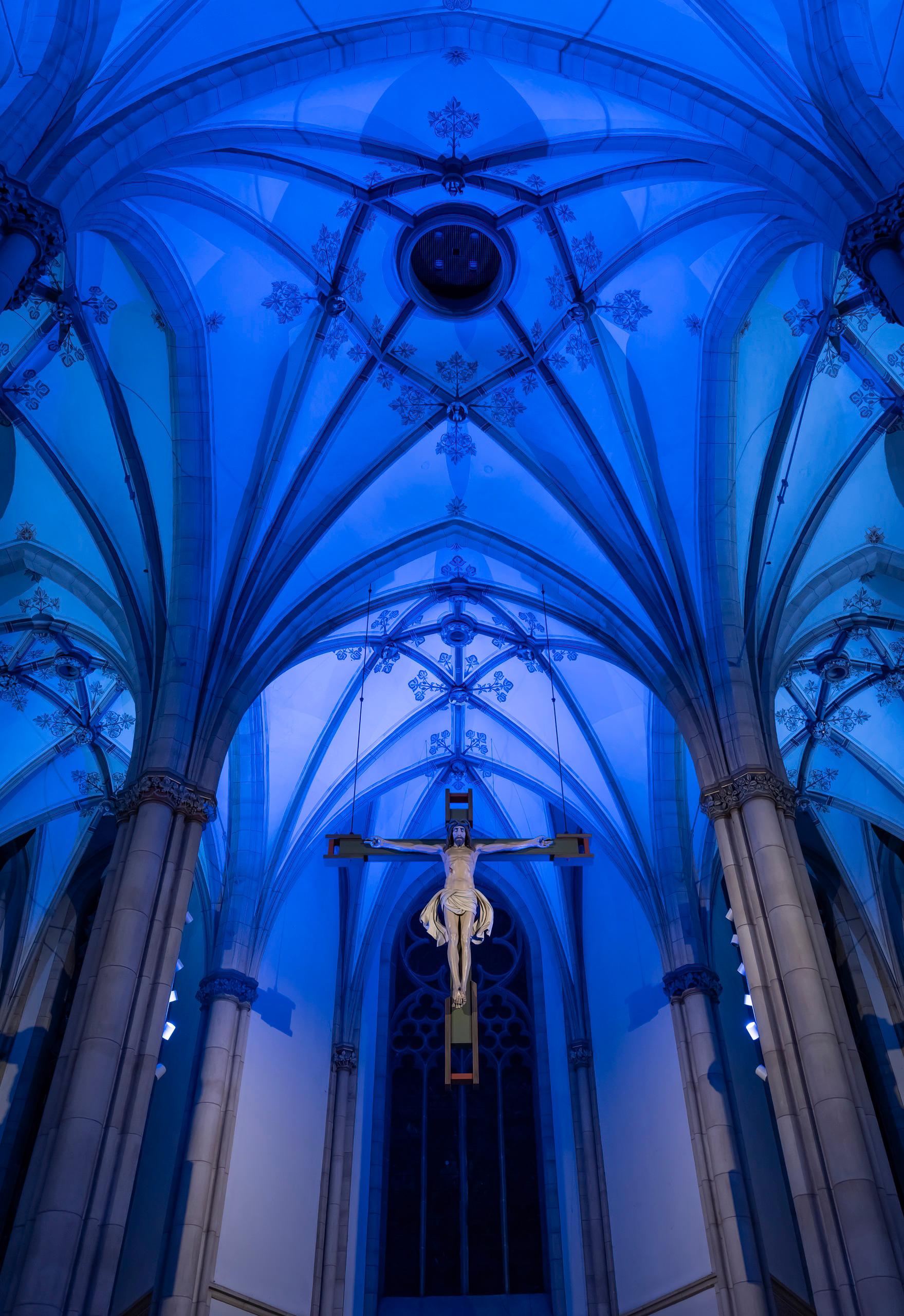

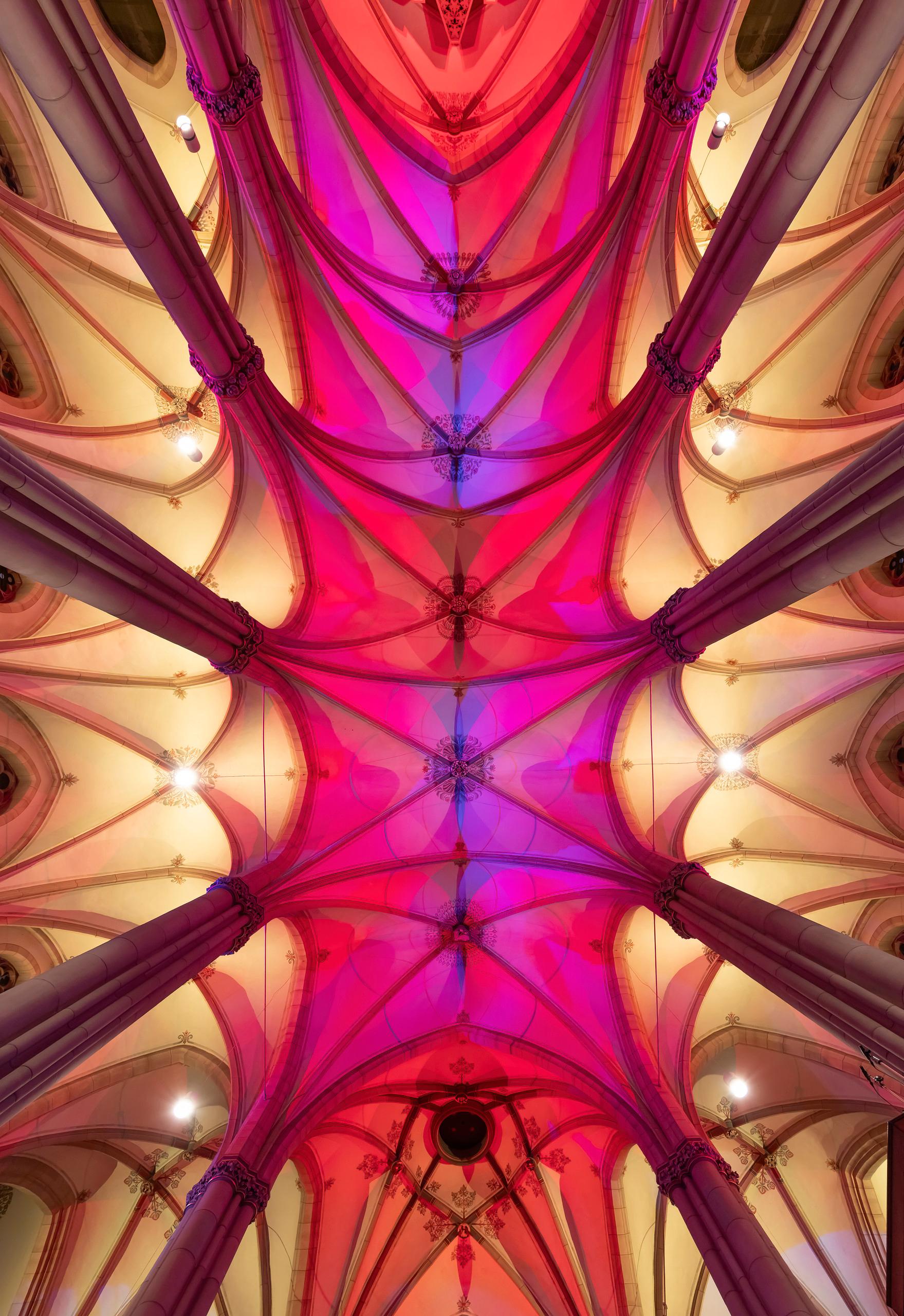
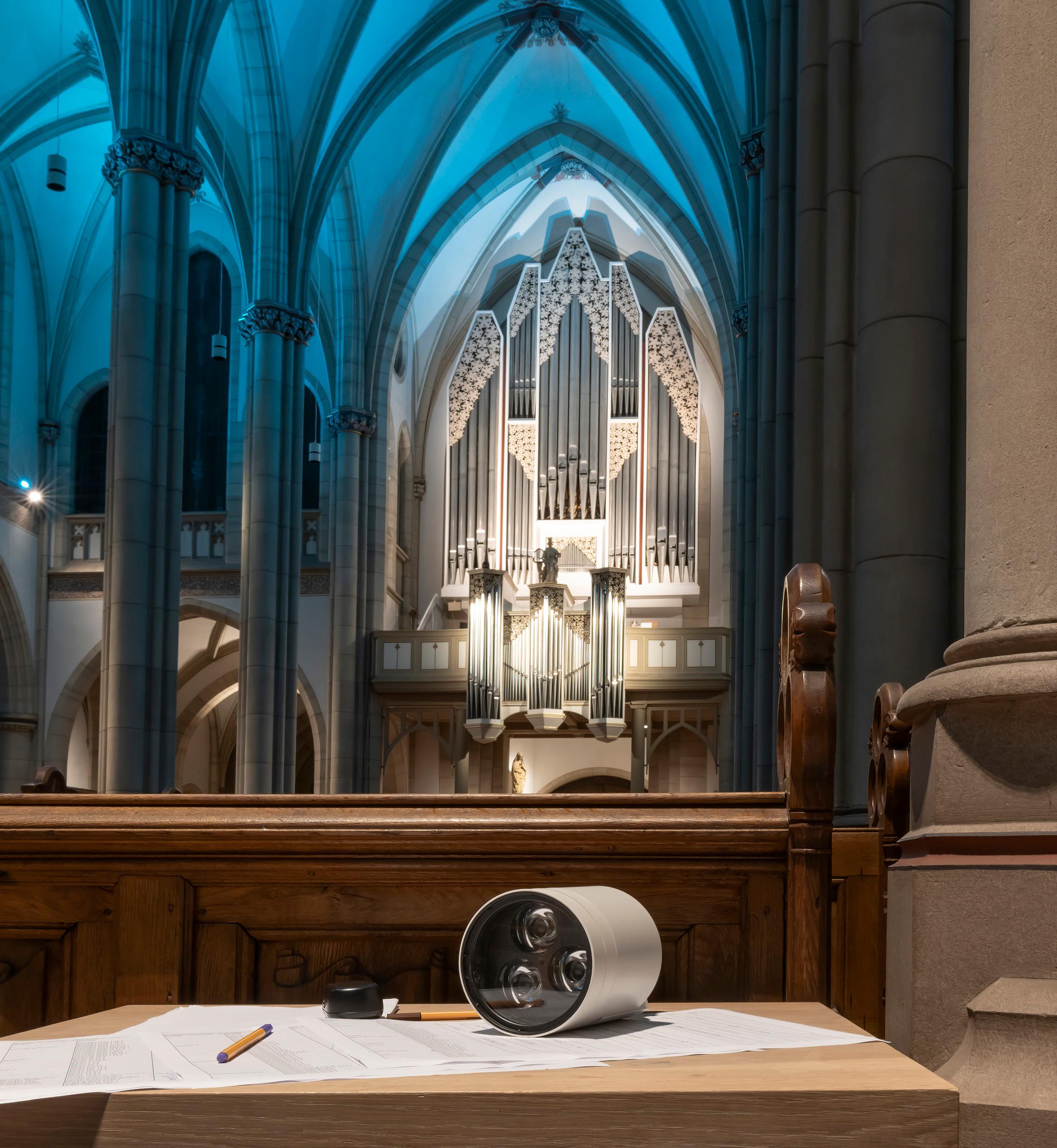
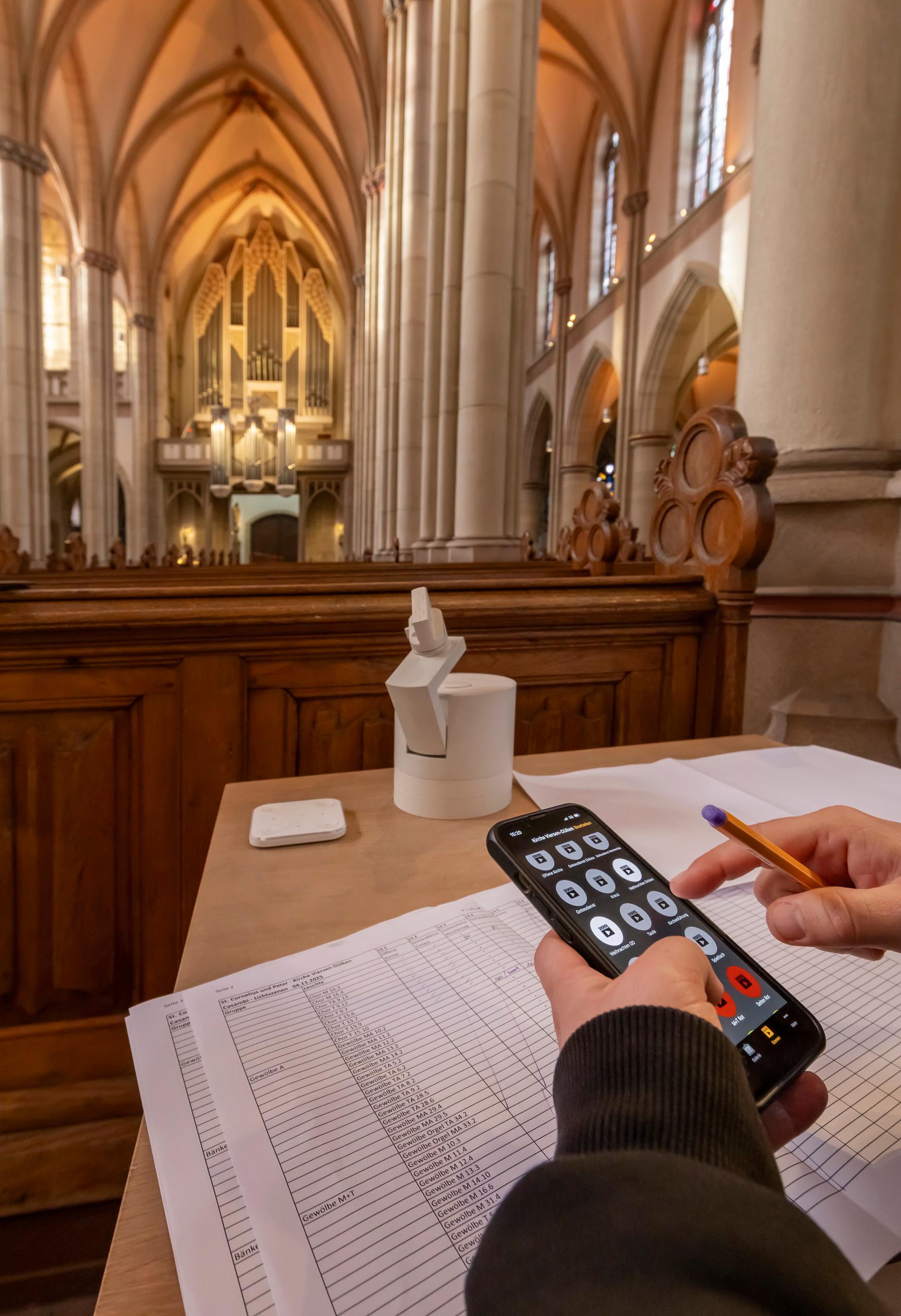
The new lighting concept makes the different facets of St. Cornelius visible. Light structures the monumental architecture, emphasises the liturgically significant areas, and creates the flexibility needed for a diverse parish life. Depending on the occasion, the space can be staged as quiet and contemplative, clearly oriented towards the liturgy, or atmospheric for cultural events.
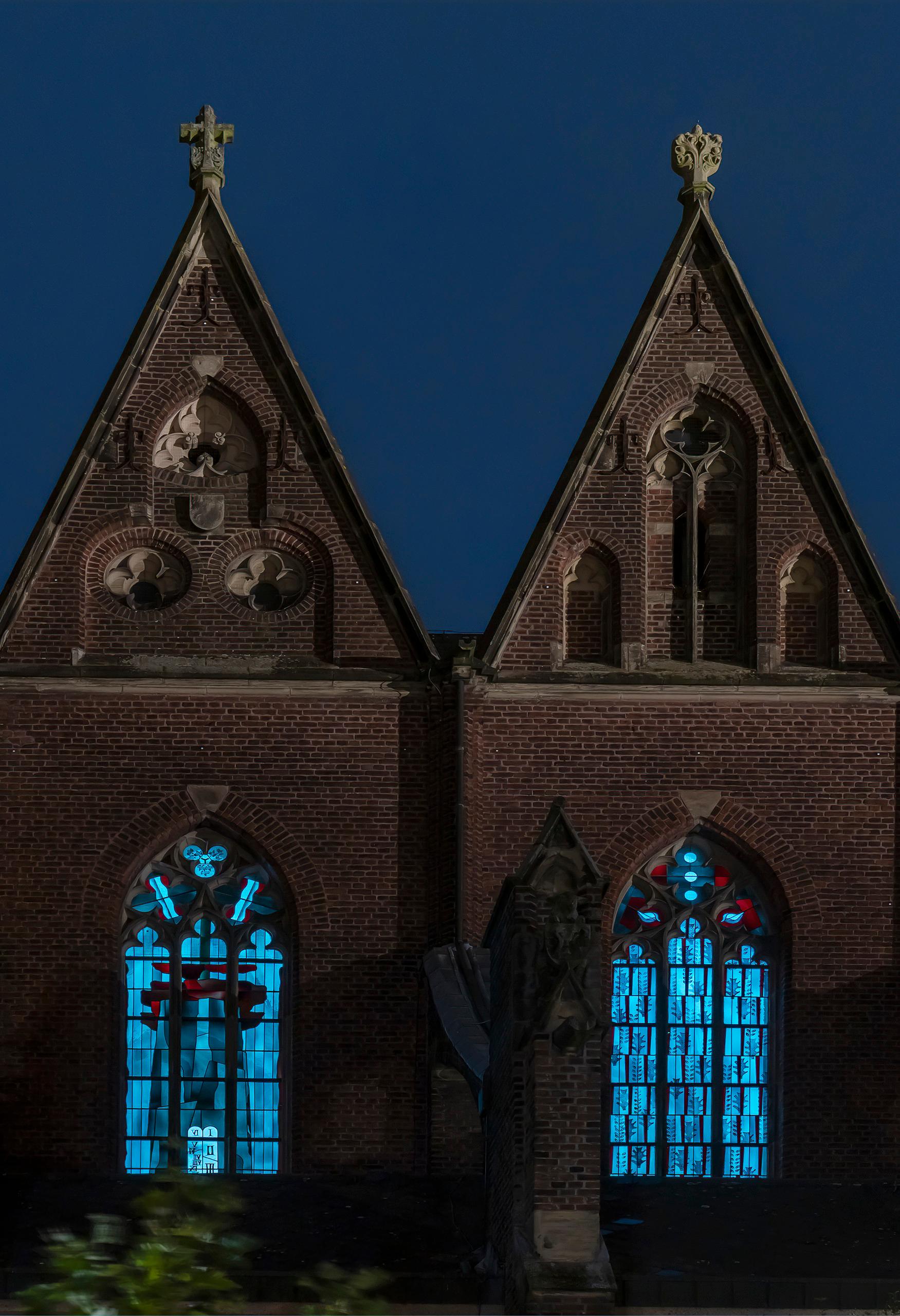
In this way, the lighting supports a fundamental idea of the project: to preserve the historic identity of St. Cornelius while at the same time opening up the church interior to present-day and future uses. The ERCO lighting tools intentionally recede into the background. What becomes visible is the light, and with it the distinctive architecture of the space.