Projection and reflection: where is the difference?
A comparison of lighting technology
Spotlights, floodlights and wallwashers are flexible and efficient lighting tools for the effective presentation of art. The quality of lighting technology is not only important for the precise distribution of light and a qualitative art experience, but also for the long-term cost-efficiency of the lighting installation.
Luminaires are efficient if the energy deployed reaches the target plane in the form of light. For this reason ERCO uses individually arranged LEDs and an in-house developed lens system consisting of collimators and interchangeable Spherolit lenses. Conventional optical systems however consist of chip-on-board (COB) LED modules and a reflector. Here several LEDs are arranged below a phosphor layer and form a large luminous surface. Not all light beams can be directed with this construction – this creates spill light (the red lines). The result - the optical system has less efficiency and precision.
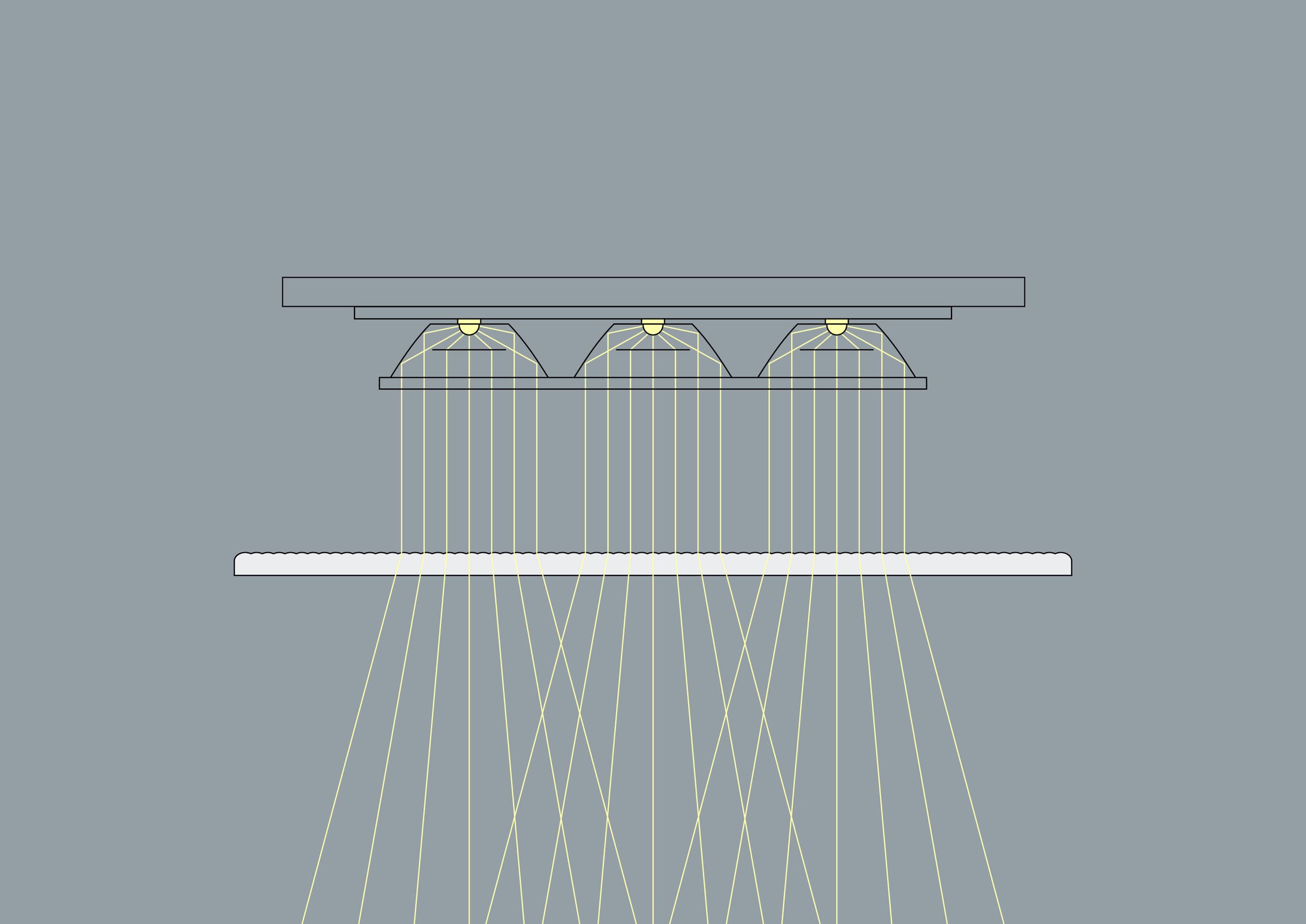
Projection: light control via lenses
Lens systems feature high precision and efficiency. High uniformity in terms of brightness and colour constancy is generated within the light beam. Imperfections or spill light losses are avoided because all light rays are guided through the lens system. This means that operators benefit from high efficiency (lx/W). Even very narrow light beams for striking accents can be implemented.
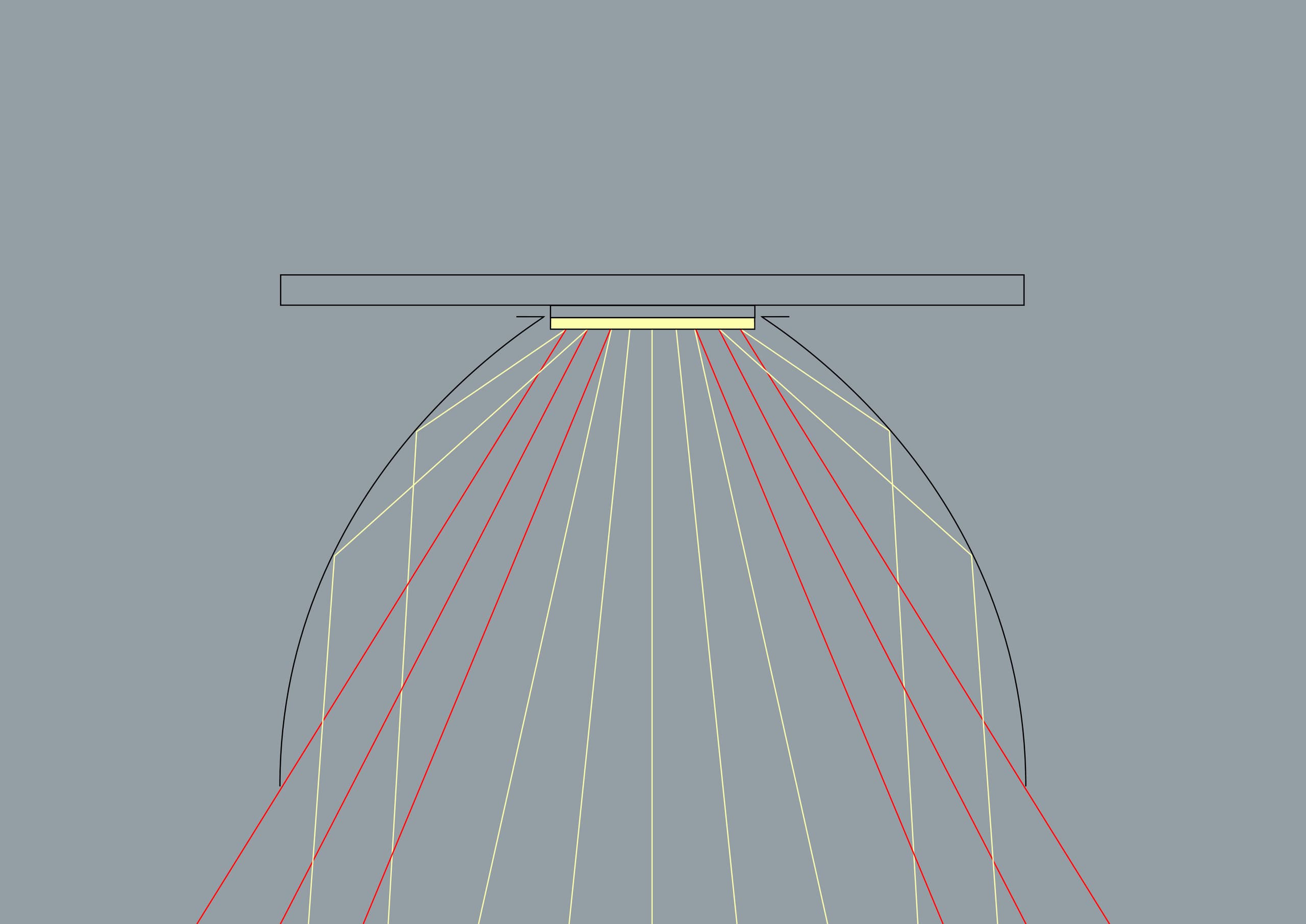
Reflection: light control via reflectors
With light control via reflectors, only the light rays emitted to the side are controlled. Therefore very narrow light beams are not possible. Furthermore, high spill light losses (red lines) or not clean beams (e.g. halos) occur. Unfocused and sometimes coloured edges to the light beams may also occur as well as a non-uniform distribution of illumination in the centre.

Wallwashing: Achieving uniformity with vertical lighting
Uniformly illuminated vertical surfaces in exhibitions are suitable for the effective display of paintings and photography. Only a few luminaires are needed for this purpose. This is demonstrated by a direct comparison of lens technology and reflector technology on a wall with a length of 10m and identical illuminance (200lx) and uniformity.
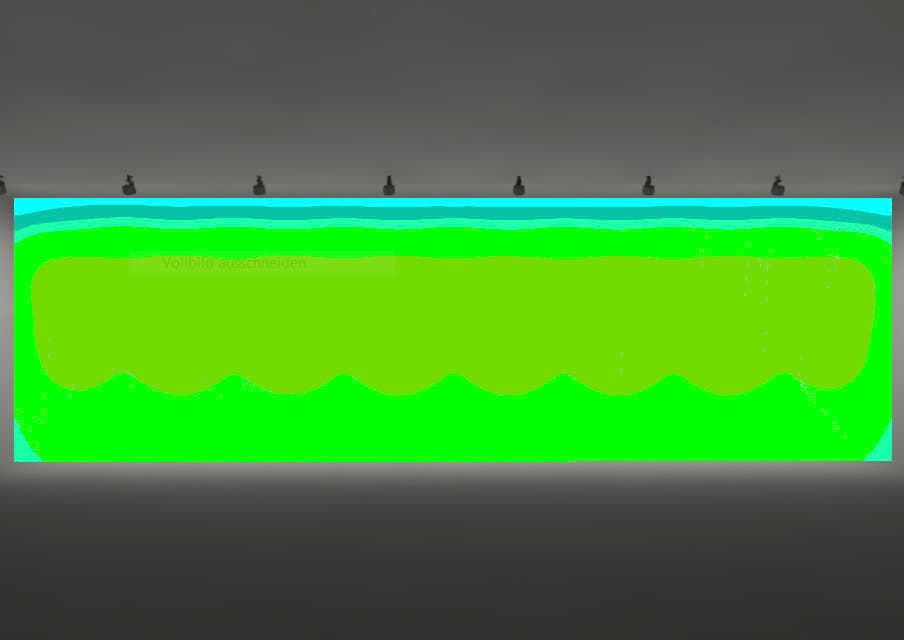
ERCO lens wallwashers enable uniform vertical lighting with wide spacing between the luminaires. Despite the spill light component, a higher quantity of wallwashers with conventional LED reflector technology is needed to achieve comparable uniformity and illuminance.
Wallwash wallwasher reflector
Wattage per area (W/m2) 4,0 8,4
Uniformity (Emin/Ē) 0,66 0,5
Luminaires per 10m of wall 8 11


Washlighting: Displaying with differentiated light distributions
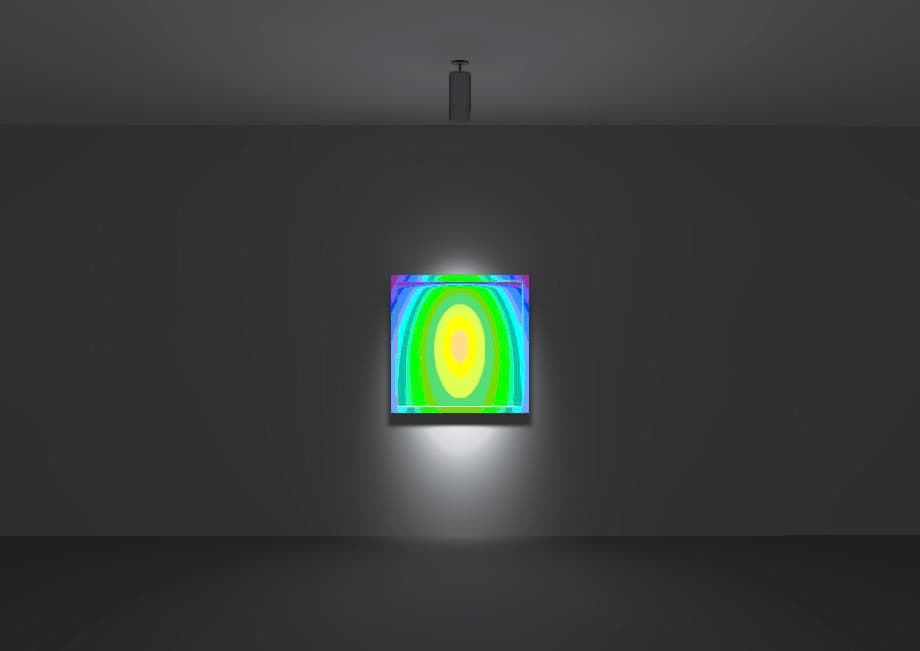
Illuminating large-format works of art is efficiently achieved with floodlights. Lenses enable precise light control. Linear exhibits for example can be illuminated with oval light distribution instead of three conventional spot light distributions. This reduces investment costs as well as installation and connection costs.
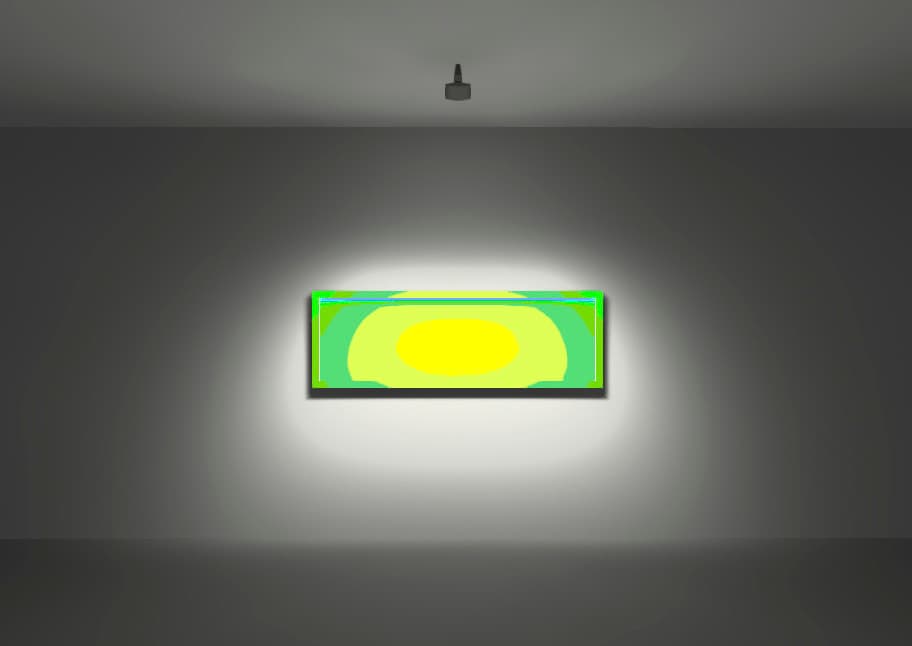
A range of interchangeable light distributions gives exhibition organisers the flexibility to select the light beam according to the exhibits. This dispenses with resource intensive solutions with complex installations and several luminaires.
Oval flood flood reflector
Connected load (W) 15 69
Efficiency (lx/W) 19,0 6,9
No. of luminaires 1 3


Accentuation: Creating hierarchies with lighting levels
Spotlights effectively accent exhibits, emphasise individual objects and create hierarchies of perception. ERCO Spherolit lens technology guides the light of the LEDs precisely onto the target plane – without any spill light. Compared to luminaires with reflectors this enables highly efficient lighting solutions.

Precise Spherolit lens technology enables accent lighting with high efficiency (lx/W). The energy converted into light is projected onto the target plane and does not escape uncontrolled into the room in the form of spill light.
Spot spot reflector
Connected load (W) 8 17
Efficiency (lx/W) 35,1 15,4
Illuminance (lx) 281 261