What are constancy phenomena?

Constancy phenomena are processes of correction in vision and an essential precondition for constructing an orderly image of reality. Constancy in this sense is the ability to recognise constant objects, even when their size, shape, reflectivity and colour or the surroundings change. These include, among other factors, changes in distance, spatial position or lighting.


What is perceptual constancy?
The same object generates different retinal images in the eye due to changes in lighting, distance or perspective. For example, due to a change in shape, size or distribution of brightness. Perceptual constancy enables us to identify recurring objects and their properties and to perceive these as being constant.
What types of constancy phenomena are there?
There are different forms of perceptual constancy in vision. These cannot, to a certain extent, be influenced or controlled. Types of perceptual constancy include:
- Size constancy
- Brightness constancy
- Colour constancy
- Shape constancy
- Constancy of perspective

What all of these have in common is that objects retain their colour, shape, size and brightness despite changing conditions in terms of surroundings and lighting.
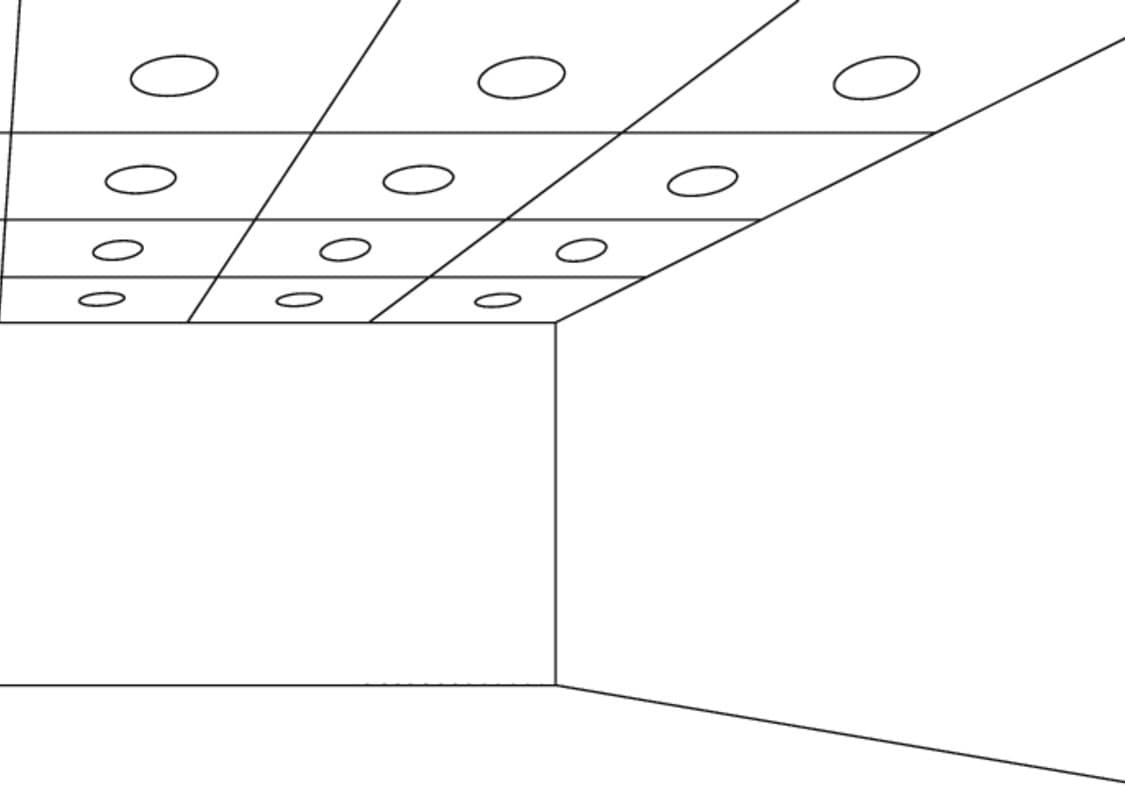
What is meant by size constancy?
For visually perceiving size, a compensation for the perspective distortion of objects takes place. This ensures that e.g. rectangular or circular shapes as spatial phenomena are perceived constantly: the observer can thus constantly recognise regularly arranged circles on the ceiling as being the same size, although the circles visually shrink with increasing distance and look more like ellipses.
What is brightness constancy?
A further phenomenon of constancy is brightness constancy. The perceived brightness results from the ratio of brightness of the object viewed and brightness of the immediate surroundings. For example, a medium grey field with a dark surrounding is seen as being light grey. If the surrounding is light, the field appears dark grey. This phenomenon can be explained by the direct processing of incoming stimuli. This visual impression of two apparently different shades of grey is exclusively based on sensory impressions coming from the outside.


What is colour constancy?
As with the perception of brightness levels, colour perception is also dependent on peripheral colours and the type of lighting. The need for interpreting colour impressions comes about mainly due to the constantly changing light colours in the environment. For example, a white sheet of paper is perceived constantly both in the bluish light of the sky and in warmer, direct sunlight. Colour constancy in vision corresponds to the white balance of film and photo cameras. Colour photos taken under identical conditions without white balance show the expected, distinct colour casts of the respective type of lighting.

Good to know: Based on long experience, the observer does not evaluate shadows as colour-changing.

What is meant by shape constancy?
Constancy of shape, or form constancy, is also one of the constancy phenomena. Our experience teaches us that gradients in luminance from light to dark or vice versa can result from the spatial shape of an illuminated object. Examples are the formation of typical shadows on three-dimensional bodies such as cubes, cylinders and spheres.
The example of a hemisphere on a plane demonstrates how the incidence of light and the progression of shadows influence the perceived shape: