Contrast vision: what is contrast perception?

Contrast vision is the visual process of perceiving the difference in brightness (luminance) or colour between two objects, or between an object and its surroundings. To be able to see an object, it needs a sufficiently high contrast to its surroundings. This should ideally be at least 2:1. The lower the contrast, the more difficult it is to distinguish between two shapes.

Interesting facts about contrast vision:
Contrast vision is a function of vision closely related to visual acuity. Both functions, however, are not identical: contrast vision allows us to distinguish objects from each other to perceive them. Visual acuity on the other hand refers to how well we can recognise contours and details.


What is meant by brightness contrast?
Whether an object is judged as bright or dark depends less on its absolute brightness (luminance), and more on its brightness in contrast to its surroundings. For example, a dimly lit object can seem bright in a dark room. The contrast in brightness is high. On the other hand, the object in bright surroundings but illuminated in the same way is hardly noticeable. The strongest light to dark difference in contrast vision is between a white and black surface.
Constructing hierarchies via brightness contrasts:
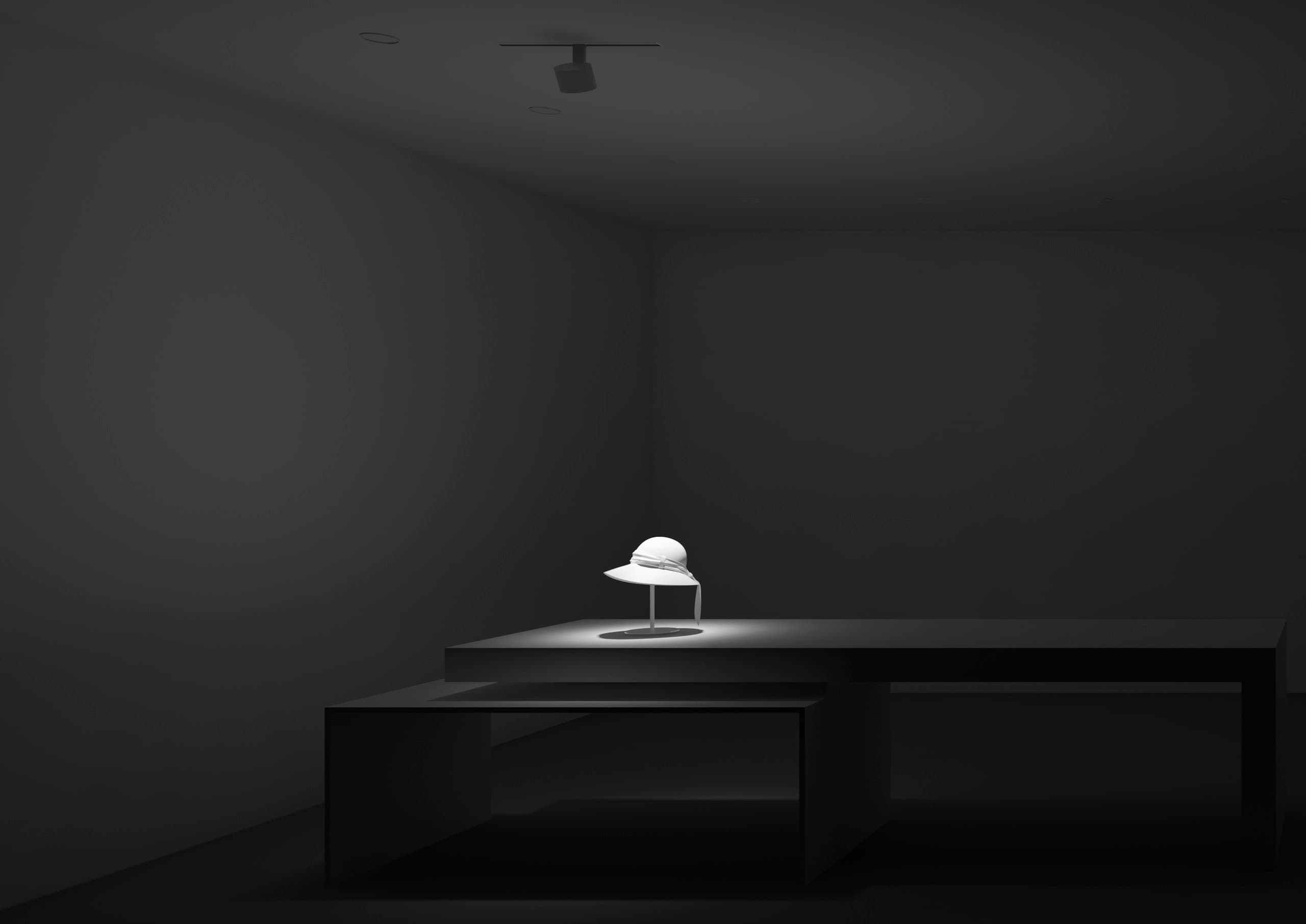
High contrast
Significant differentiation can be recognised with a brightness contrast of 1:10 between the surroundings and the accenting. A very dramatic atmosphere is thus created. Light and shadow characterise this intense accent lighting.
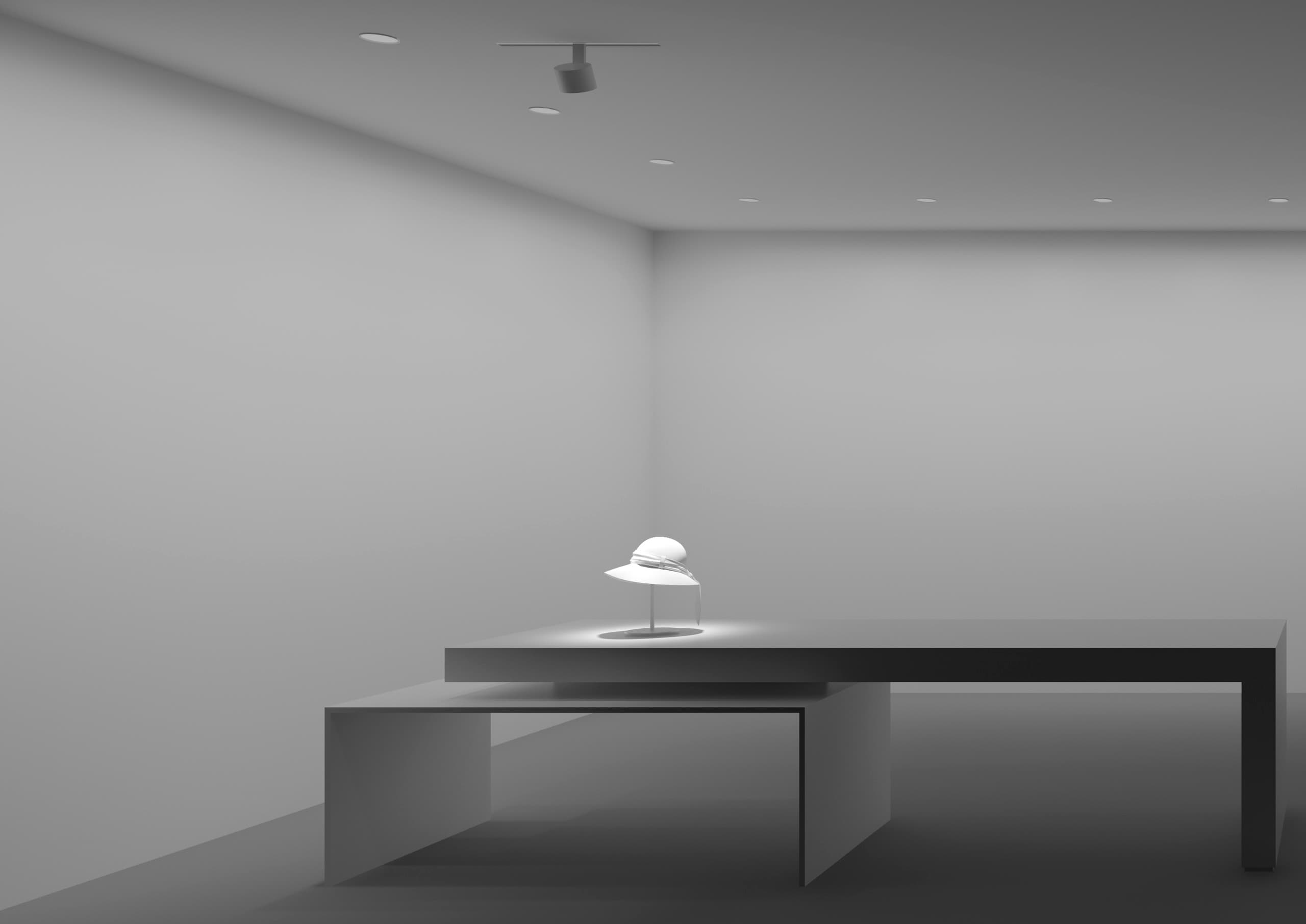
Medium contrast
The differentiation can no longer be clearly recognised if the brightness contrast between the surroundings and accenting is approximately 1:5. The attention of the observer is no longer so distinctly guided.
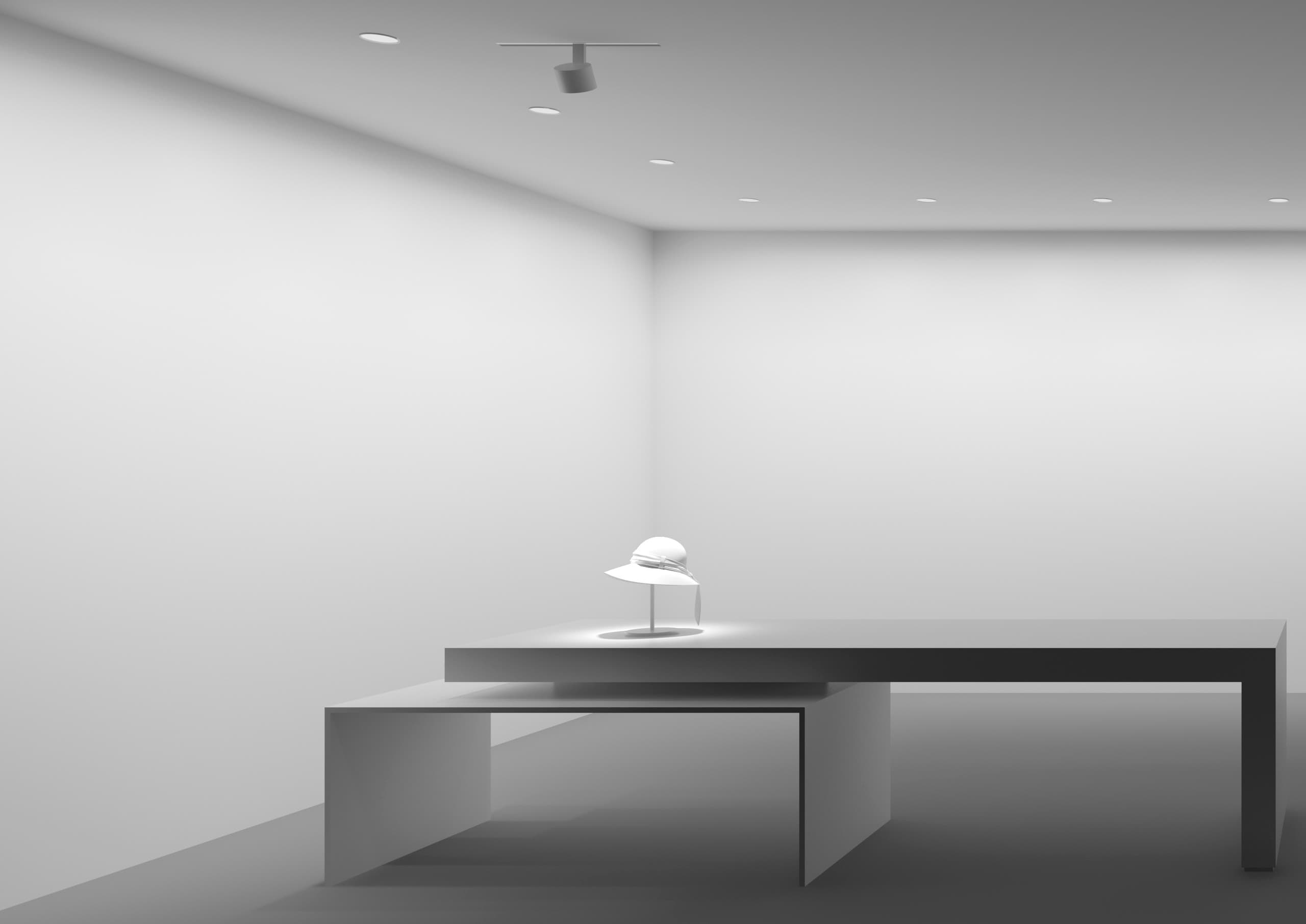
Low contrast
No hierarchy can be recognised anymore with a 1:2 difference in brightness between the surroundings and the object. The room thus looks monotonous.
Brightness contrast


The objects and the wall are given general lighting by wallwashers. Beams from individual spotlights add emphasis to the objects. A higher brightness contrast increases the level of accentuation.
When the brightness contrast of the ambient surroundings to the object is 1:2, a contrast can hardly be noticed. When the ratio is 1:5, a minimum brightness contrast is established between primary and secondary points of interest. A contrast of 1:10 brings out the difference very well. A brightness contrast of 1:100 detaches the object very strongly from its ambient surroundings but an unintentional dissection of the wall can arise.
Highlighting of objects on walls is a practice used in:
- museums
- exhibitions
- trade-fair stands
- sales rooms
What is contrast rendering?
Contrast rendering is a criterion for limiting reflected glare, and is thus a criterion of quality in lighting design, e.g. for the legibility of text. Contrast rendering is defined by the contrast rendering factor (CRF). This is the relationship between contrast of the visual task at a given illumination to the luminance contrast at a reference illumination.

Is it possible to have no contrast?
We talk about loss of contrast when differences in luminance no longer exist. A distinction is made between two types of contrast loss:
- Blackout: black objects in very dark to black surroundings can no longer be recognised.
- Whiteout: white objects in white or very bright surroundings can no longer be seen in a differentiated way.