Light for a world full of stories: KOLK 17 Figurentheater & Museum, Lübeck
Frieder Blickle
Theater and museum, historic building fabric and contemporary architecture, preserving and transforming: KOLK 17 Figurentheater & Museum brings together different worlds under one roof in the heart of Lübeck's old town. For this project, completed in 2025, Konermann Siegmund Architekten reorganized the historic building ensemble. A new museum building was created behind a heritage-protected façade, while the puppet theater gained a new hall and a forum. In all, seven interwoven building sections connect exhibition spaces, theater, offices, and accommodation for artists. The lighting design was handled by ANDRES + PARTNER.
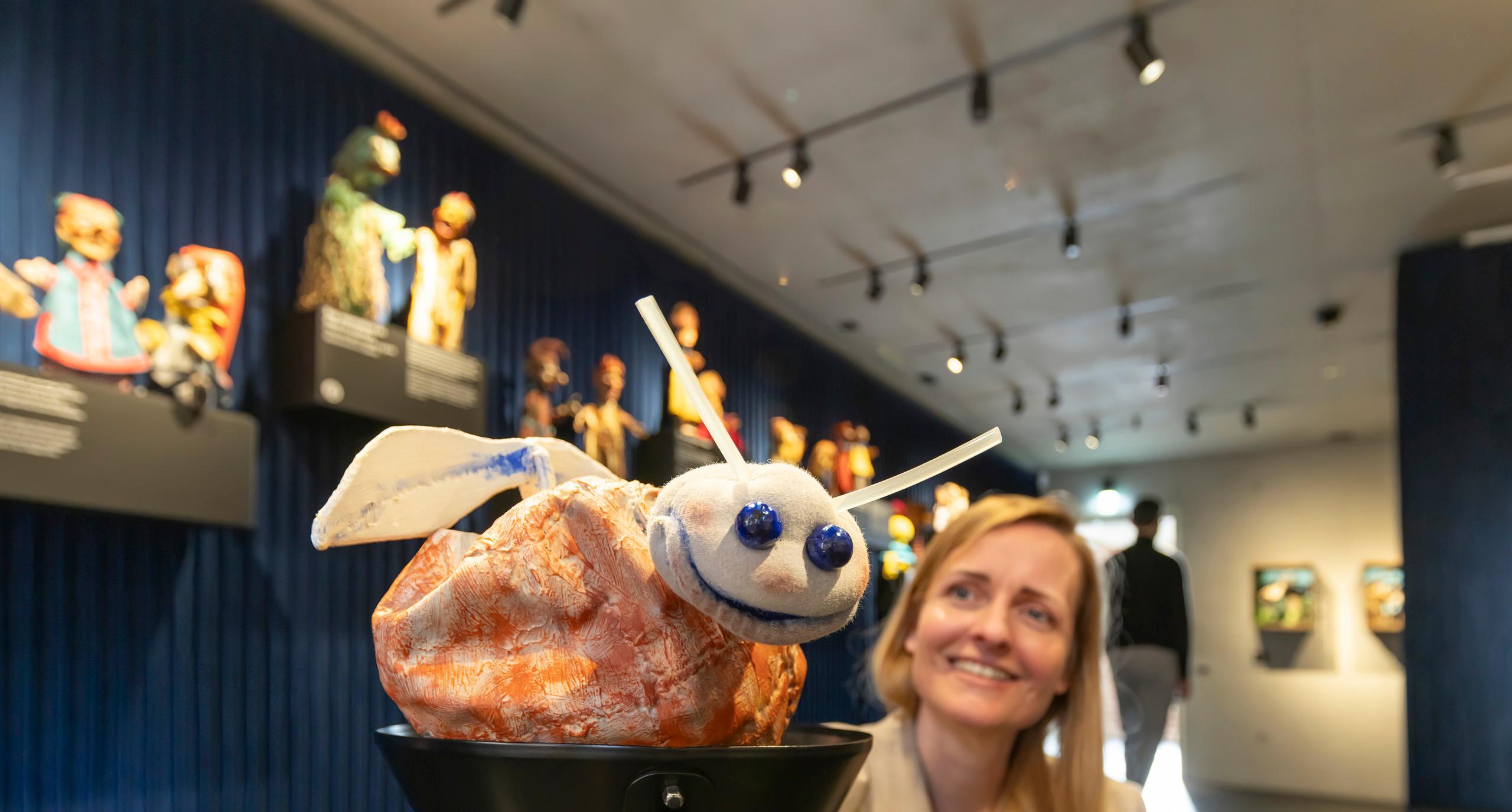
Storytelling plays a special role. Figures and selected exhibits are not merely displayed but become the protagonists of stories. Spaces are staged, viewpoints shift, and new connections emerge. The exhibition itself is designed for change and is intended to keep telling new stories. This is precisely the idea that the lighting had to support as well.
The sophisticated architecture of KOLK 17 Figurentheater & Museum placed particular demands on the lighting design. In this densely built-up historic setting, heritage-protected building sections meet contemporary architecture. Each space has its own character and called for an individual solution. At the same time, the museum needed to respond flexibly to changing exhibitions.
The light makes this dialogue between past and present tangible: luminaires integrated flush into historic walls, for example, illuminate the new concrete museum building. Tracks, in turn, were recessed largely flush into the concrete surfaces. The lighting thus becomes part of the architecture without pushing itself into the foreground. It was precisely this integration that demanded the utmost precision in planning and construction supervision.
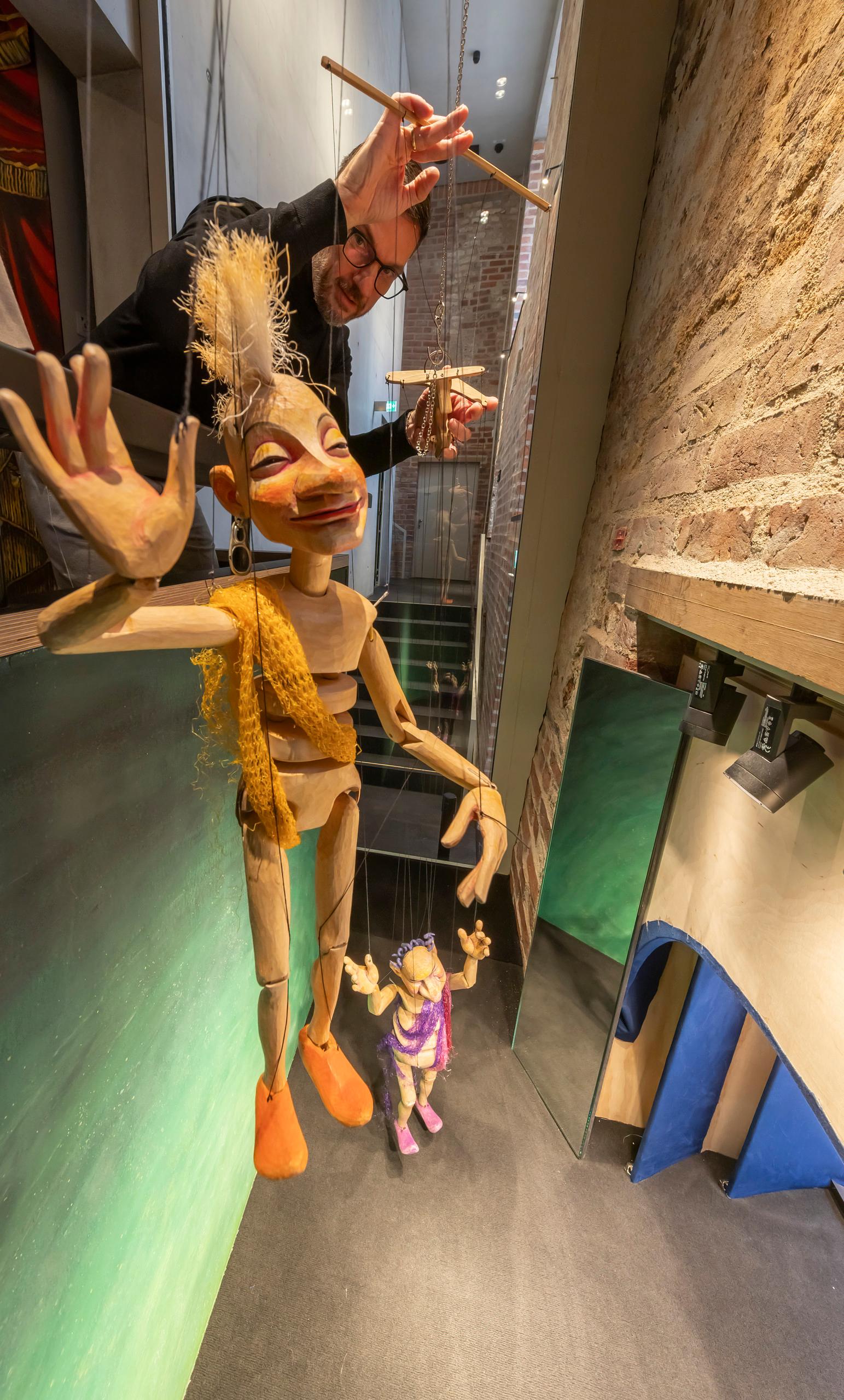
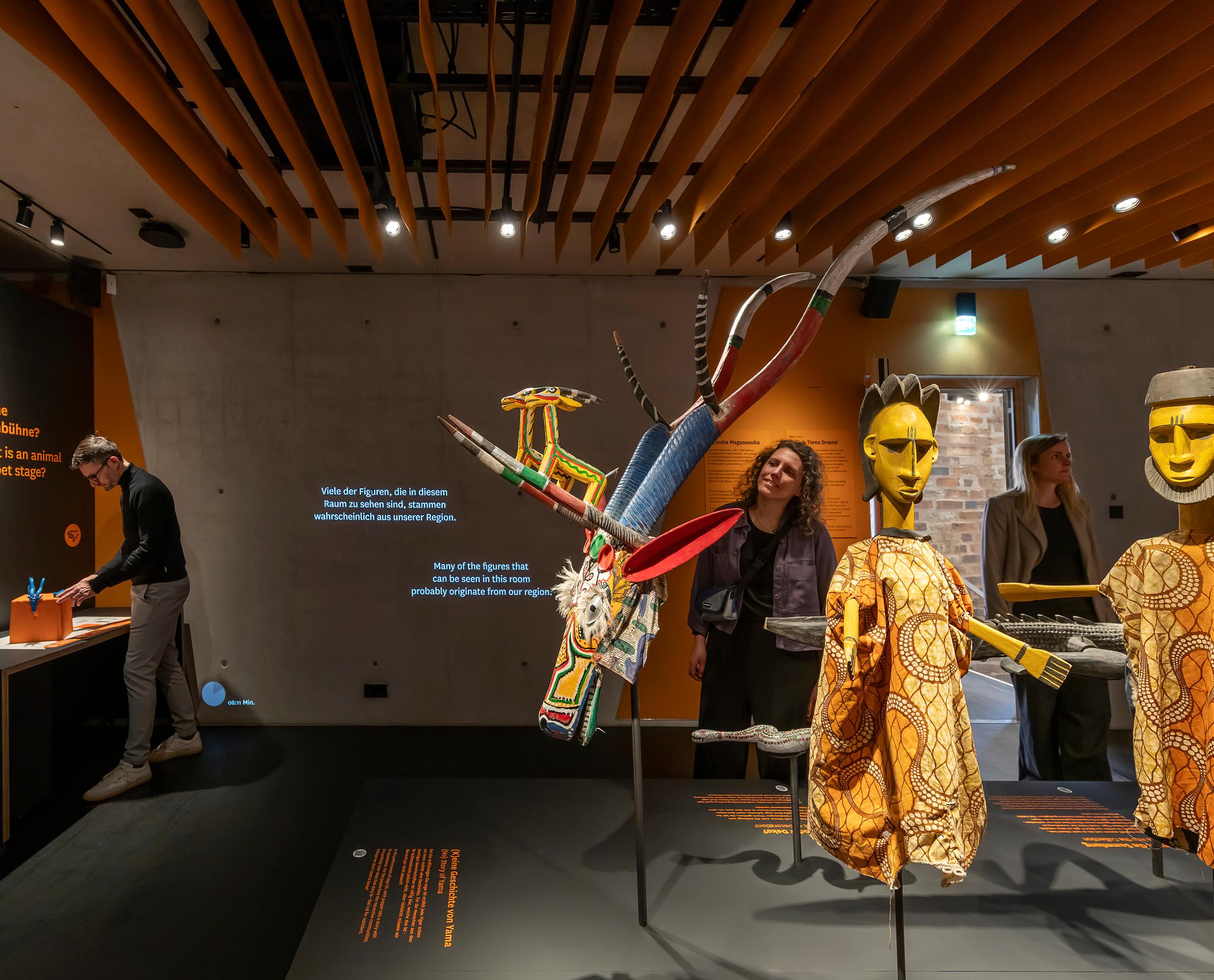
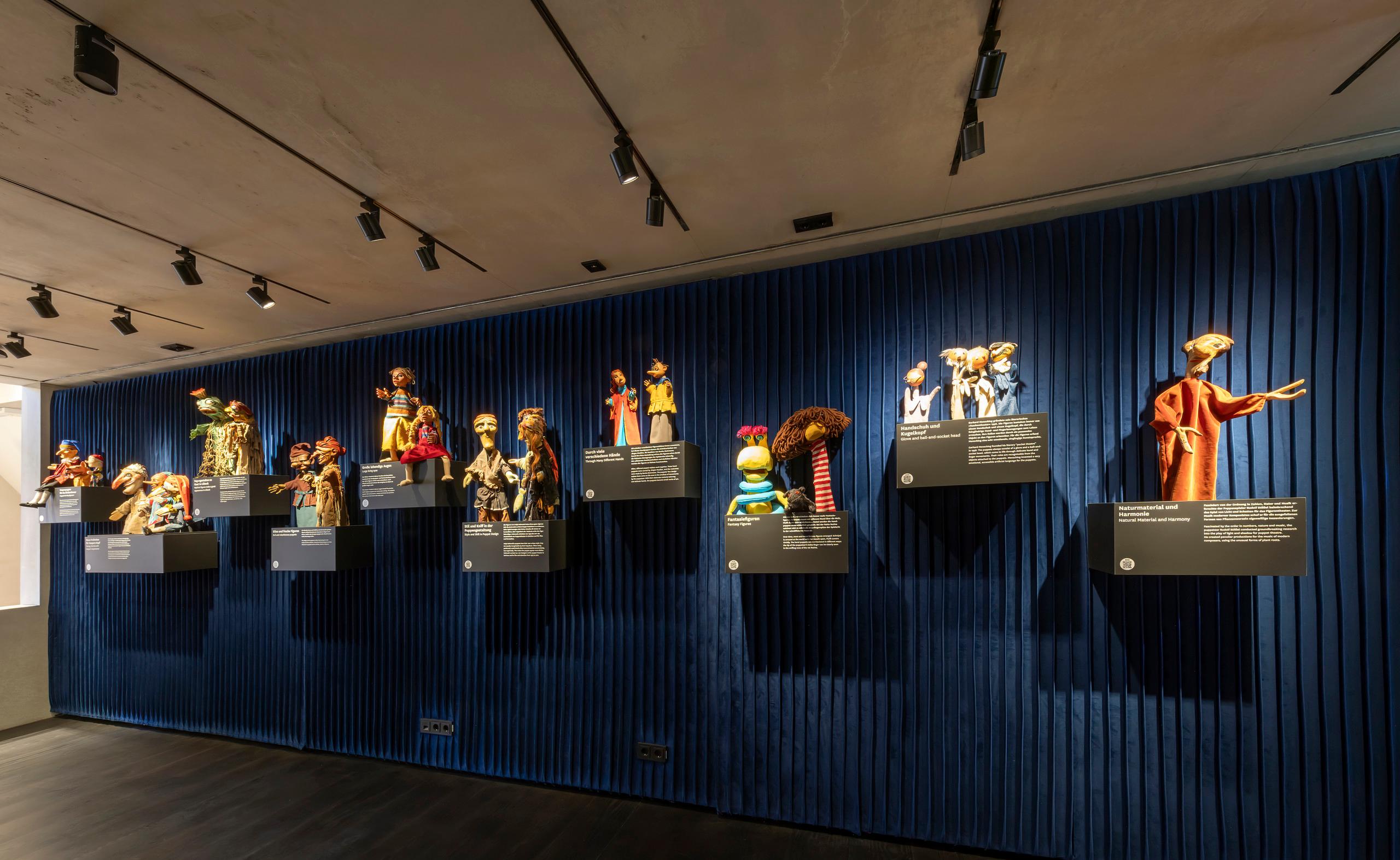
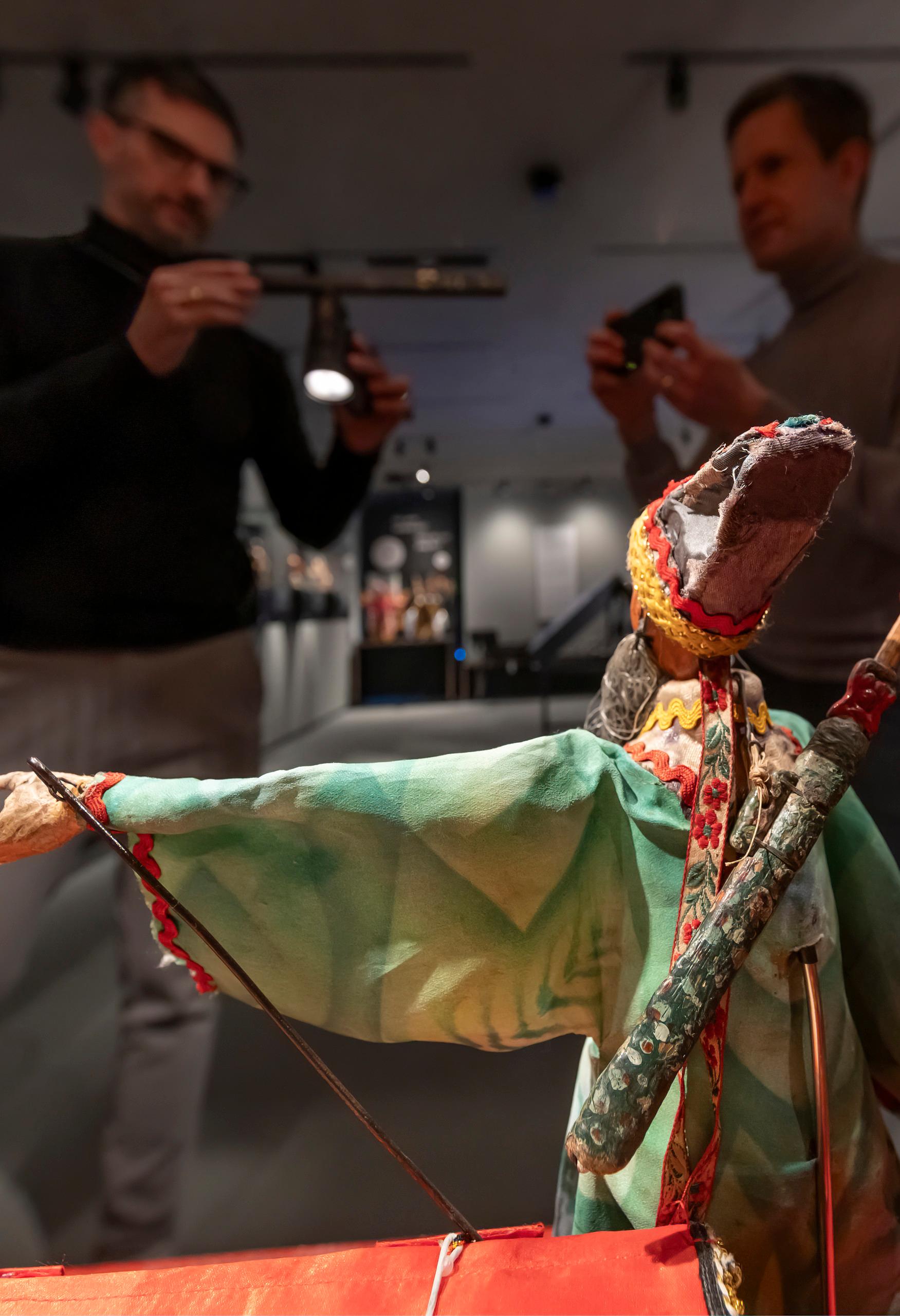
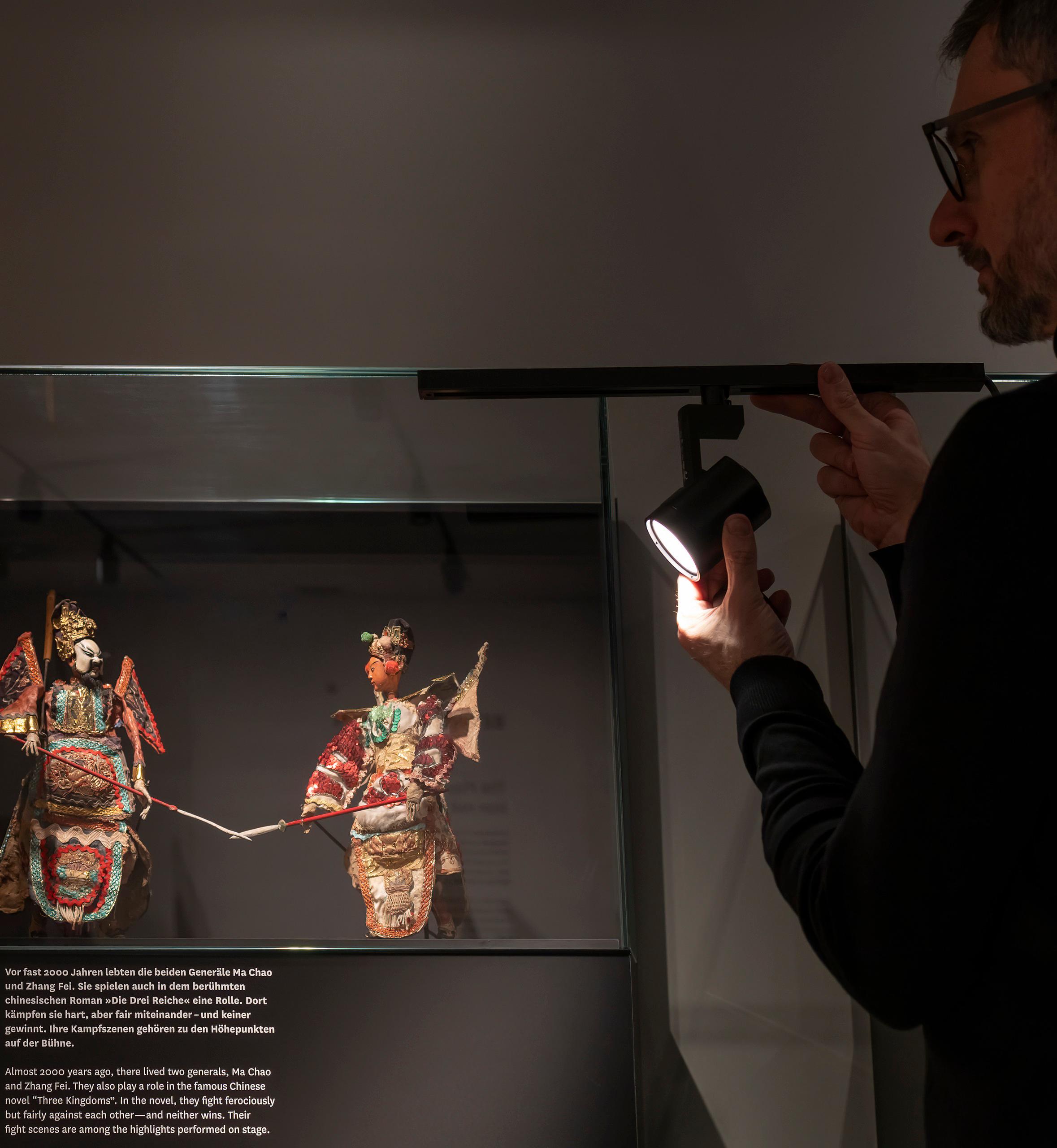
In the museum, the light guides visitors through the exhibition, makes different materials tangible, and directs the gaze specifically to figures and other exhibits. Among the tools used for this are Parscan New spotlights combined with the compact Minirail 48V track system. Different light distributions make it possible to tailor the lighting to the size and presentation form of an exhibit. The optics of the Parscan spotlights can be swapped out easily without tools. The light distribution can thus be changed whenever the exhibition changes.
This adaptability is especially crucial for KOLK 17 Figurentheater & Museum. For where figures repeatedly appear in new constellations and tell different stories, the lighting too cannot be a rigid system. At the same time, the compact dimensions of Parscan New 48V and Minirail tracks support an unobtrusive integration of the lighting technology. The focus is not on the luminaire but on what it makes visible.
A particular challenge becomes apparent along the double stair helix. During the day, large windows create a bright, daylight-defined atmosphere here. From these light-filled circulation areas, visitors move into exhibition spaces that contain some light-sensitive objects. There, lower illuminance levels must be reconciled with an effective staging of the exhibits.
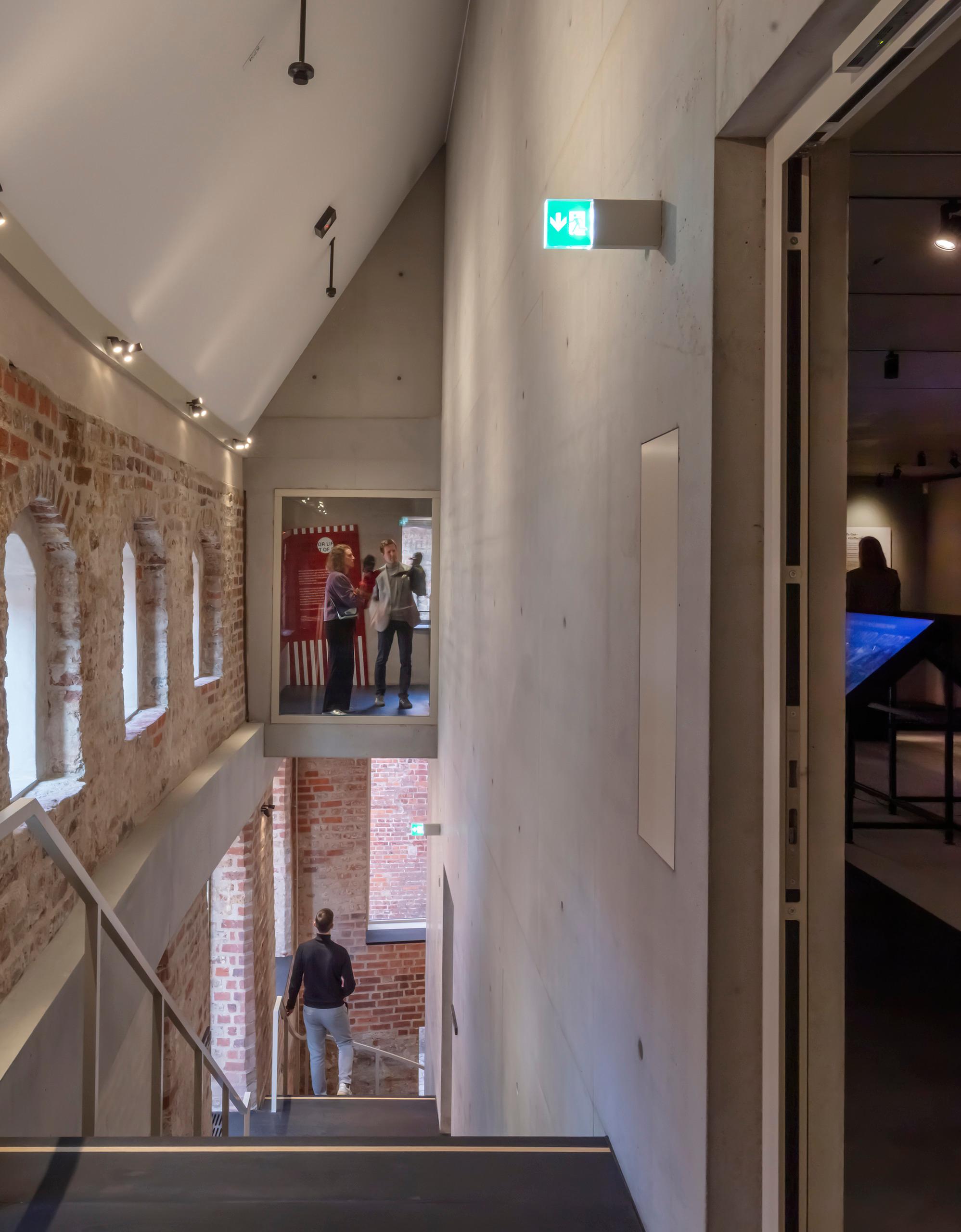
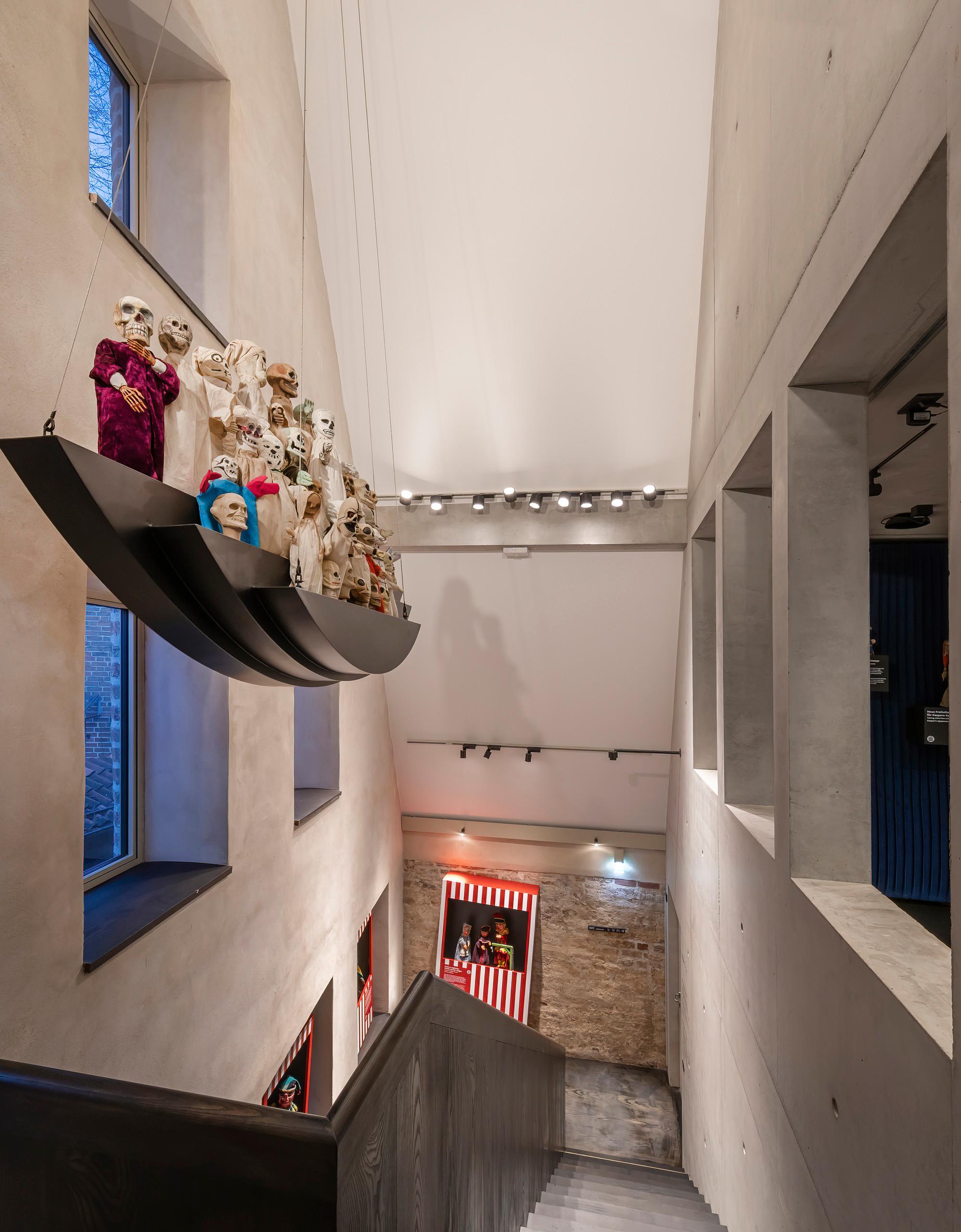
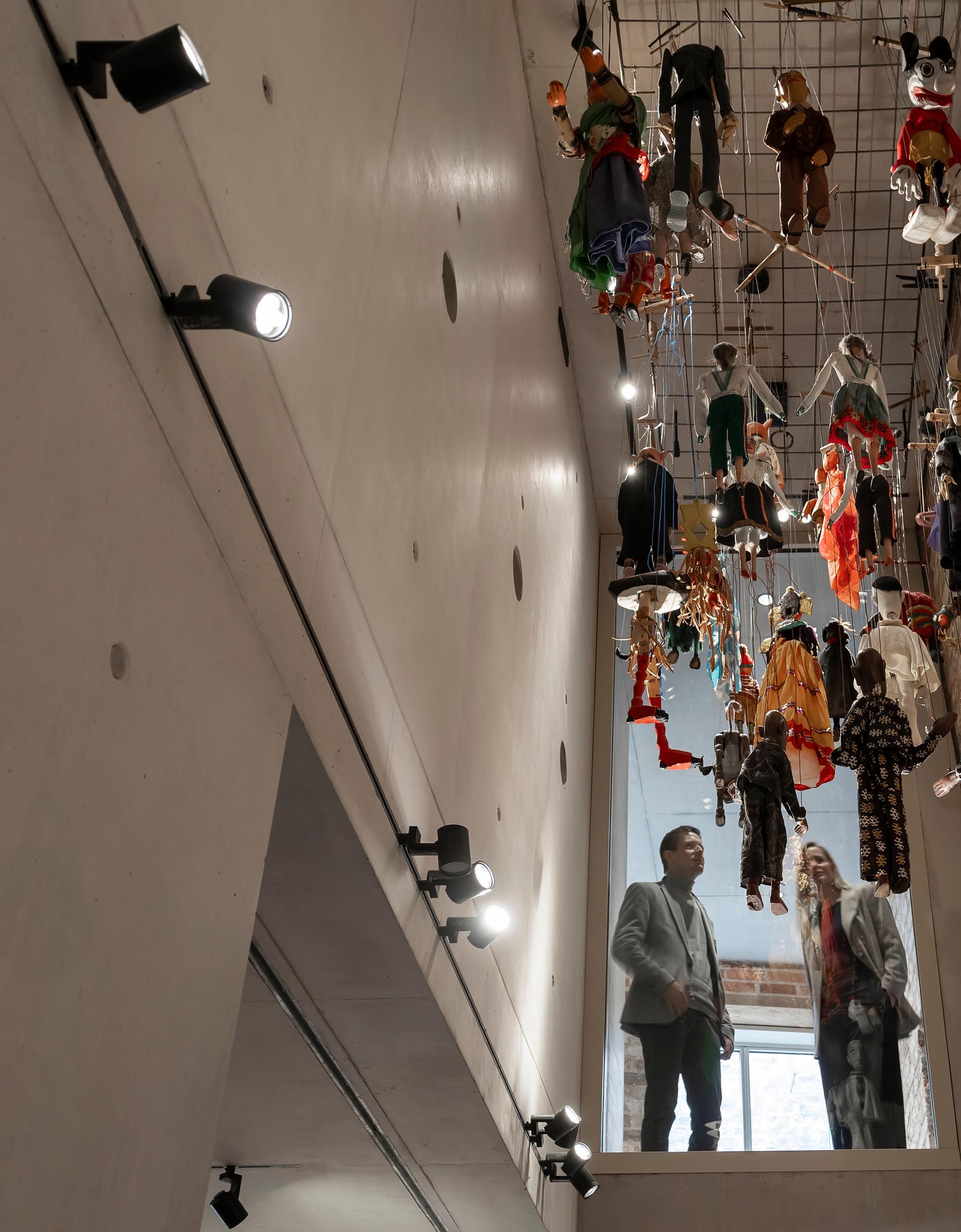
Different lighting scenes respond to these contrasts. They help balance perception between bright circulation areas and more sensitive exhibition zones while preserving the individual character of the spaces. The light thus performs several tasks at once: it provides orientation, stages architecture and exhibits, and takes into account the conservation requirements of the collection.
The lighting responds not only to different spaces and uses but also to the visitors. All spotlights in the museum areas are controlled via Casambi Bluetooth. Together with the curators and the client, the lighting design team developed various scenes that are activated by motion detectors. In this way, the light unfolds its effect when an audience is present, while it can be reduced during visitor-free periods. This supports needs-based operation and at the same time helps to protect light-sensitive exhibits.
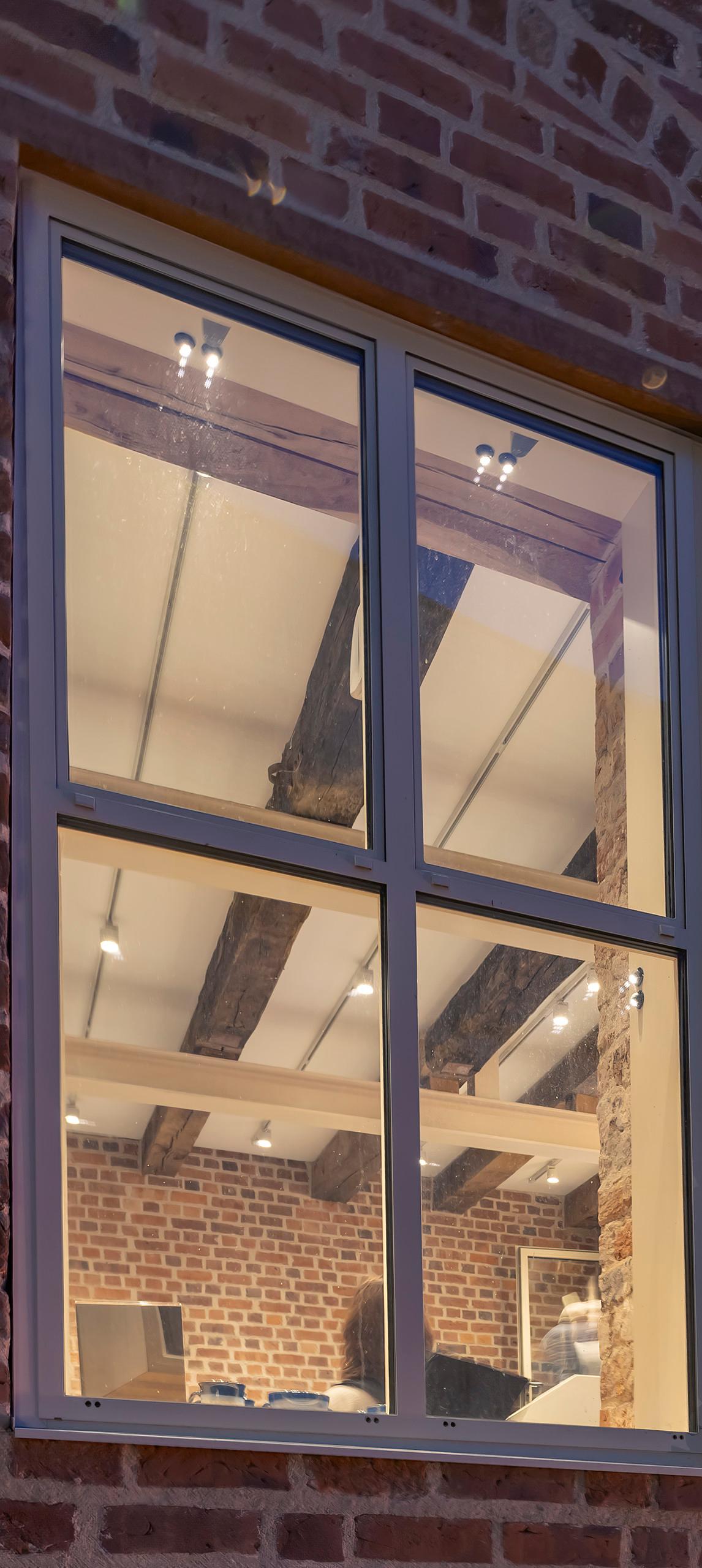
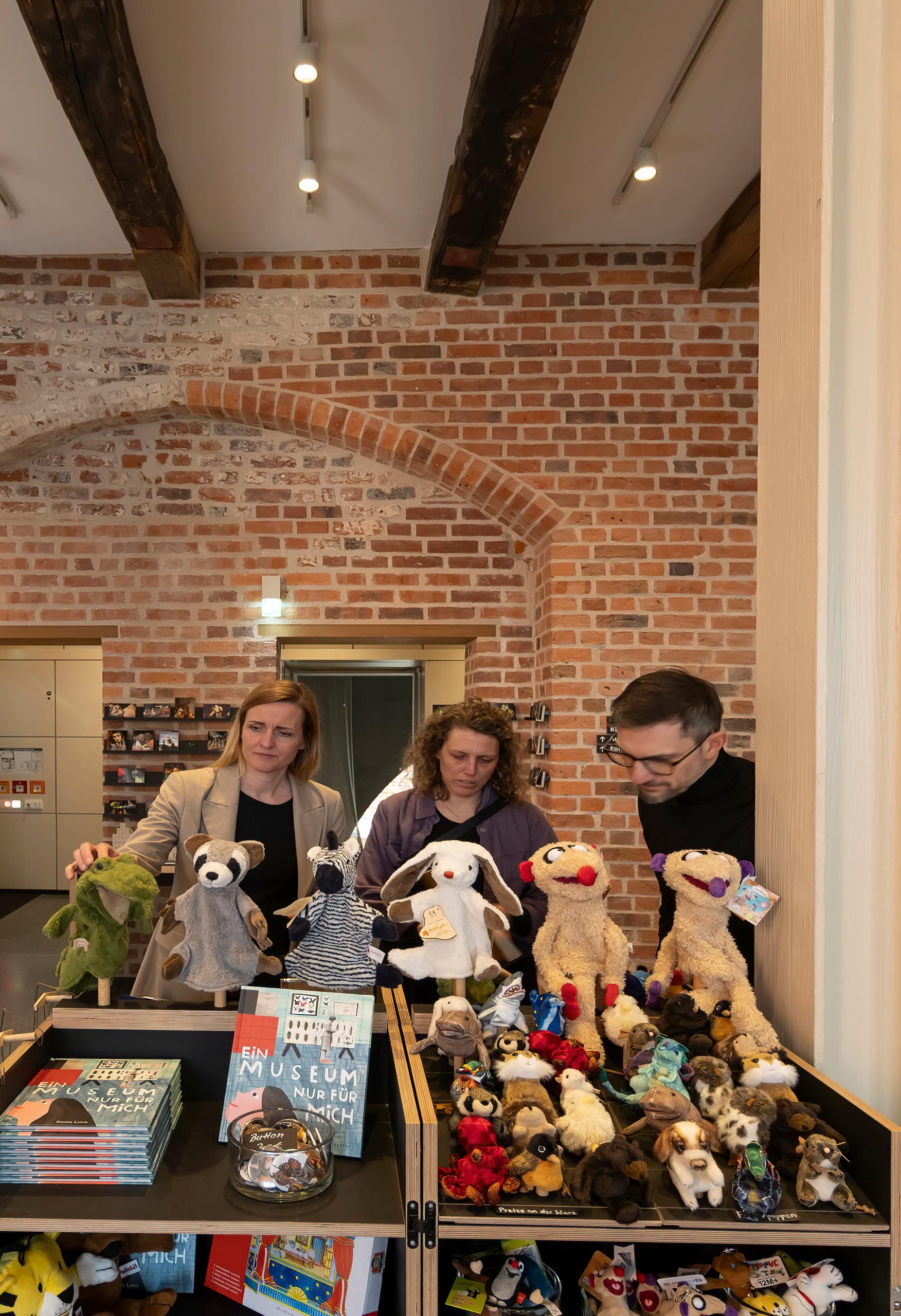
The lighting tools themselves also follow the varied requirements of the building: in the foyer, Axis recessed spotlights illuminate the exhibits in the large windows and give passers-by a first glimpse into the world of the puppet theater. The spotlights can be aimed precisely at the displayed objects. In this way, the lighting combines flexibility in everyday museum use with a precise staging of architecture and exhibits.
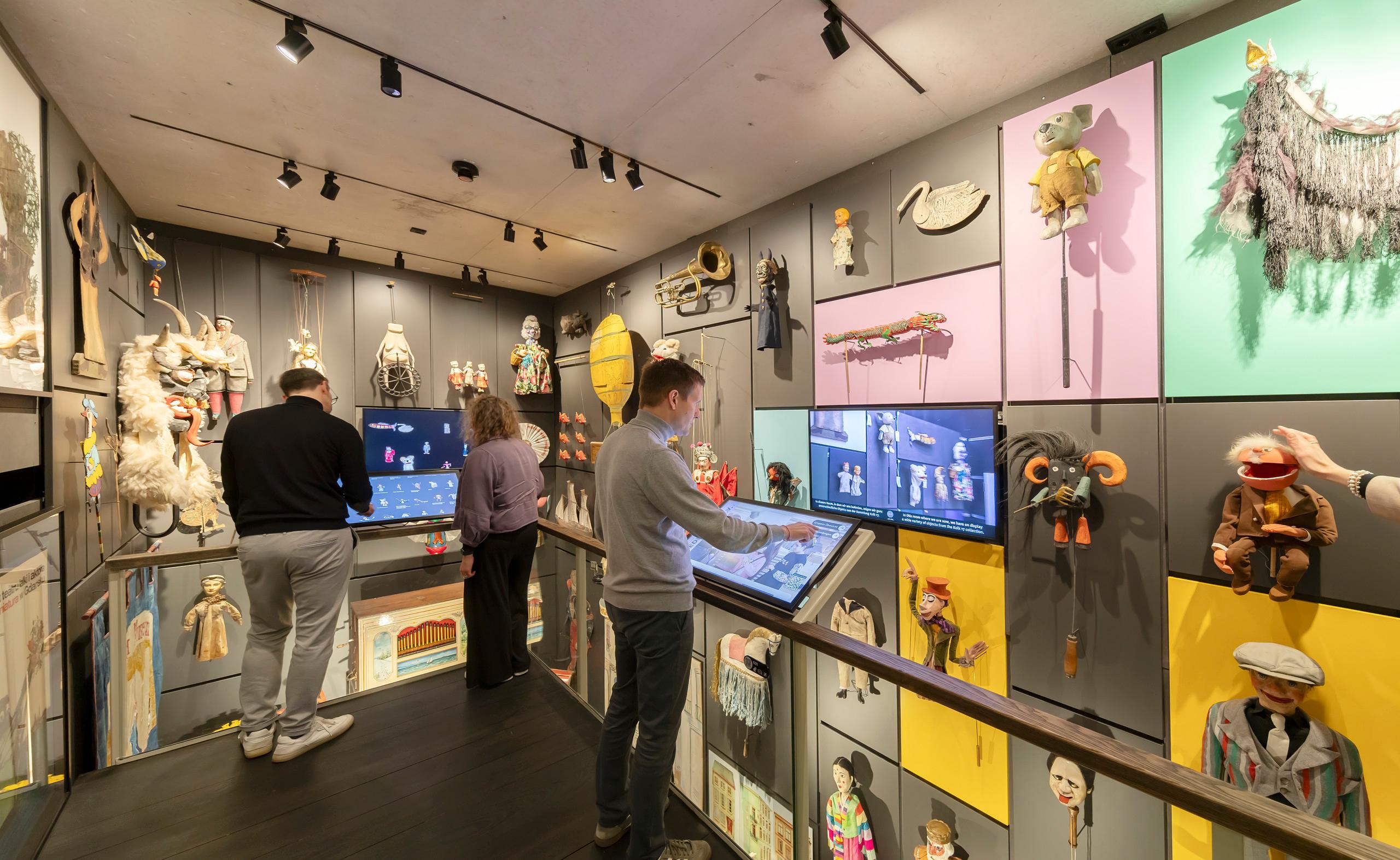
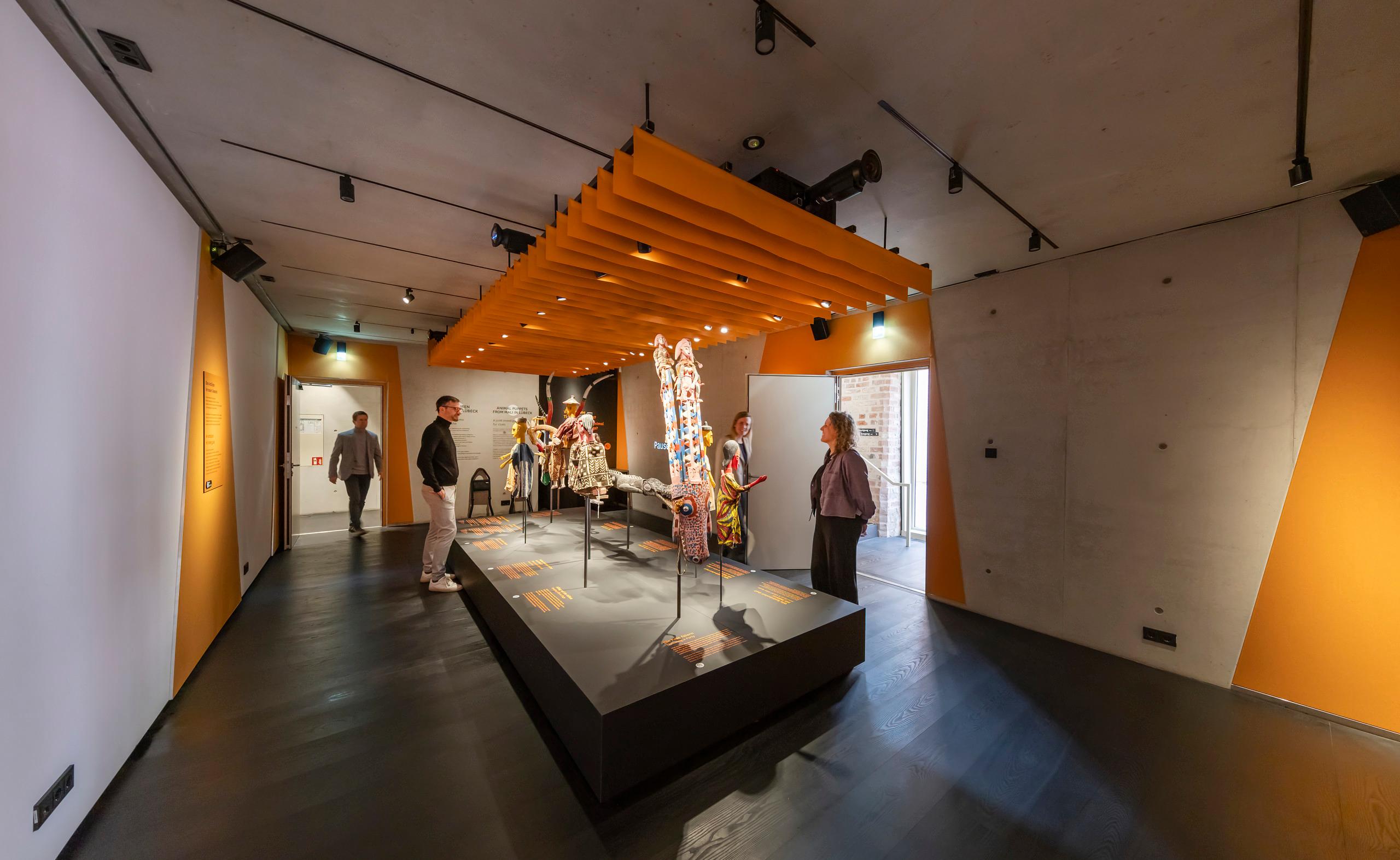
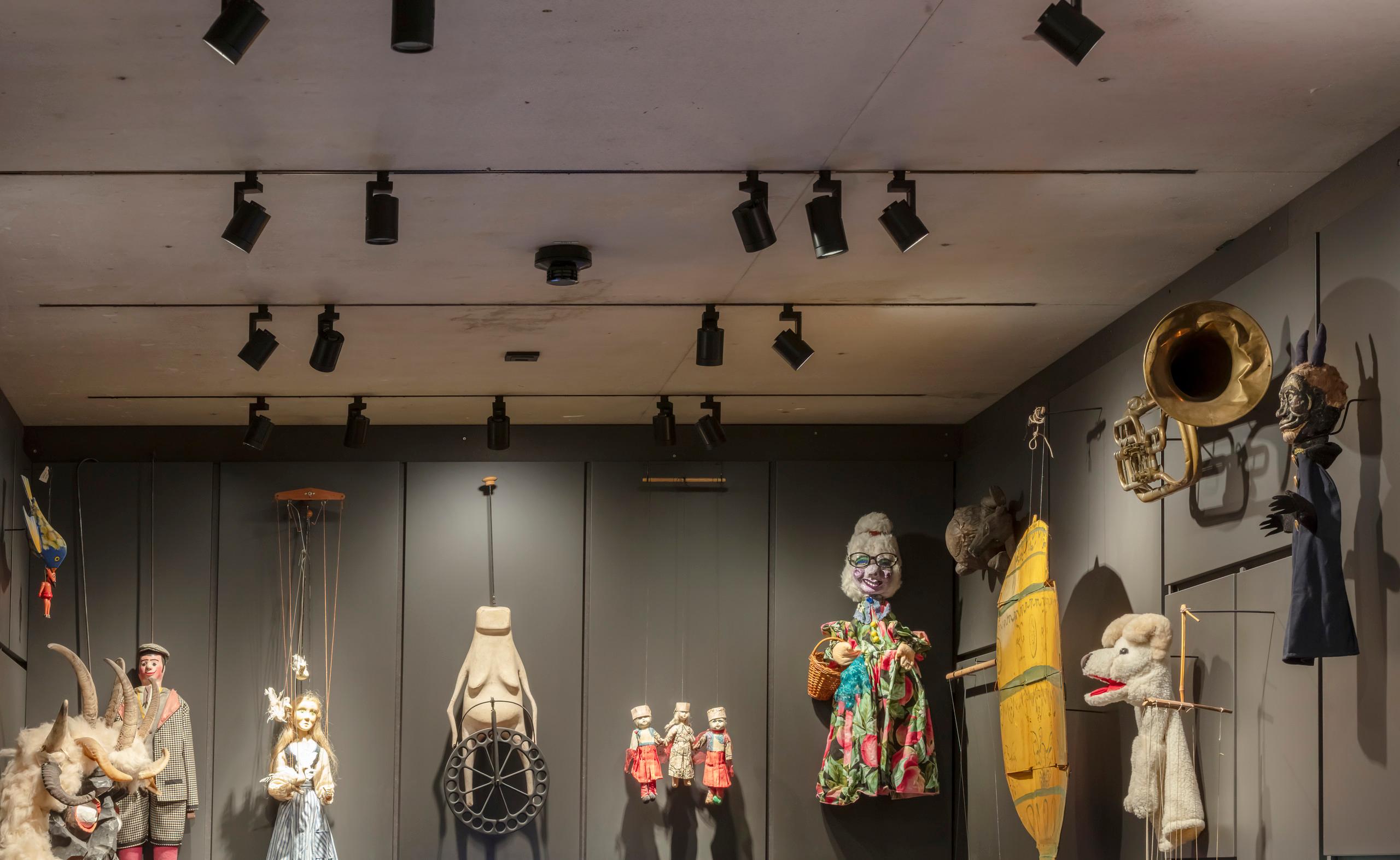
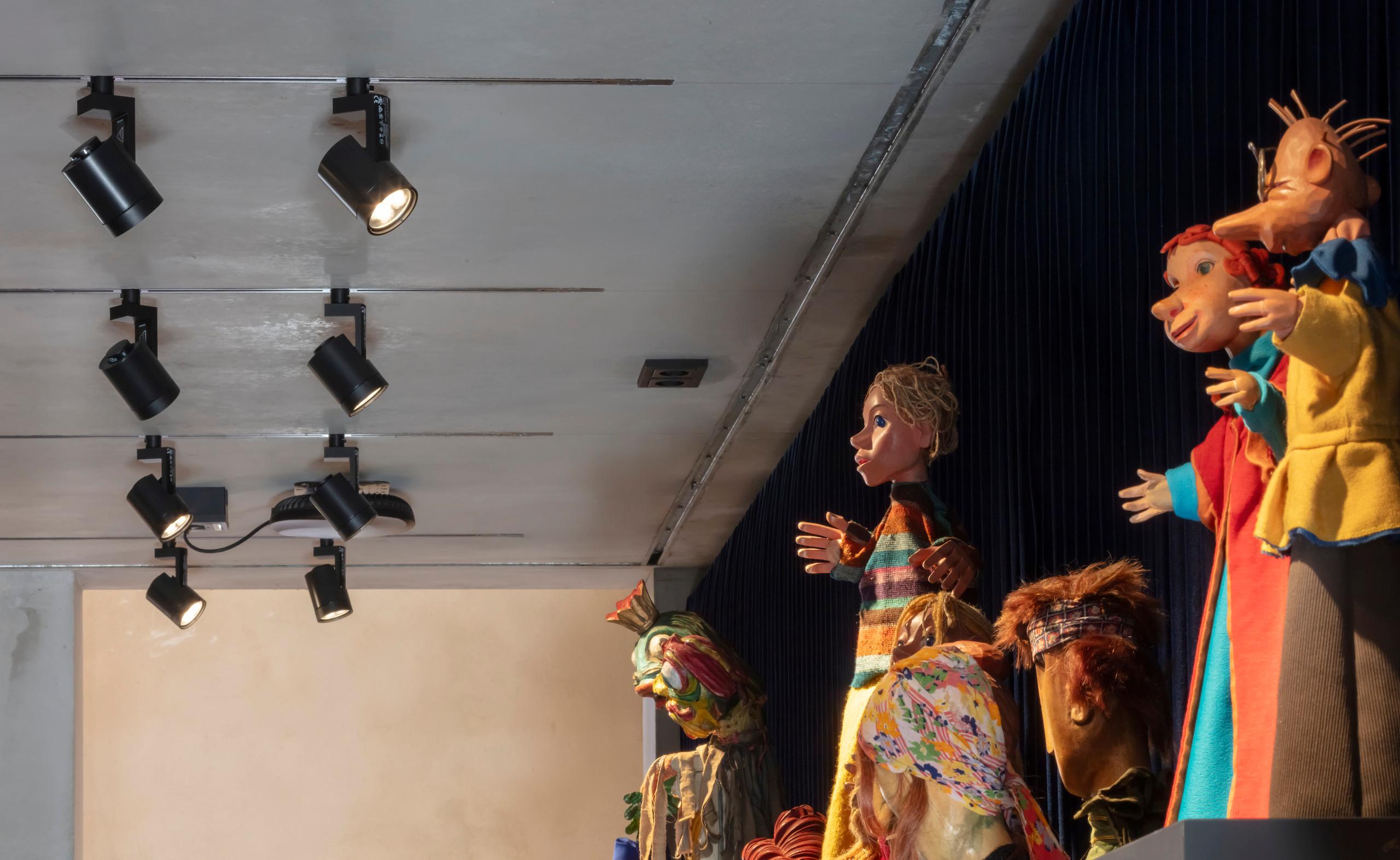
The lighting tools themselves also follow the building's varied requirements: in the foyer, Axis recessed spotlights illuminate the exhibits in the large windows, giving passers-by a first glimpse into the world of puppet theater. The spotlights can be aimed precisely at the exhibited objects. In this way, the lighting combines flexibility for everyday museum operations with a precise display of architecture and exhibits.
The decision in favor of ERCO was driven above all by the flexibility of the lighting tools and their compact dimensions. Added to this was the support with sample setups and throughout the demanding construction phase. When changes arose during the course of construction, solutions could be adapted together. The close coordination made it possible both to respond to changes at short notice and to implement longer-term adjustments.
This made the collaboration a perfect match for the character of the project: rather than a rigid solution, what was needed was a system that could respond to diverse architecture, changing exhibitions, and modifications during realization. ANDRES + PARTNER accompanied the project over a total of seven years, developing the lighting in parallel with the architecture and interior design.
The lighting concept brings together the different worlds of KOLK 17 Figurentheater & Museum into a shared visitor experience. Historic walls and new concrete, light-filled stairwells and sensitive exhibition areas, museum and stage remain tangible in their individuality while at the same time being connected to one another through light.
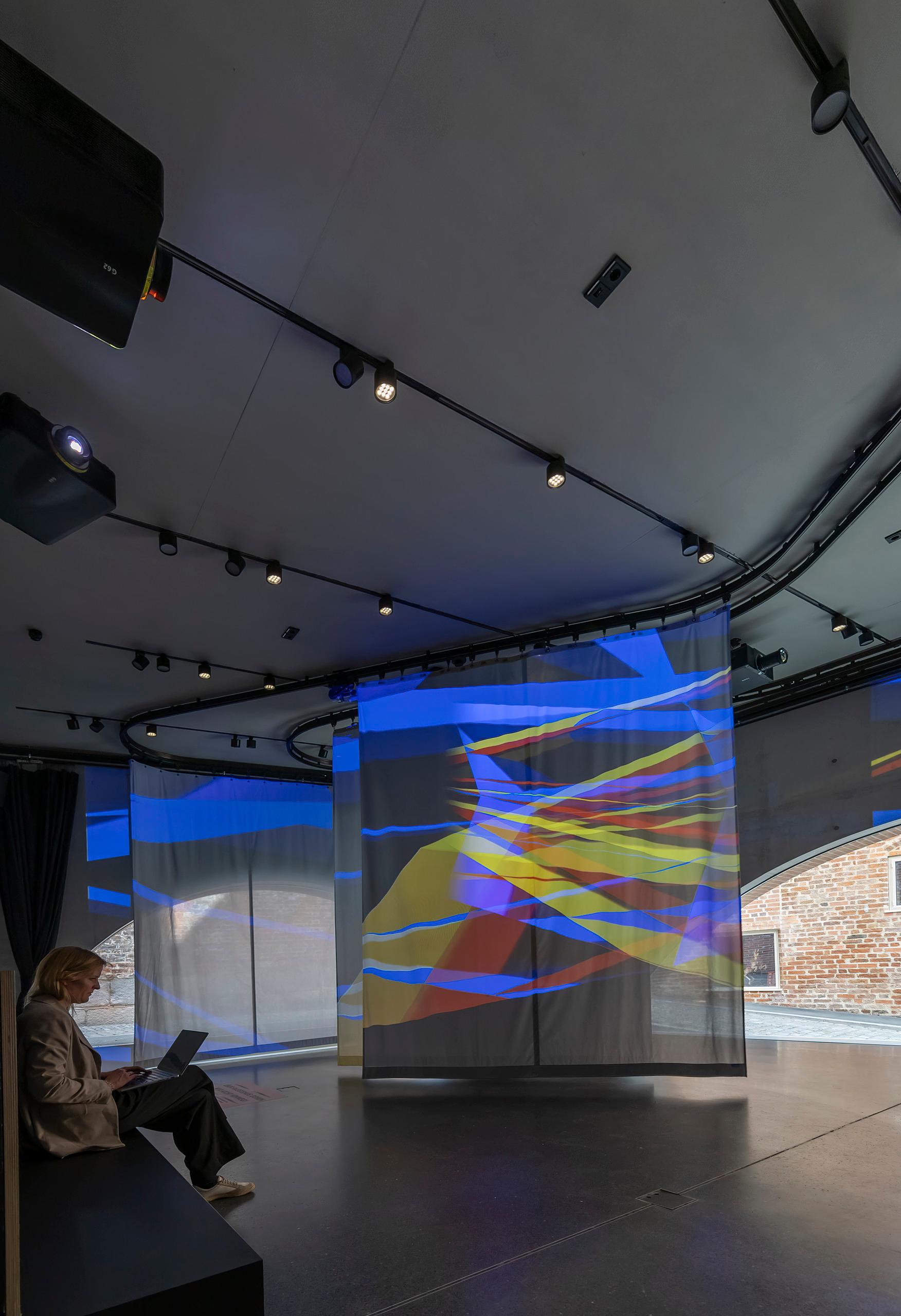
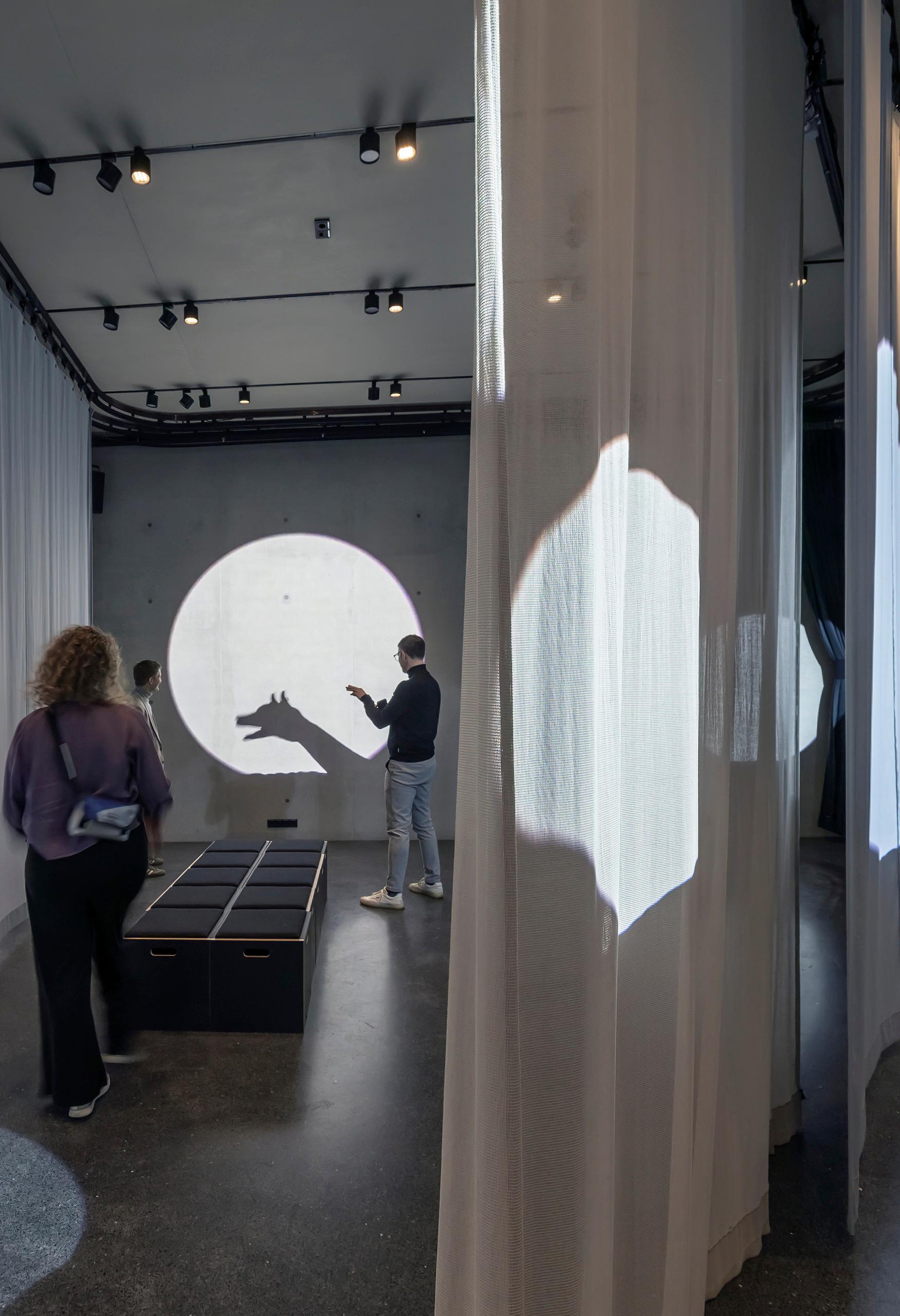
Above all, however, the lighting follows the building's underlying idea: stories change. Exhibits are swapped, figures enter new contexts, and spaces take on different functions. With precise and flexibly adaptable lighting tools, the lighting creates the conditions for the staging to change again and again as well. The result is not static exhibition spaces, but spaces in which architecture, figures, and light tell new stories time and again.


