"Framing Light" Exhibition: How Art Changes with Light
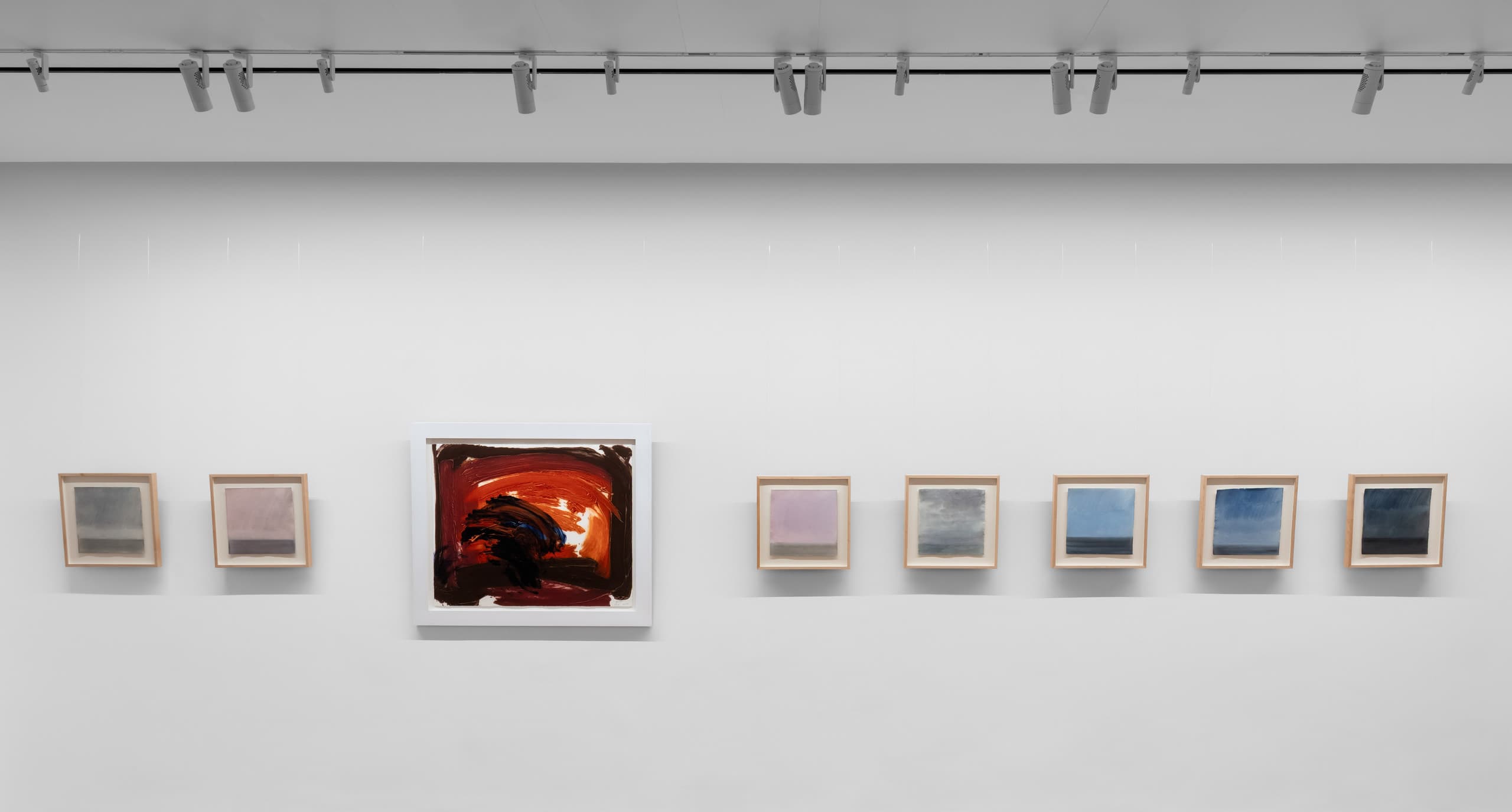
When we talk about light in art, we are usually referring to the light within a painting: atmosphere, mood and perception. The exhibition Framing Light at the ERCO Showroom in London expands this idea. Here, light is not merely depicted but becomes an active component of the exhibition itself. The works of Adam Leef and Howard Hodgkin enter into a dialogue about landscape, memory and colour.
At the same time, a dynamic lighting installation by ERCO continuously changes the way these works are perceived. Curated by Maya Binkin, the exhibition brings together new works from Leef’s English (Hampshire) Suites alongside selected hand-coloured prints by Hodgkin. At its core is an exploration of light as both an artistic subject and a means of perception.
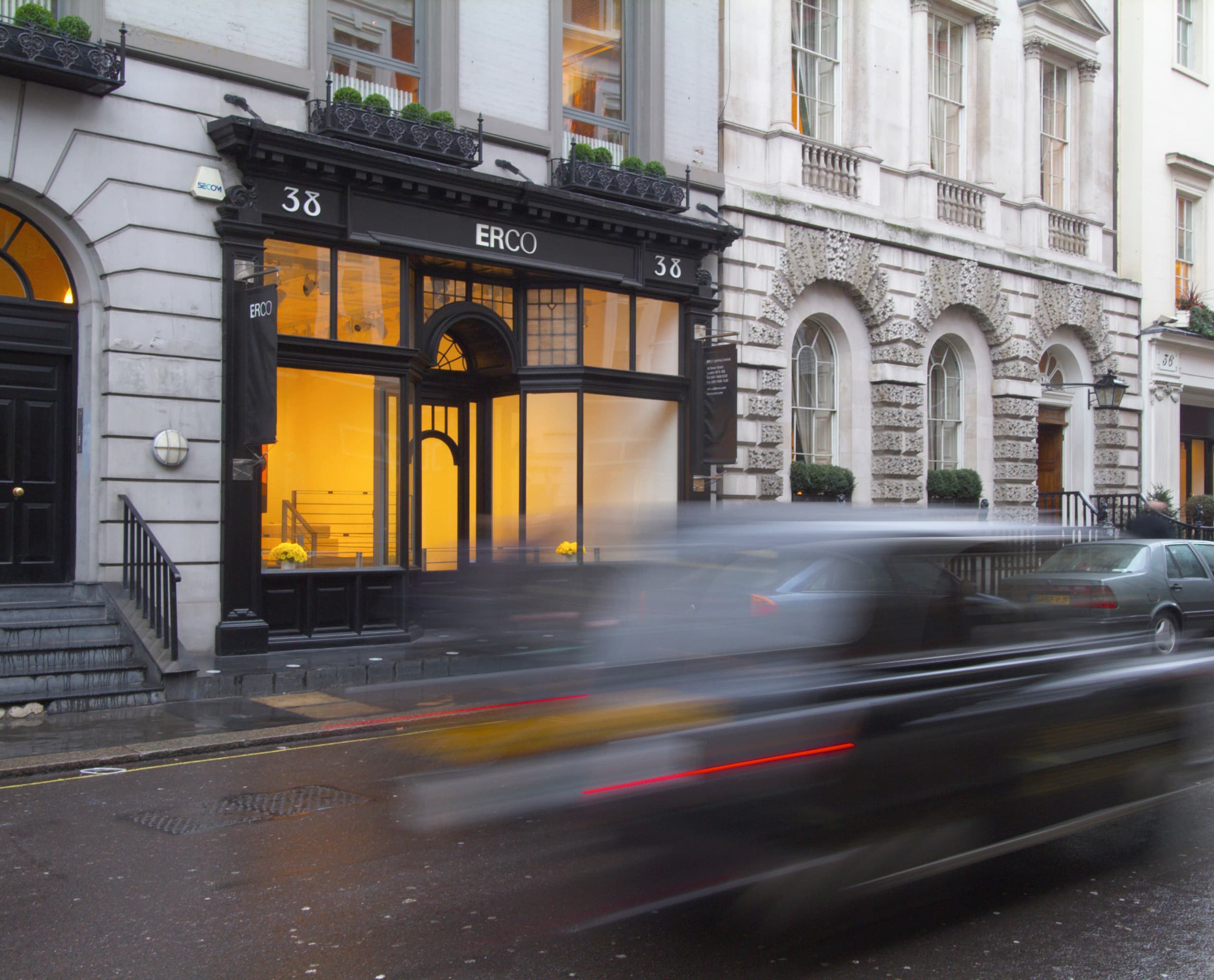
ERCO Showroom, Dover Street, London
To make these different dimensions of light visible, the exhibition brings together two very different artistic positions. Adam Leef approaches light through close observation and the careful study of atmospheric change. Howard Hodgkin, by contrast, translates memories and emotions into immediate gestures and intense colour harmonies. For Maya Binkin, this contrast lies at the heart of Framing Light: the question of how differently light can be experienced – both as an observed phenomenon and as an emotional recollection.
Together with ERCO, the exhibition developed a concept that directly addresses this question. Rather than presenting the works under constant conditions, the gallery itself becomes a changing light environment. Over a cycle of approximately ten minutes, the lighting continuously shifts, simulating characteristic light conditions of an English day. Moments of brightness alternate with overcast periods, while the light becomes warmer or cooler, creating different atmospheric states.
As a result, visitors encounter the same works again and again in new ways. Colours emerge or recede, spatial depth changes, and details become visible that were previously difficult to perceive. For Maya Binkin, the collaboration with ERCO was also an opportunity to make a normally invisible aspect of curatorial practice visible.
Collaborating with ERCO has given me the opportunity to bring that normally invisible element of my practice to the foreground and put it into flux.
Maya Binkin, Curator
Light has always been part of exhibition-making but usually remains in the background. In Framing Light, this element is deliberately brought to the forefront and placed in a state of continual transformation. The exhibition space itself becomes part of the narrative. Light assumes an active role within the curatorial concept instead of limiting itself to the illumination of artworks.
The installation also challenges the traditional separation between artwork and environment. The works no longer appear as static objects but as works that continuously interact with their surroundings. Light becomes the medium through which the exhibition’s central question can be experienced: How do perception, atmosphere and meaning change when the conditions of seeing change?

The technical foundation of this installation is Tunable White technology. It enables the continuous adjustment of colour temperature, simulating different daylight situations within an exhibition space.
For Maya Binkin, the particular strength of this technology lies not only in its technical flexibility but also in its curatorial potential. The possibility of “making light itself malleable” and integrating it into the narrative of an exhibition opens up new possibilities for engaging audiences with art. Light can create atmosphere, alter moods and influence how visitors perceive both a space and the works displayed within it. For Adam Leef, his first encounter with this technology was a key moment. “This is the future of exhibition space and gallery lighting,” he says about the possibility of experiencing artworks under lighting that can be adjusted to the individual colours, surface, physicality and mediums of the individual work and its specific needs.
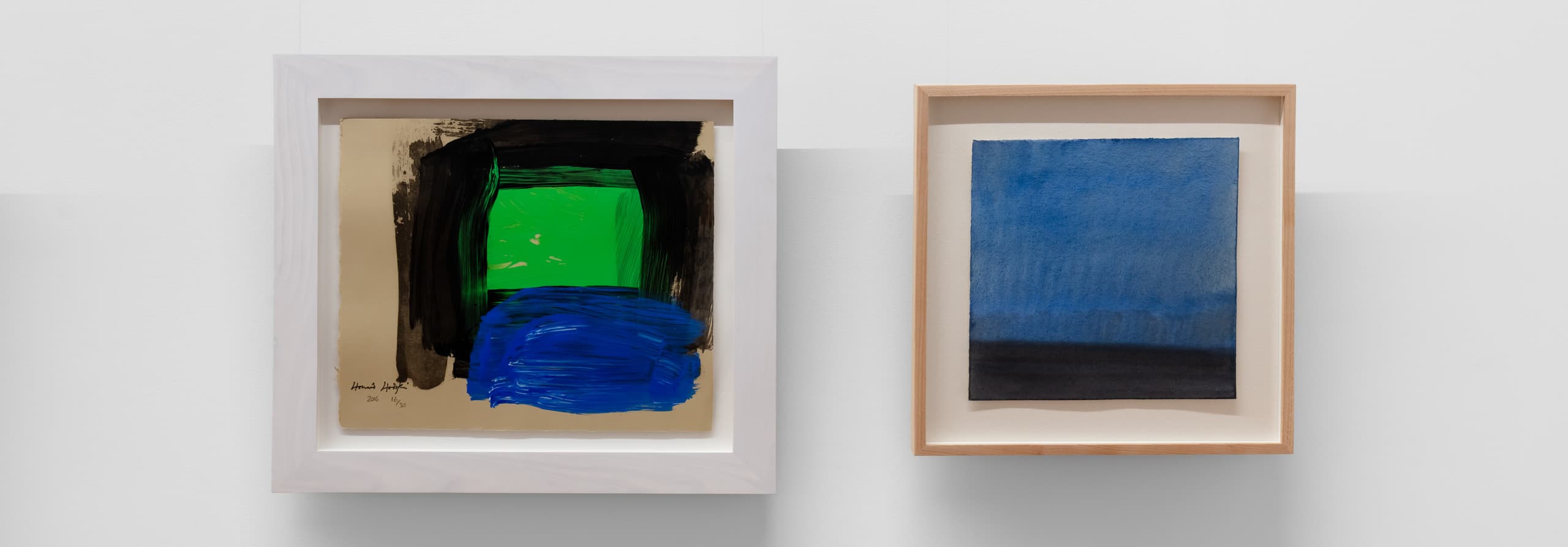
Throughout the cycle, the lighting alternates between warmer and cooler colour temperatures. Warm lighting emphasises the pinks, purples and earthy tones in the works. Cooler lighting, by contrast, highlights blues and greys, reinforcing associations with overcast skies and atmospheric weather conditions. Equally important is the exceptionally high colour rendering throughout the entire adjustment range. The integrity of the colours remains intact while different aspects of the works become visible. Visitors do not experience distorted colours but rather different readings of the same artwork.
This is the future of exhibition space and gallery lighting.
Adam Leef, Artist

The dynamic lighting does not change the artworks themselves but the way they are perceived. Precisely therein lies its curatorial strength. In the restrained watercolours of the English (Hampshire) Suites, certain colour relationships come to the fore depending on the lighting conditions. A cooler light state can emphasise the connection between sky and landscape, while warmer light tones bring the earthy colours of a work into focus.
Howard Hodgkin’s prints also reveal new facets under changing conditions. The expressive colour palette of his works appears more or less intense and emotionally charged depending on the character of the light. Together, both artistic positions demonstrate that light does not simply make things visible – it actively shapes perception. The changing lighting conditions continually open up new perspectives on the same works. Colour nuances, contrasts and spatial depth are constantly transformed, turning the perception of an artwork into an open process rather than a fixed moment.

At the same time, the dynamic lighting recalls the conditions under which the works themselves were created. Artists rarely work under the constant lighting conditions of a museum or white cube. Whether in the studio or outdoors, light is always changing. The installation reintroduces a degree of this unpredictability into the exhibition space, revealing just how strongly our perception of art depends on the conditions under which we see it. As a result, visitors experience an unusual mode of exhibition viewing. Rather than grasping a work in a single moment, they are invited to linger, observe, and consciously register change. Seeing itself becomes part of the experience.
The exhibition demonstrates a fundamental shift in the way museum and gallery lighting is understood. Lighting is no longer seen solely as technical infrastructure but as a means of curatorial expression. For Adam Leef, the significance of light can be summed up simply: “Light to artists is what acoustics are to musicians.” Light is the invisible prerequisite that allows art to reveal its depth, complexity and emotional impact. His collaboration with ERCO has shown him how precisely modern lighting technology can respond to the specific requirements of individual works and exhibitions. For Maya Binkin, the significance of this approach extends far beyond the exhibition itself.


Lighting can help shape atmosphere, emotion and the way a visitor moves through and responds to a space.
Maya Binkin, Curator
The ability to use light dynamically opens up new forms of storytelling for curators. When light can change, it becomes a tool for creating atmosphere, conveying emotion and guiding visitors through an exhibition. Dynamic lighting therefore expands the curatorial toolkit with an additional narrative layer. At the same time, Binkin is clear that the lighting intervention should never become a technical effect or spectacle. What matters is that the artworks themselves are strong enough to reveal new qualities under changing conditions. Lighting should sharpen perception, not distract from the works.
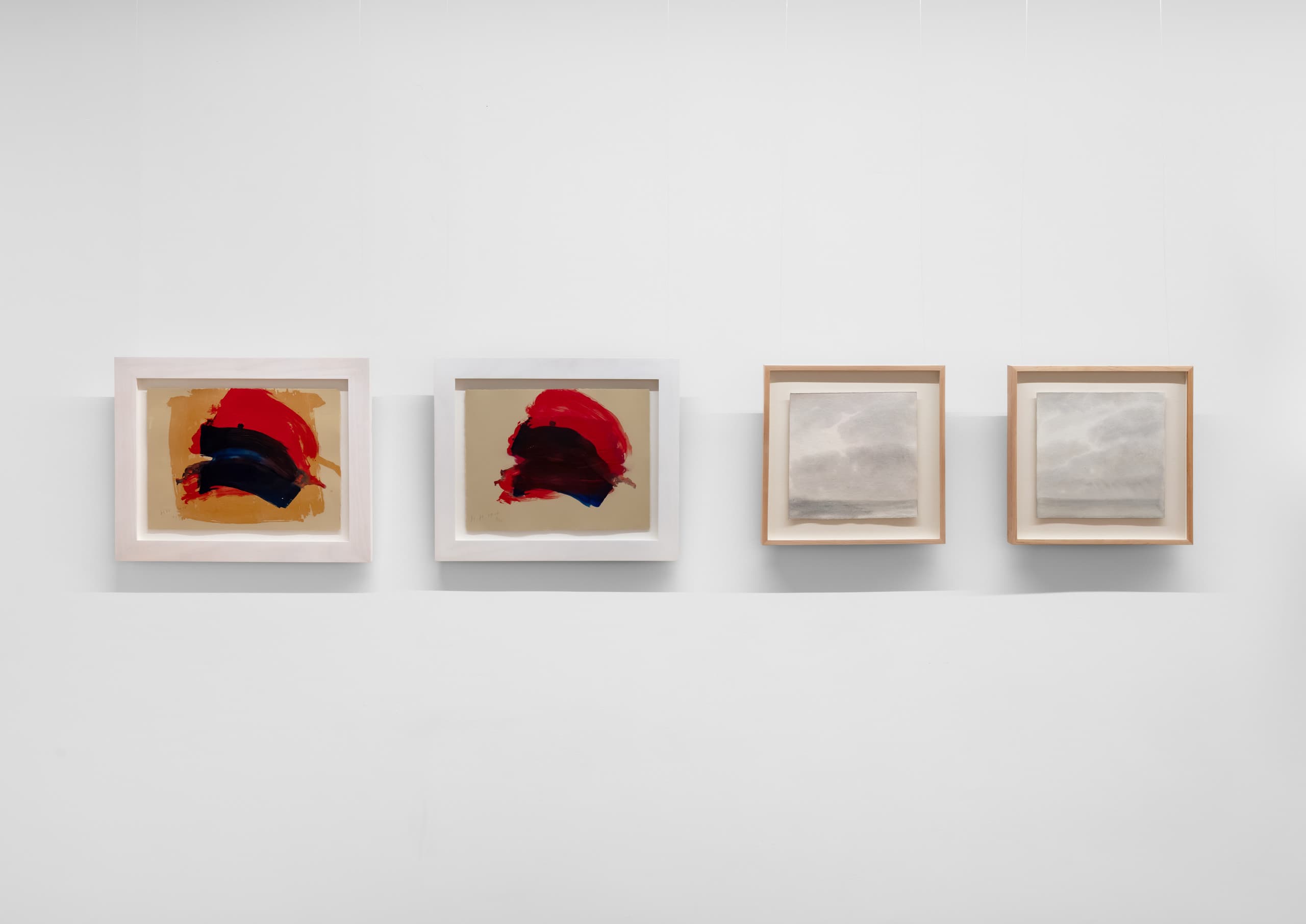
Framing Light demonstrates that light is far more than a means of illuminating art. It influences how we see, what we perceive and the meanings we assign to a work. For Adam Leef, light is the invisible foundation of artistic experience; for Maya Binkin, it is an active curatorial medium. Together with ERCO’s dynamic lighting solution, the exhibition creates an environment in which light not only reveals but also becomes part of the narrative itself.
When asked what good lighting reveals in an exhibition that would otherwise remain hidden, Maya Binkin answers with a single word: “Nuance.” These nuances lie at the heart of Framing Light and make tangible the close relationship between art, perception and light.

