Light for a world full of stories: KOLK 17 Figurentheater & Museum, Lübeck
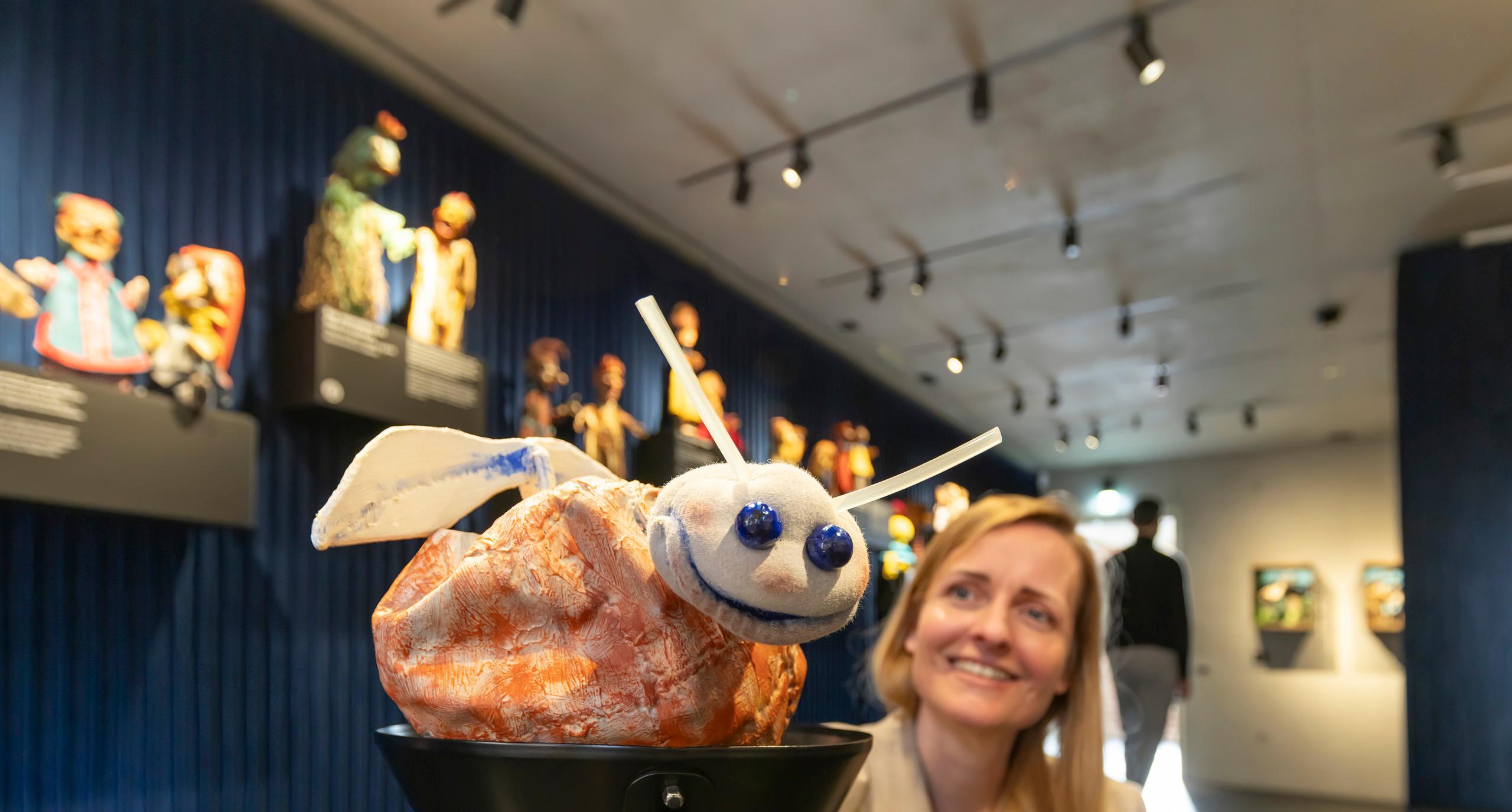
Frieder Blickle
Theatre and museum, historical fabric and contemporary architecture, preserving and transforming: in the heart of Lübeck's old town, KOLK 17 Figurentheater & Museum brings different worlds together under one roof. For this project, completed in 2025, Konermann Siegmund Architekten reorganised the historical building ensemble. A new museum building emerged behind a heritage-protected façade, while the puppet theatre gained a new auditorium and a forum. In all, seven interwoven building sections connect exhibition spaces, theatre, offices, and accommodation for artists. The lighting design was handled by ANDRES + PARTNER.
Storytelling plays a special role here. Figures and selected exhibits are not merely presented but become the protagonists of stories. Spaces are staged, viewpoints shift, and new connections emerge. The exhibition itself is designed for change and is intended to keep telling new stories over and over again. This very idea had to be supported by the lighting as well.
The demanding architecture of KOLK 17 Figurentheater & Museum placed particular requirements on the lighting design. In this densely built historical setting, heritage-protected building sections meet contemporary architecture. Each space has a character of its own and called for an individual solution. At the same time, the museum needed to be able to respond flexibly to changing exhibitions.
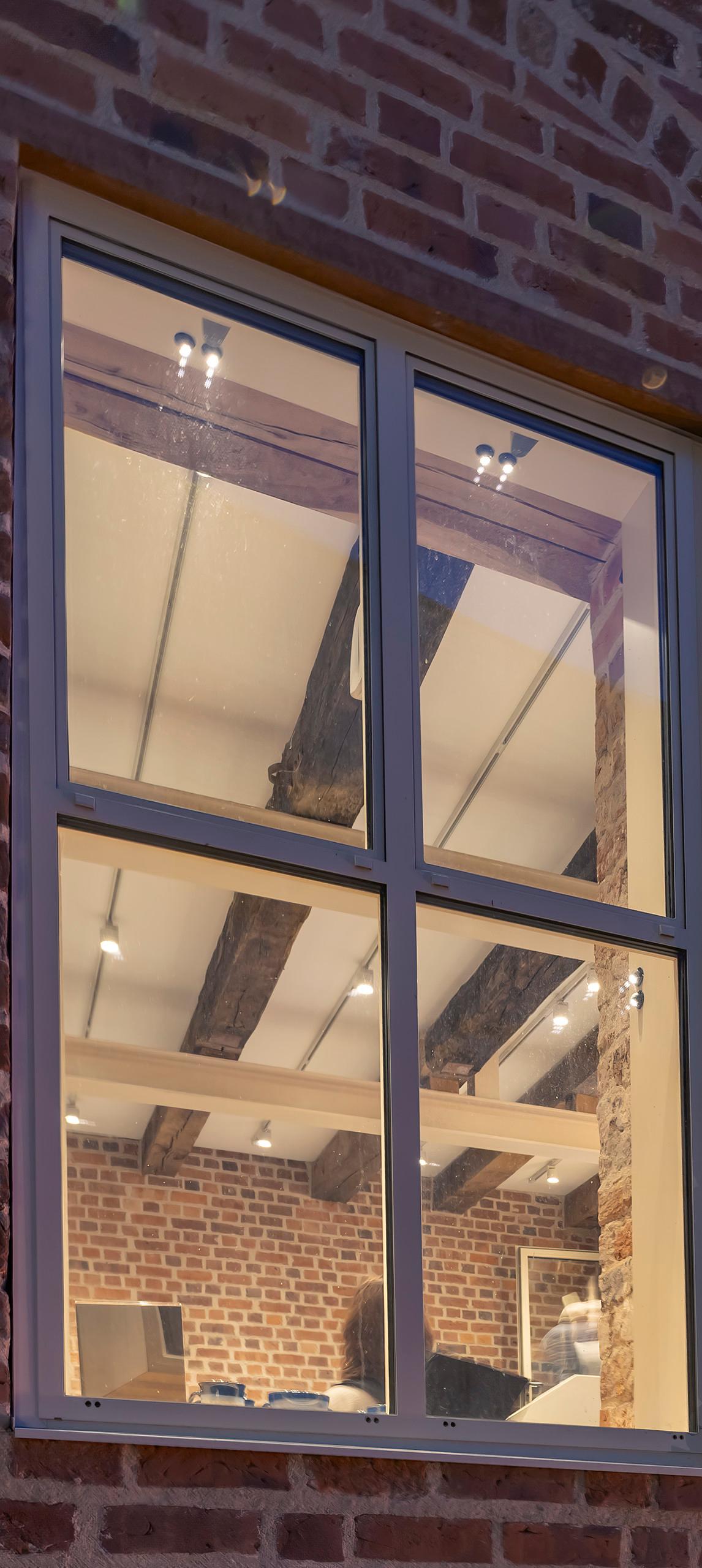
The light makes this dialogue between past and present tangible: luminaires integrated flush into historical walls illuminate the new concrete museum building, for example. Tracks, in turn, were largely recessed flush into the concrete surfaces. The lighting thus becomes part of the architecture without pushing itself into the foreground. This very integration demanded the utmost precision in both planning and construction supervision.
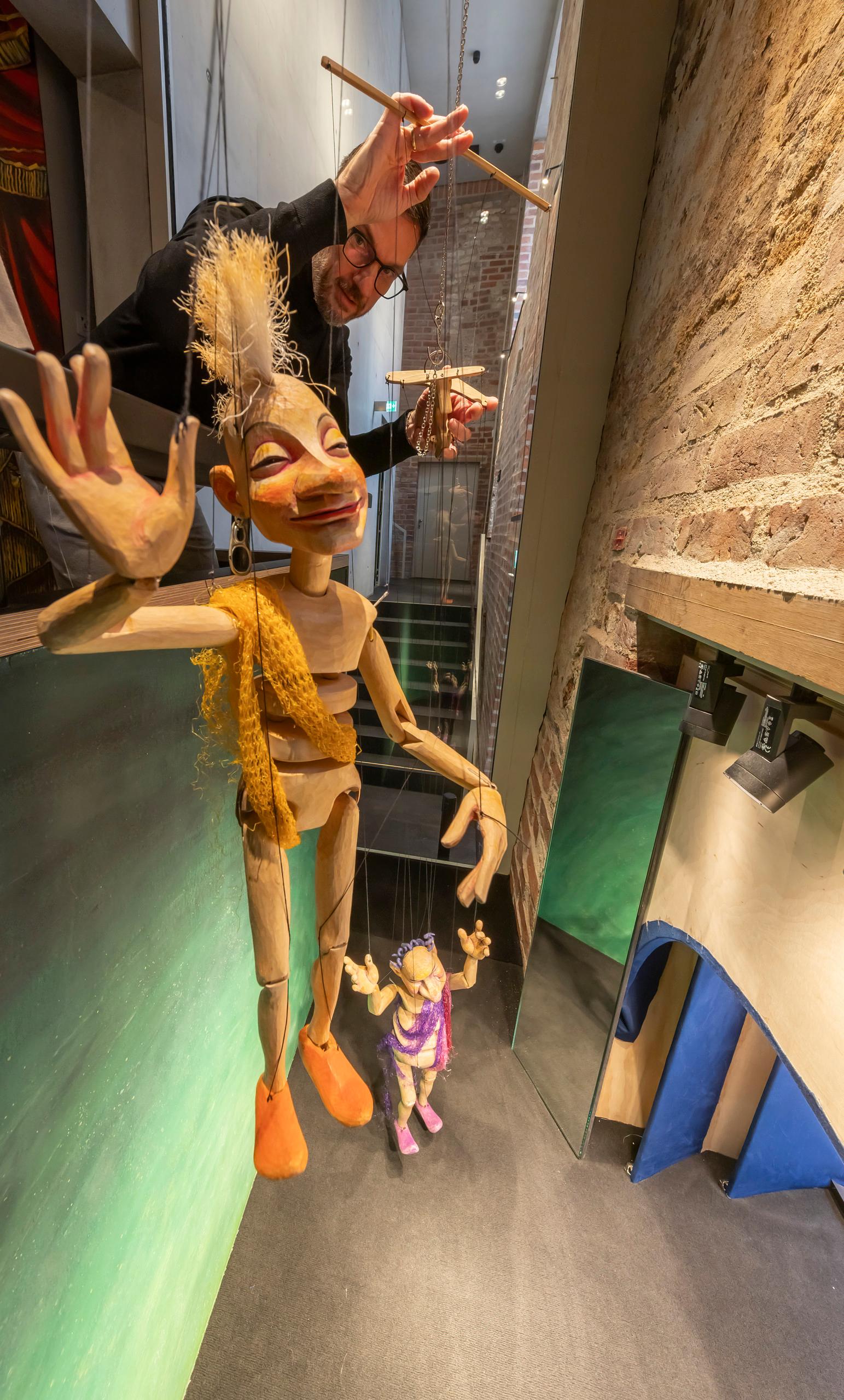
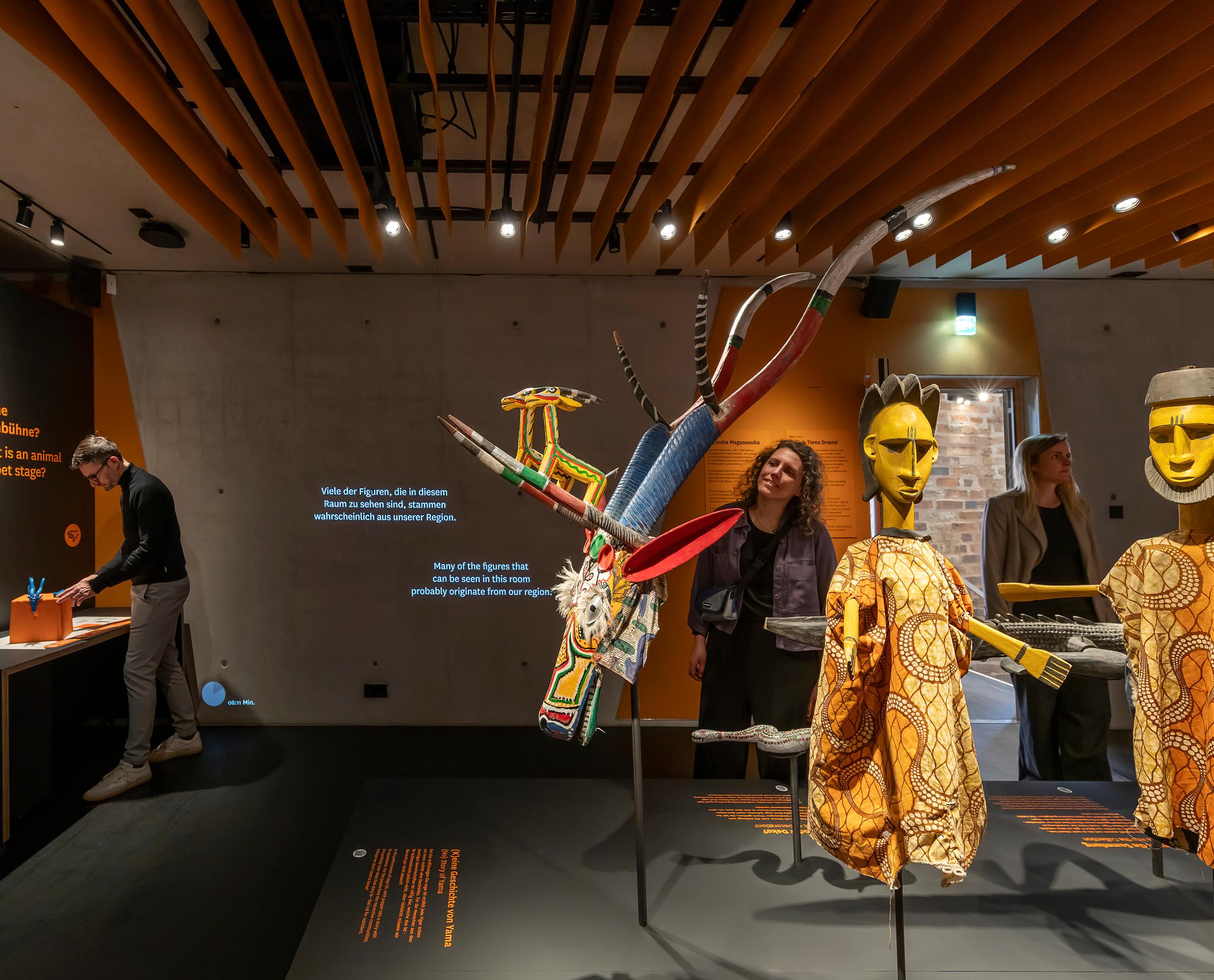
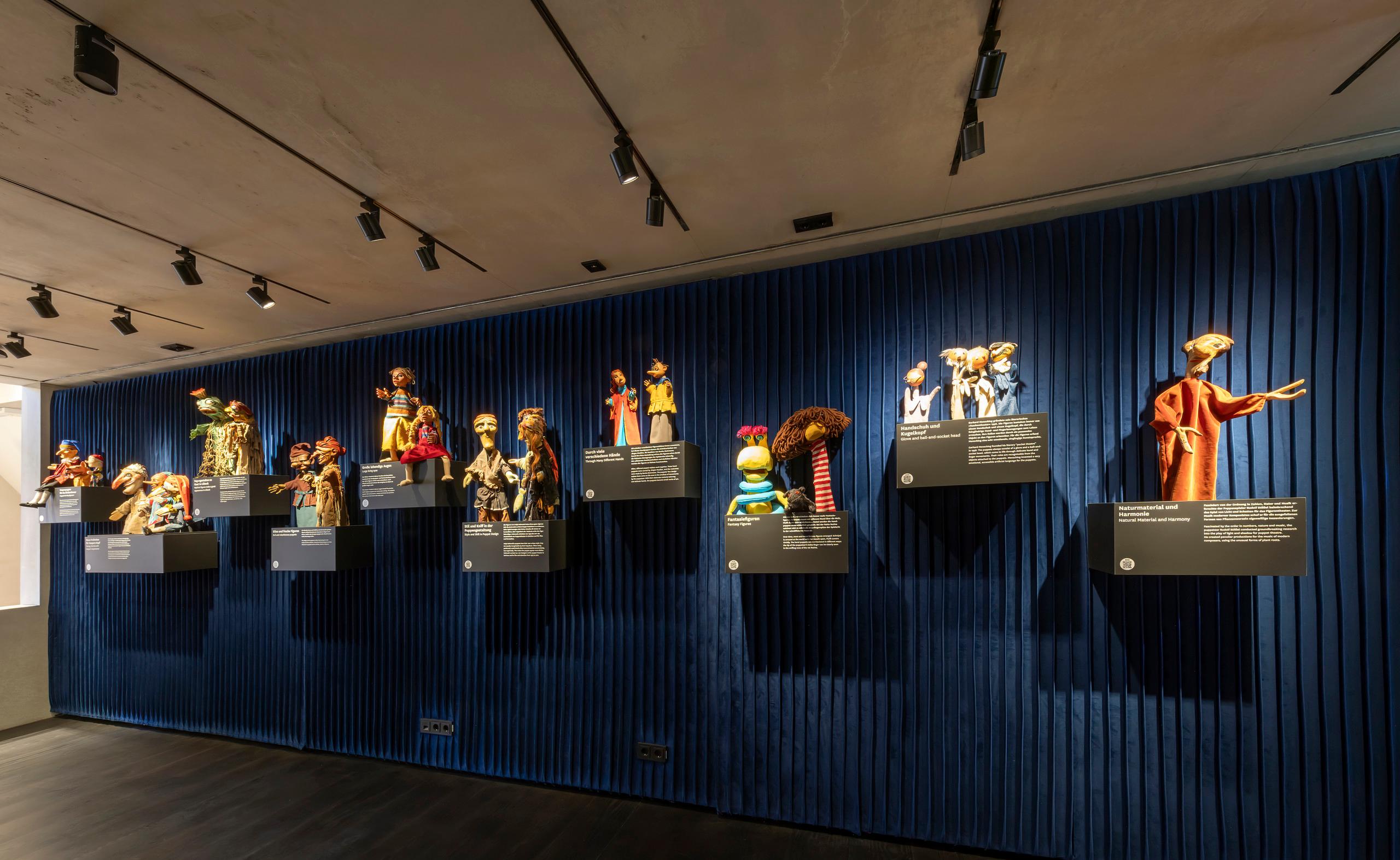
In the museum, the light guides visitors through the exhibition, makes different materials tangible, and directs the gaze specifically towards figures and other exhibits. Among the tools used for this are Parscan New spotlights combined with the compact Minirail 48V track system. Different light distributions make it possible to tailor the lighting to the size and presentation format of an exhibit. The lenses of the Parscan spotlights can be swapped out effortlessly without tools. In this way, the light distribution can be changed whenever the exhibition changes too.
This adaptability is decisive precisely for KOLK 17 Figurentheater & Museum. For where figures appear again and again in new constellations and tell different stories, the lighting too cannot be a rigid system. At the same time, the compact dimensions of Parscan New 48V and Minirail tracks support a discreet integration of the lighting technology. The focus is not on the luminaire, but on what it makes visible.
A particular challenge becomes apparent along the double staircase helix. Large windows create a bright atmosphere here during the day, shaped by daylight. From these light-filled circulation areas, visitors enter exhibition spaces containing objects that are in part light-sensitive. There, lower illuminance levels must be reconciled with an effective staging of the exhibits.
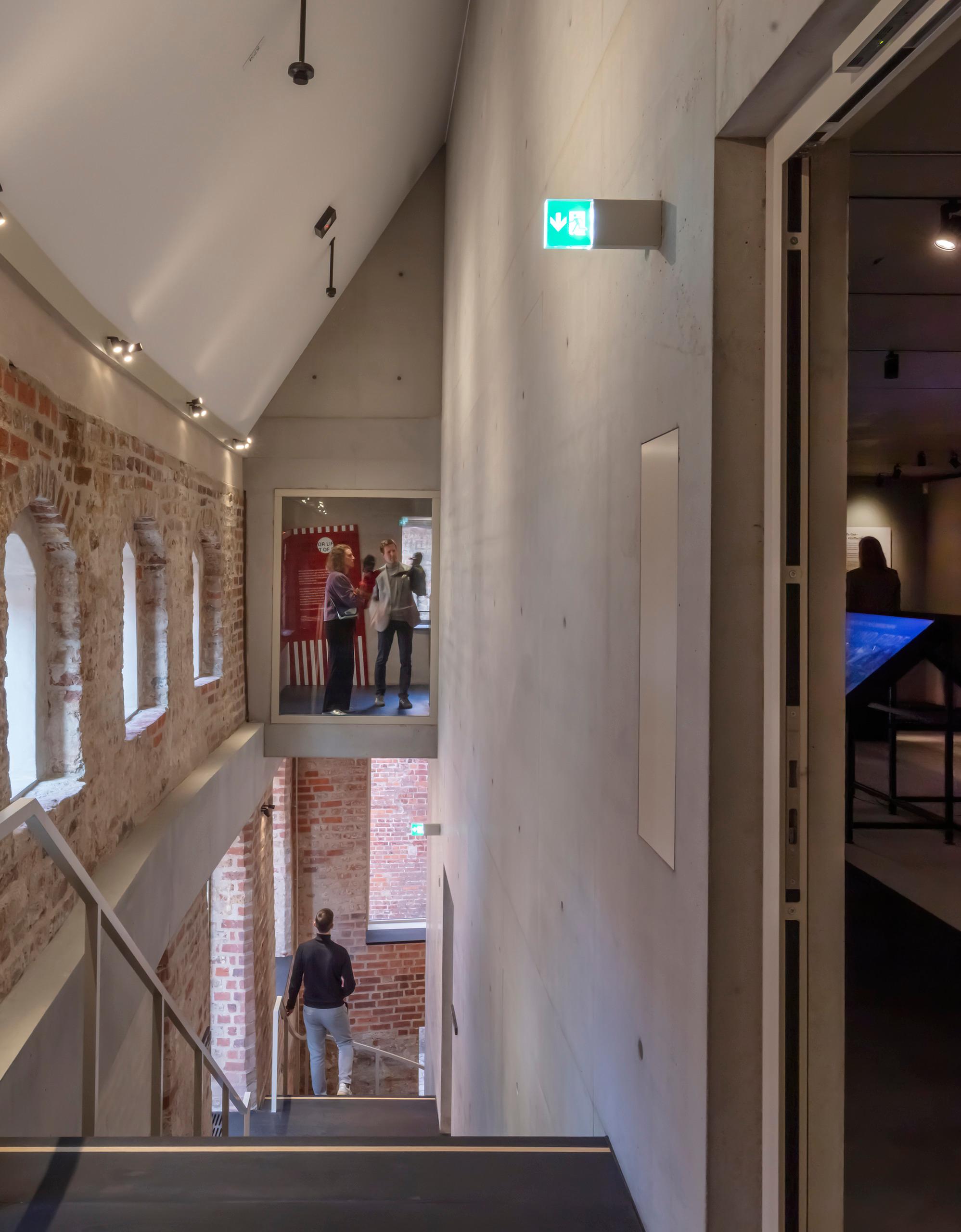
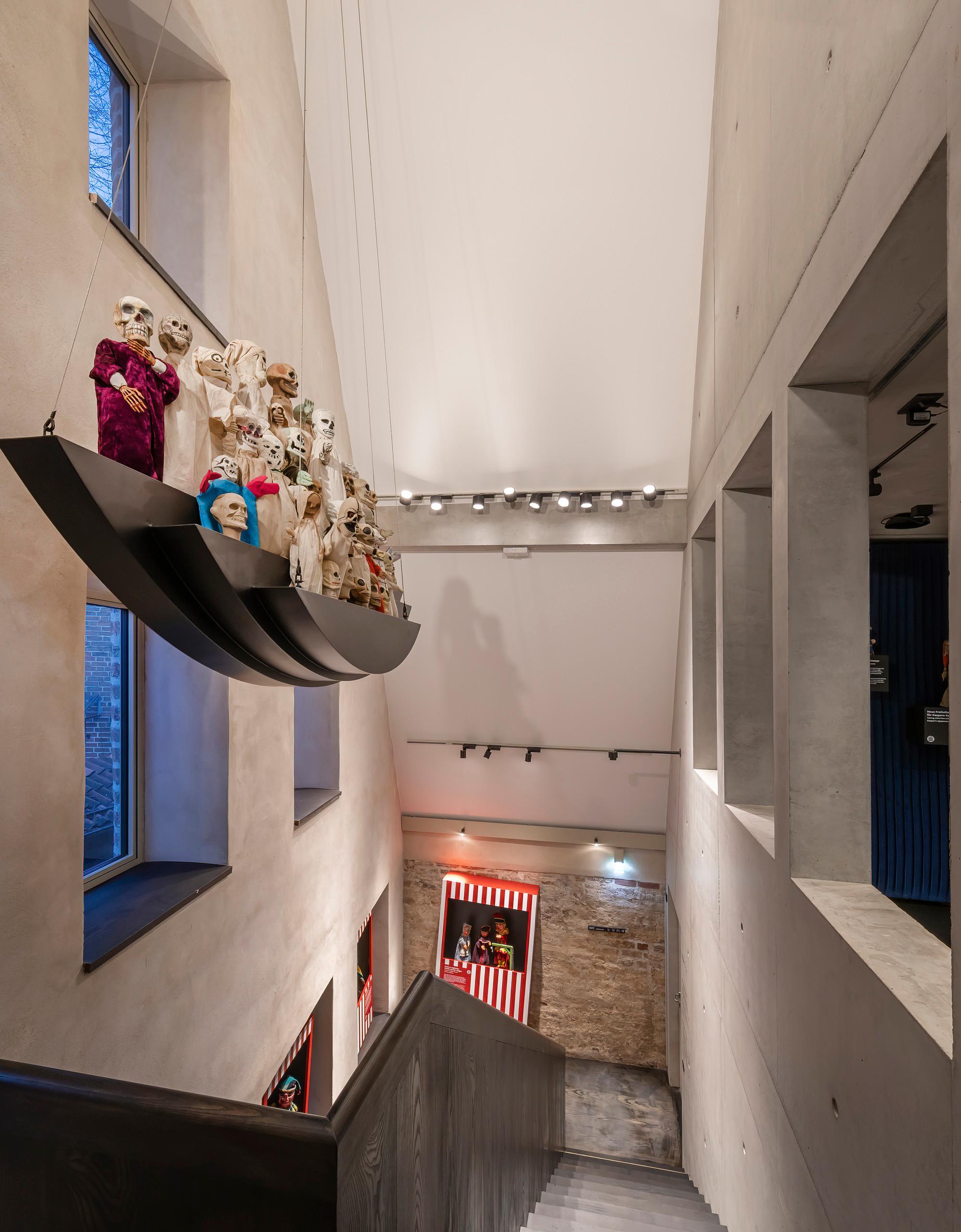
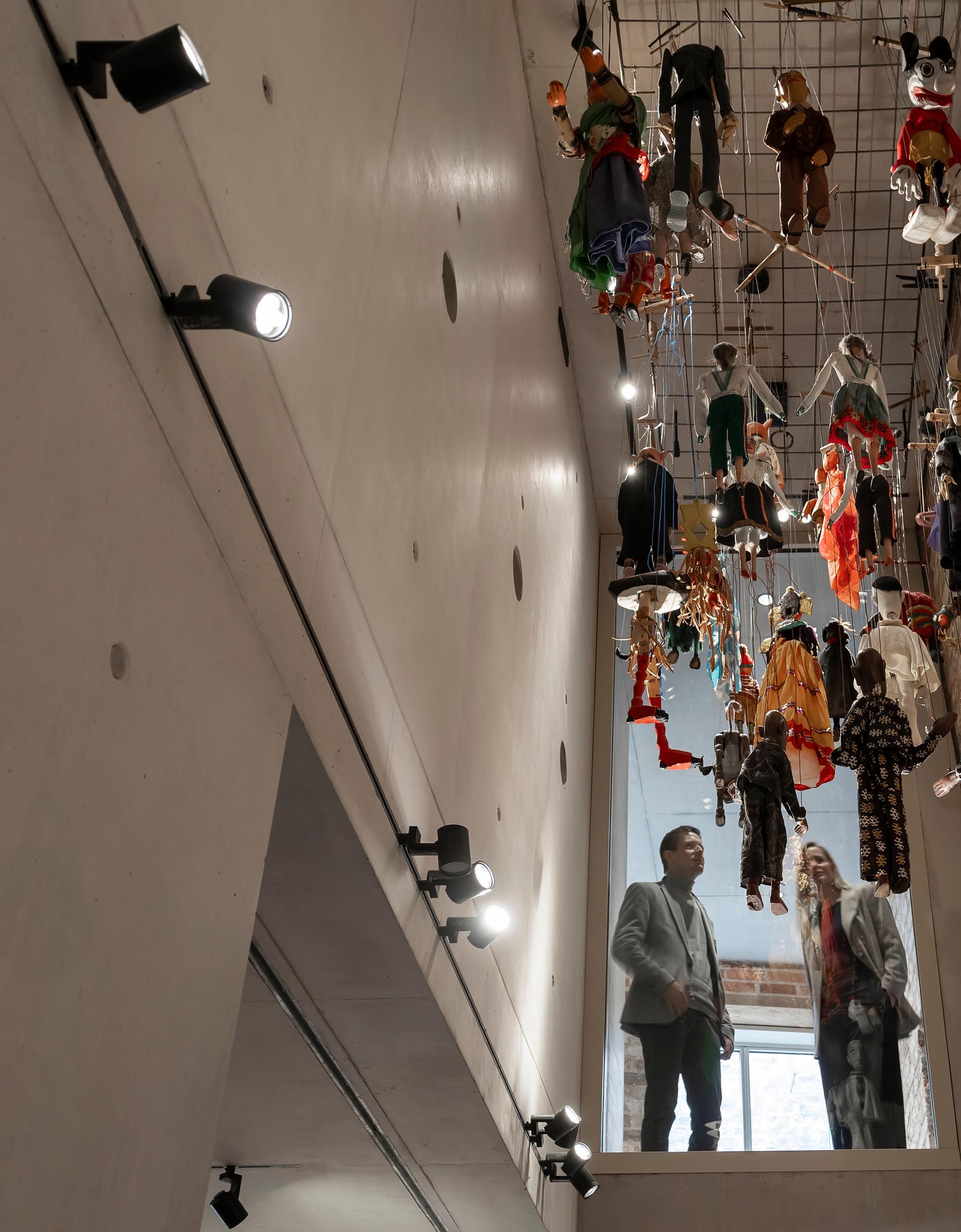
Various light scenes respond to these contrasts. They help to balance perception between bright circulation areas and more sensitive exhibition zones, while at the same time preserving the individual character of the spaces. The light thus takes on several tasks at once: it provides orientation, stages architecture and exhibits, and takes account of the collection's conservation requirements.
The lighting responds not only to different spaces and uses, but also to the visitors. All spotlights in the museum areas are controlled via Casambi Bluetooth. Together with the curators and the client, the lighting design team developed various scenes that are activated by motion detectors. In this way, the light unfolds its effect when an audience is present, while it can be reduced during visitor-free periods. This supports an operation geared to actual needs while also helping to protect light-sensitive exhibits.
The lighting tools themselves also follow the varied requirements of the building: in the foyer, Axis recessed spotlights illuminate the exhibits in the large windows and give passers-by a first glimpse into the world of the puppet theatre. The spotlights can be aimed specifically at the objects on display. In this way, the lighting combines flexibility in everyday museum life with a precise staging of architecture and exhibits.
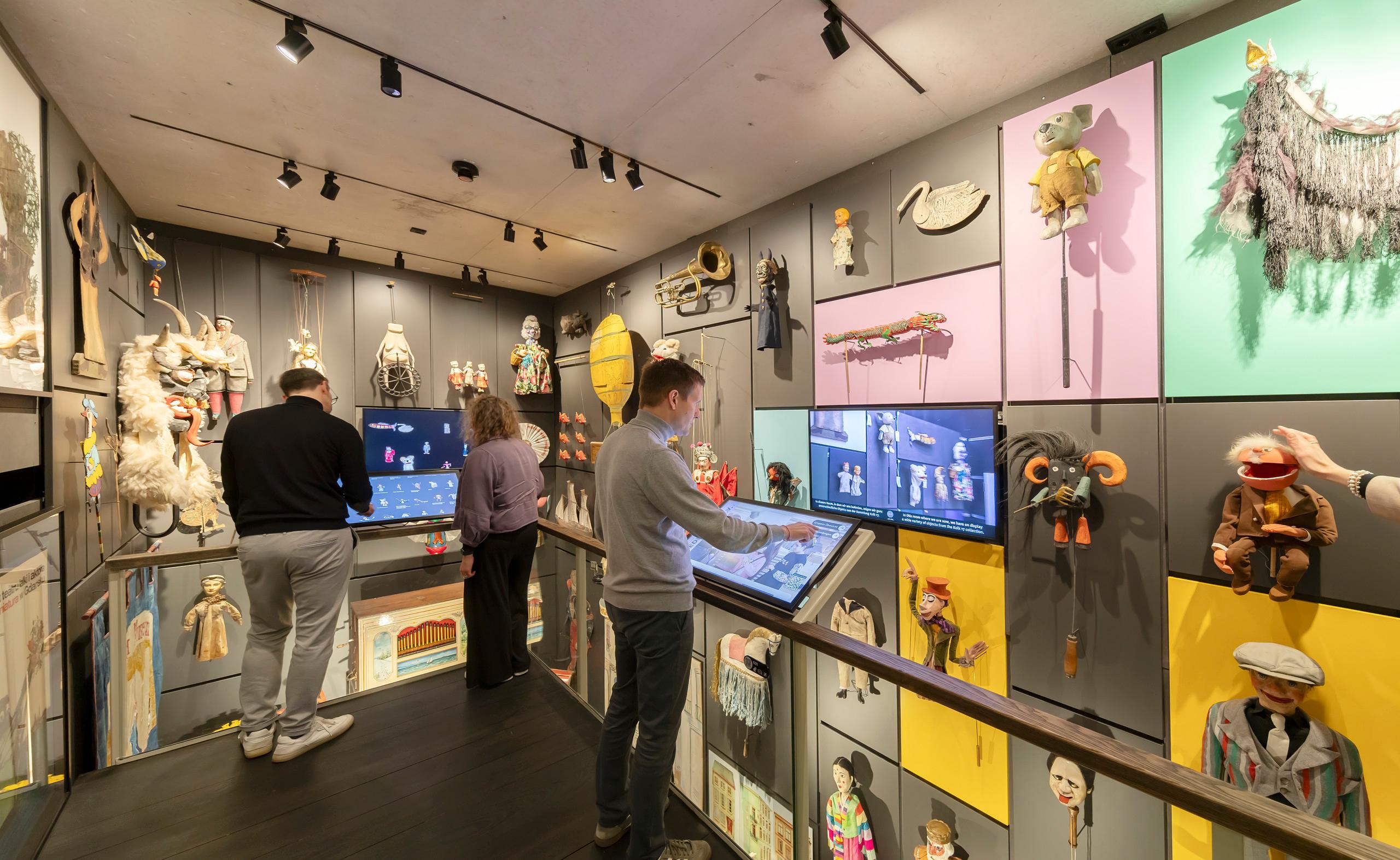
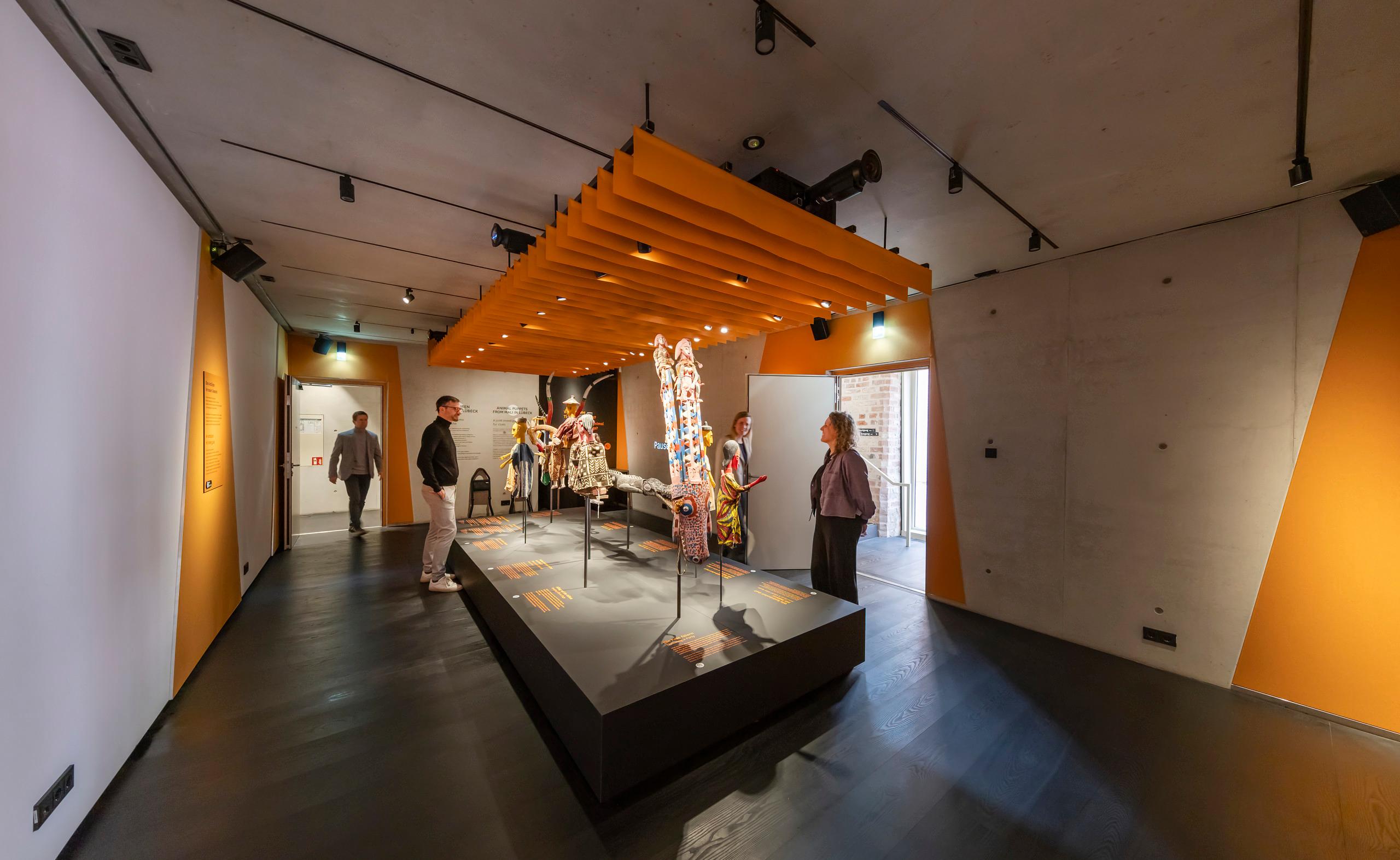
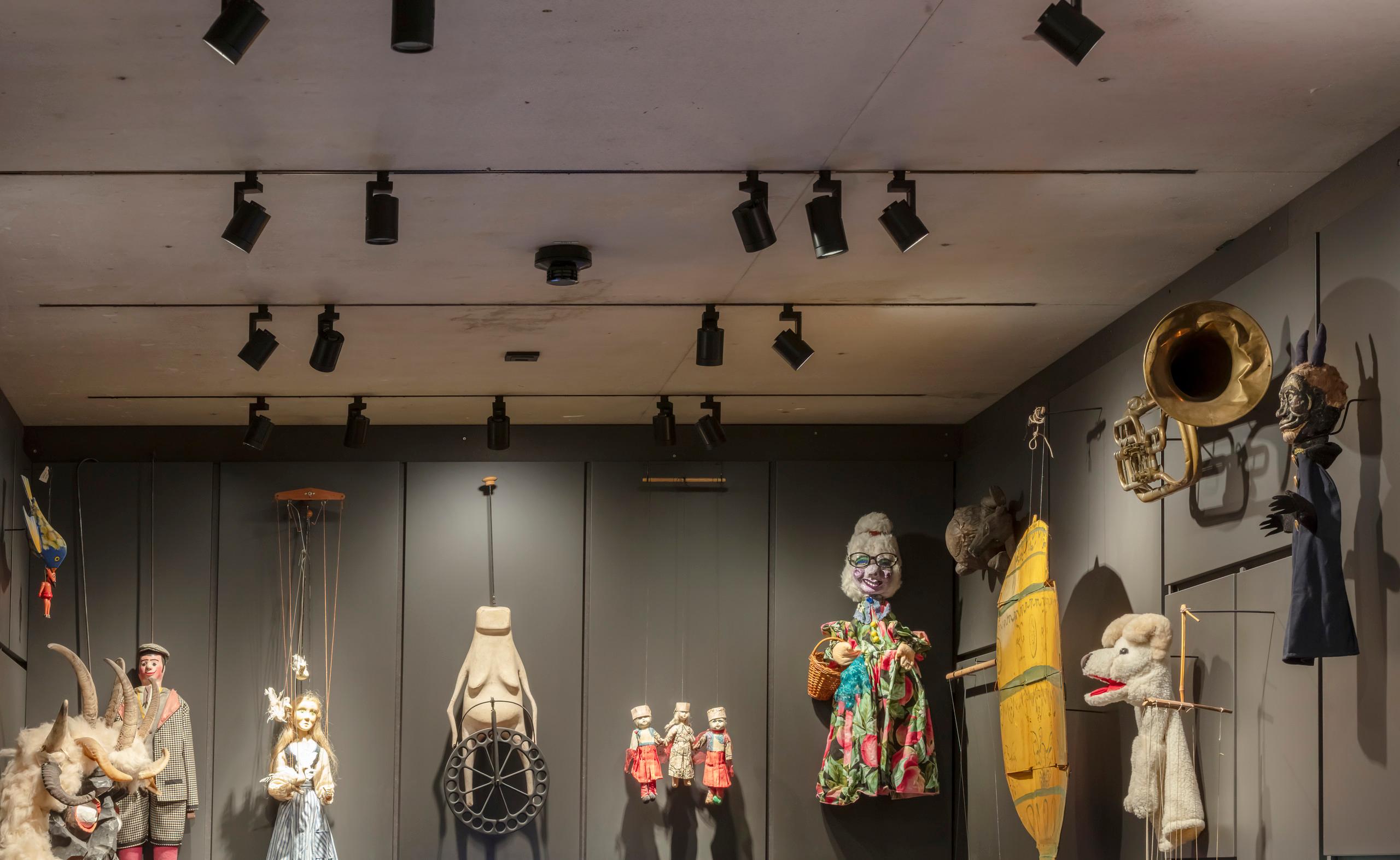
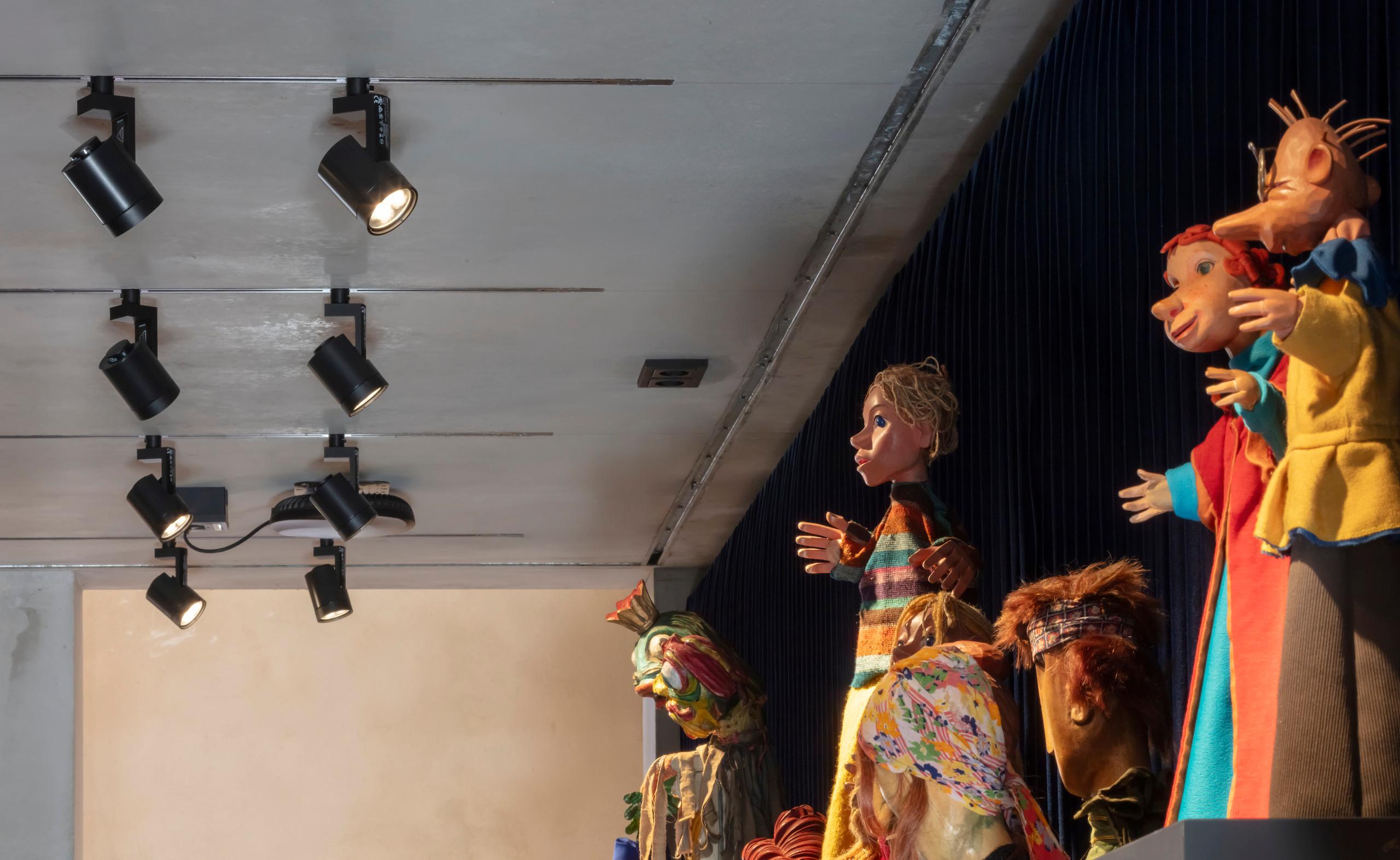
The lighting tools themselves also follow the building's varied requirements: in the foyer, Axis recessed spotlights illuminate the exhibits in the large windows, giving passers-by a first glimpse into the world of puppet theatre. The spotlights can be aimed specifically at the displayed objects. In this way, the lighting combines flexibility in day-to-day museum operations with a precise display of architecture and exhibits.
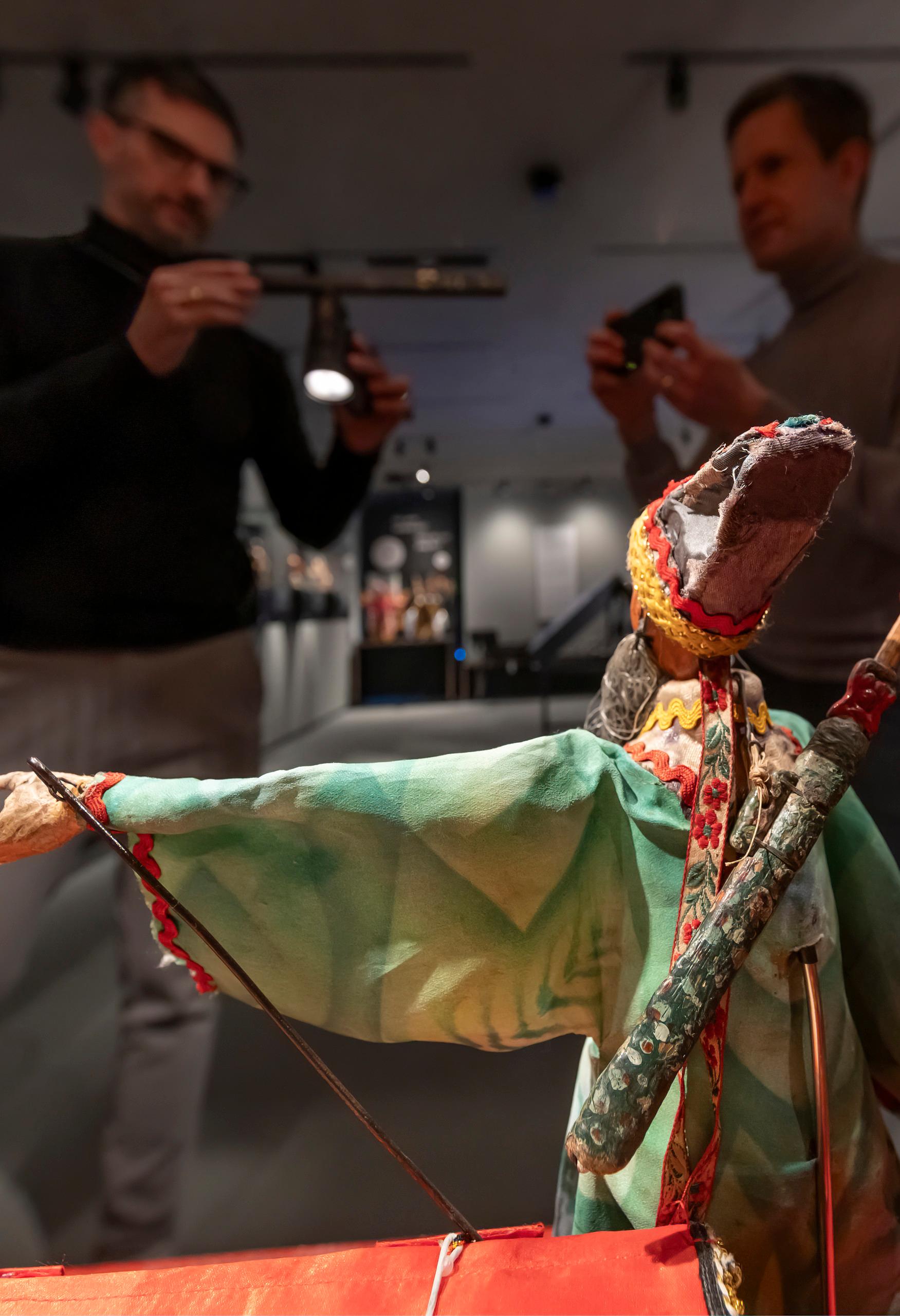
The decision in favour of ERCO was driven above all by the flexibility of the lighting tools and their compact dimensions. Added to this was the support with sample installations and throughout the demanding construction phase. When changes arose during the construction process, solutions could be adapted together. This close coordination made it possible both to respond to changes at short notice and to implement longer-term adjustments.
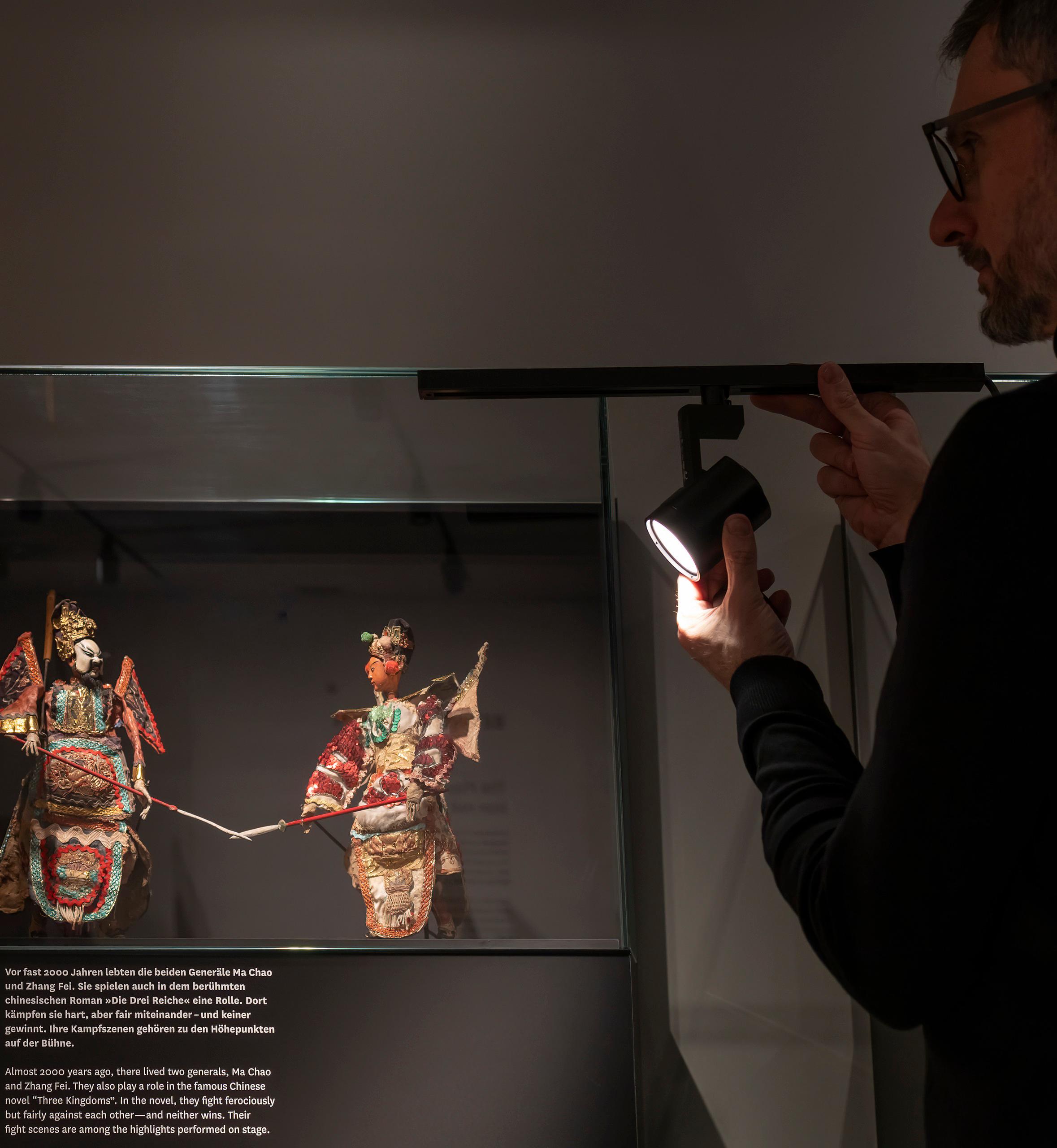
In this way, the collaboration matched the character of the project precisely: rather than a rigid solution, what was needed was a system that could respond to varied architecture, changing exhibitions, and alterations during realisation. ANDRES + PARTNER accompanied the project over a total of seven years, developing the lighting in parallel with the architecture and interior design.
The lighting concept brings together the different worlds of KOLK 17 Figurentheater & Museum into a shared visitor experience. Historic walls and new concrete, light-filled stairwells and sensitive exhibition areas, museum and stage all remain tangible in their own right while at the same time being connected to one another through light.
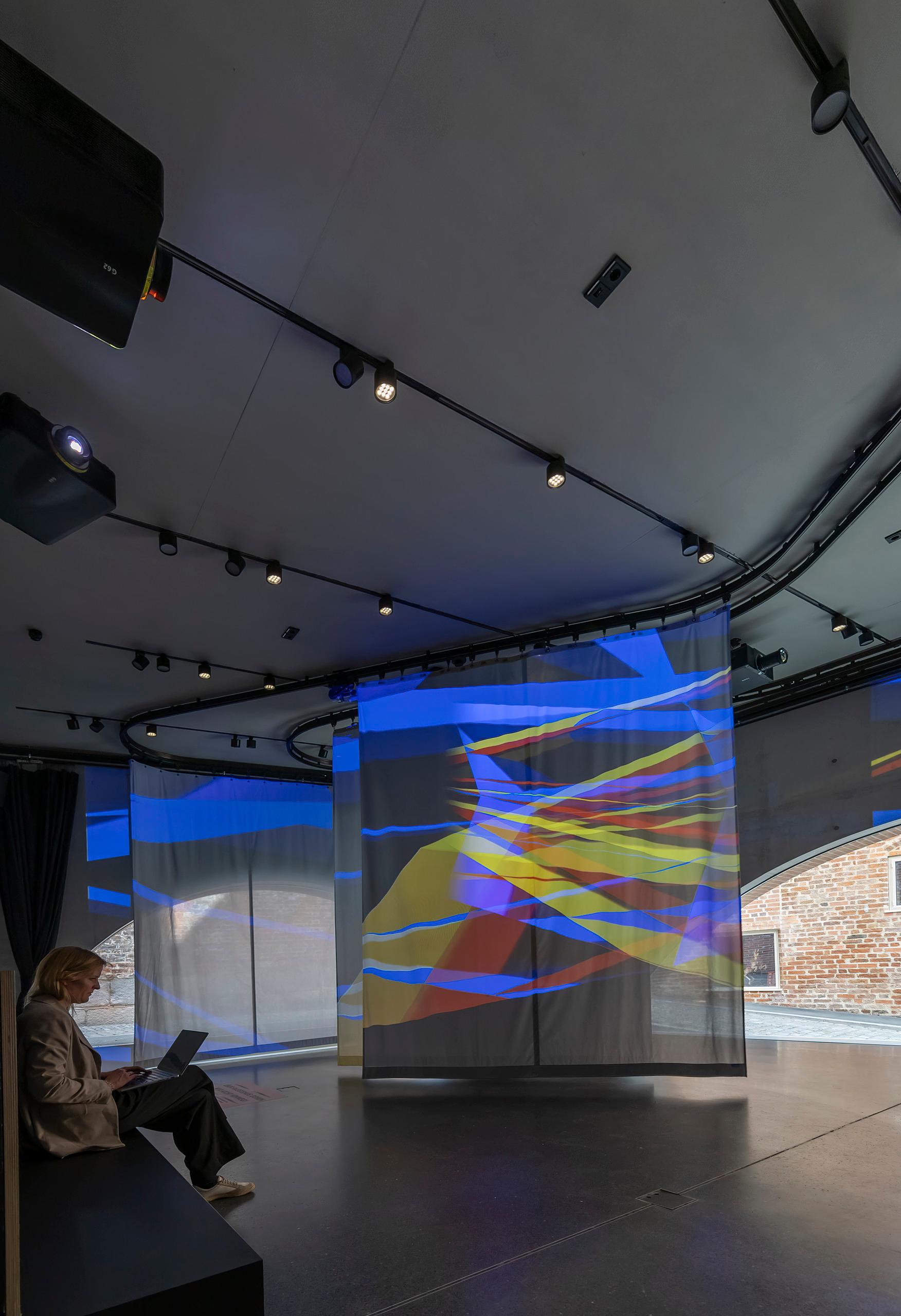
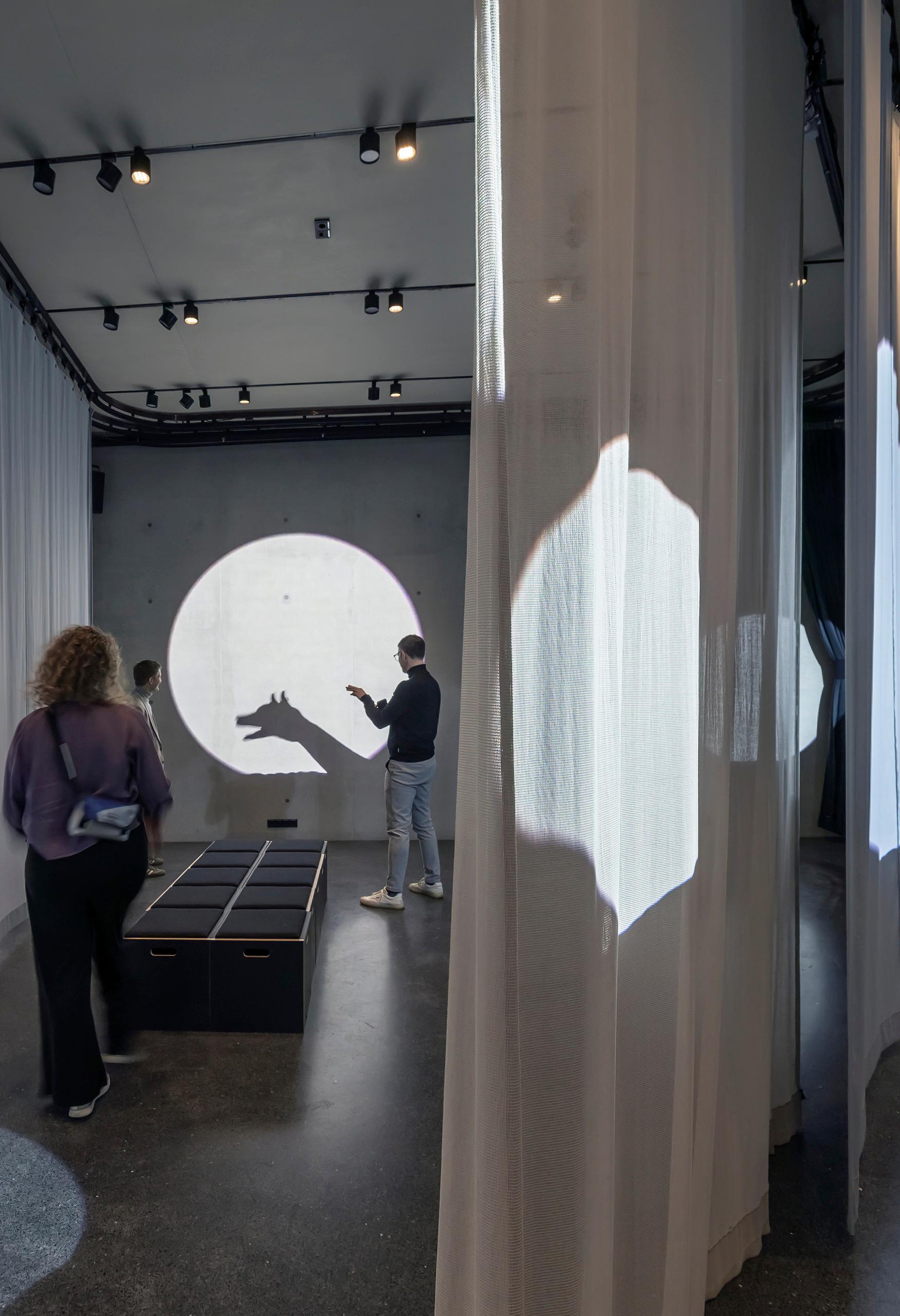
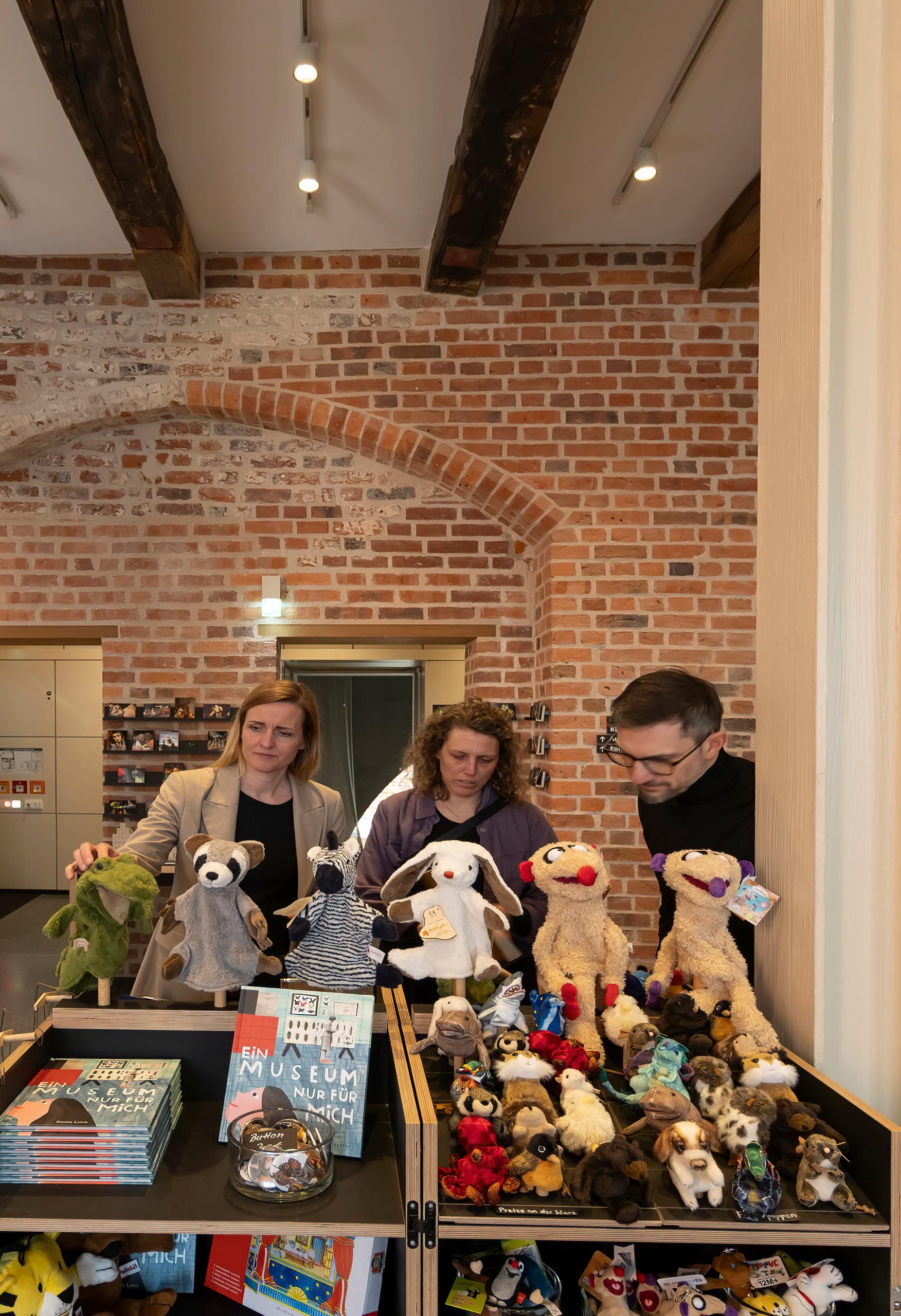
Above all, however, the lighting follows the building's core idea: stories change. Exhibits are rotated, figures enter new contexts, and spaces take on different functions. With precise and flexibly adjustable lighting tools, the lighting creates the conditions for the display to keep changing as well. The result is not static exhibition spaces, but spaces in which architecture, figures, and light tell new stories again and again.


