How can exhibits and rooms be displayed with light?
Increasing the perception of art with a light

Creating perception hierarchies with light
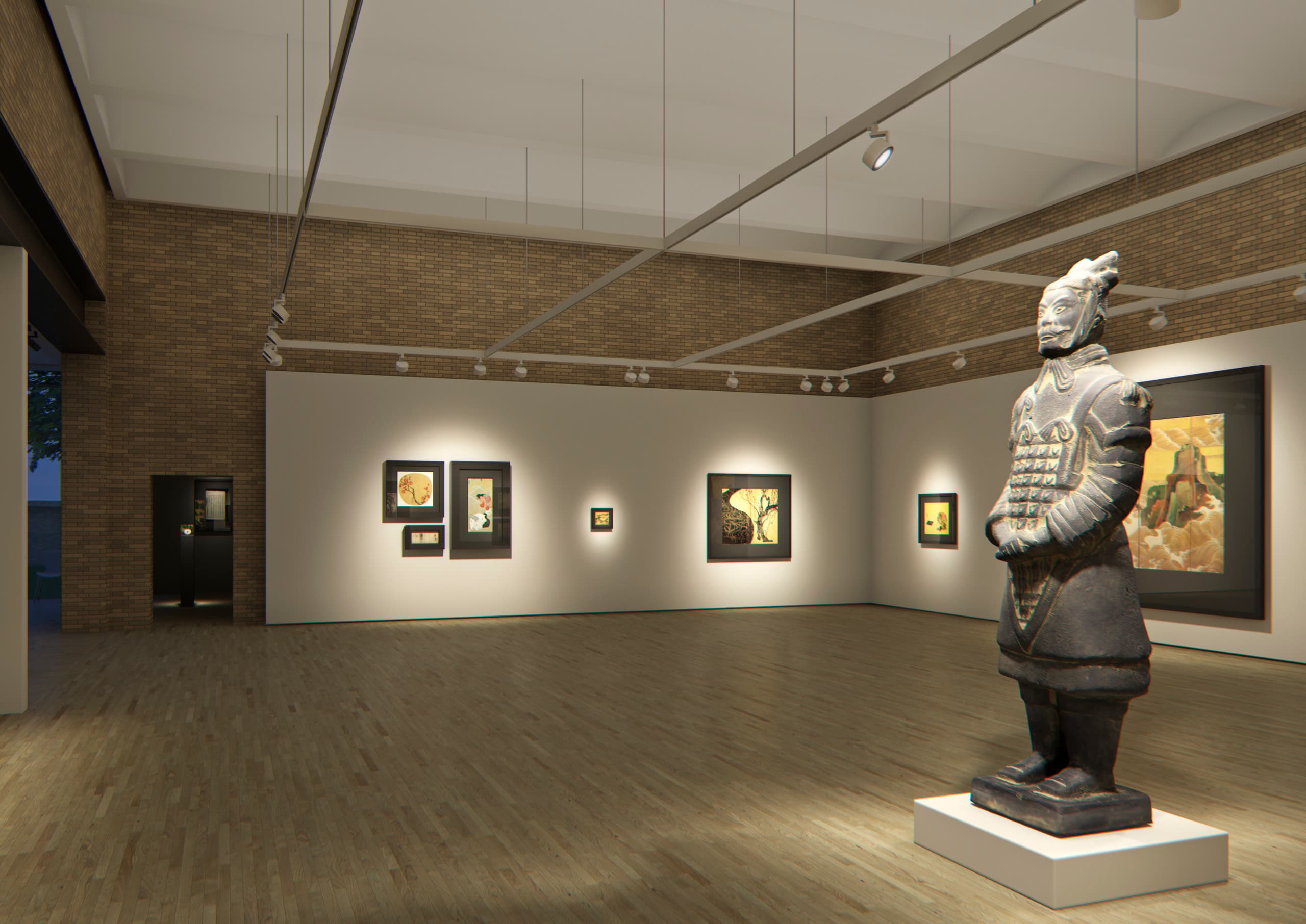
Light renders art perceivable for visitors. It presents exhibits and rooms, it guides the view of the observer and contributes to the drama of an exhibition by lending a special status to important works in a collection. Brilliant light and good colour rendering are indispensable for viewing details.
Emphasising exhibits with accent lighting
Accent lighting structures the room. It attracts the view of the observer onto the exhibits and places the most important objects into the foreground via brightness. Directed light is required for brilliance, e.g. by using spotlights. The luminaires simultaneously ensure rich-detail modelling via light and shadow. Authentic and nuanced colour rendering is achieved by a balanced spectrum and by specifying a suitable colour temperature.
Creating a spatial experience by illuminating the ceiling
General lighting with indirect light emphasises the dimensions of the room. The bright ceiling lends a sense of height to the room. Uniform ceiling illumination is achieved with the luminaires integrated into the upper side of the lighting structure. Sculptures appear almost free of shadows because of this indirect lighting. For this reason, directed light from spotlights is needed for modelling and brilliance.


ERCO light guide: Culture
Planning tips for design and technology