Rods (eye): specialized cells for light-dark vision
Rods belong to the sensory cells in the eye and enable us to see light and dark: Because of their high sensitivity to light, we can still see with them at dusk or under a bright full moon.



What is the function of the rods in the eye?
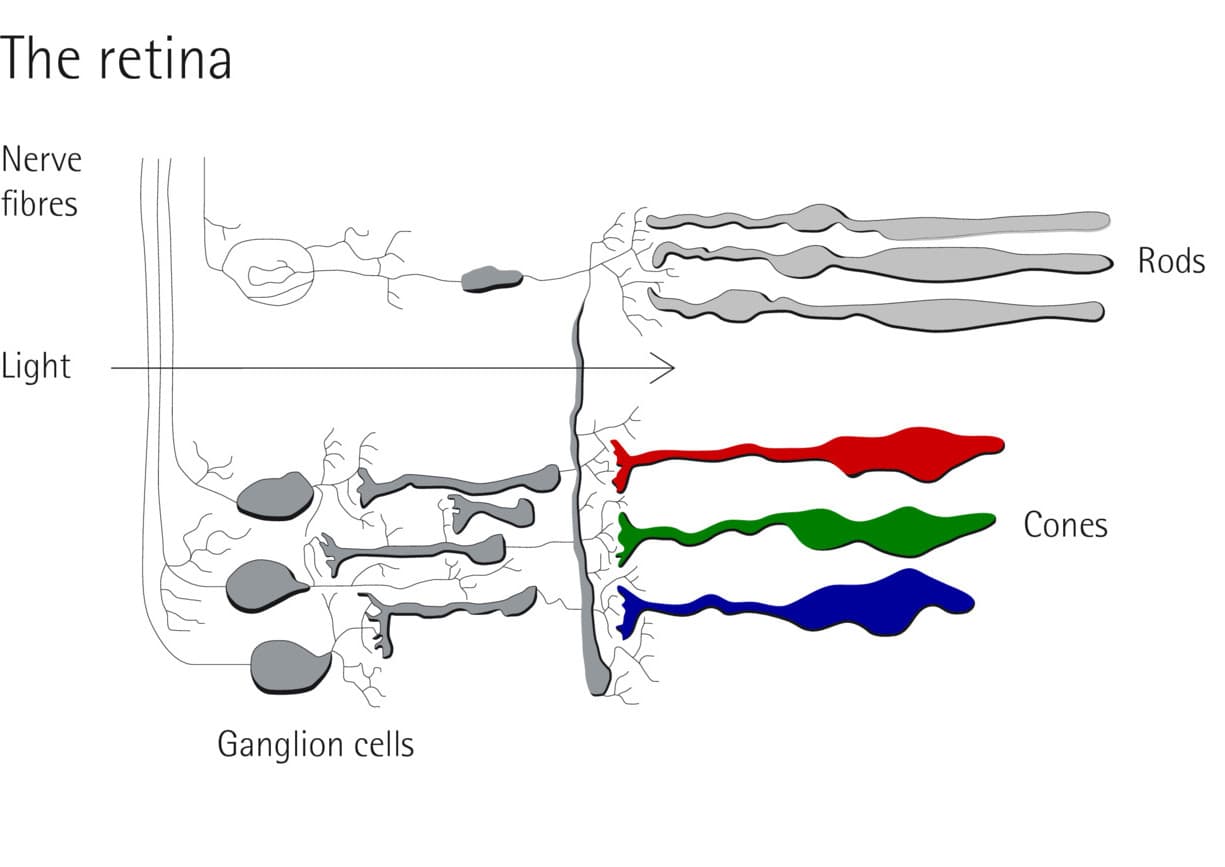
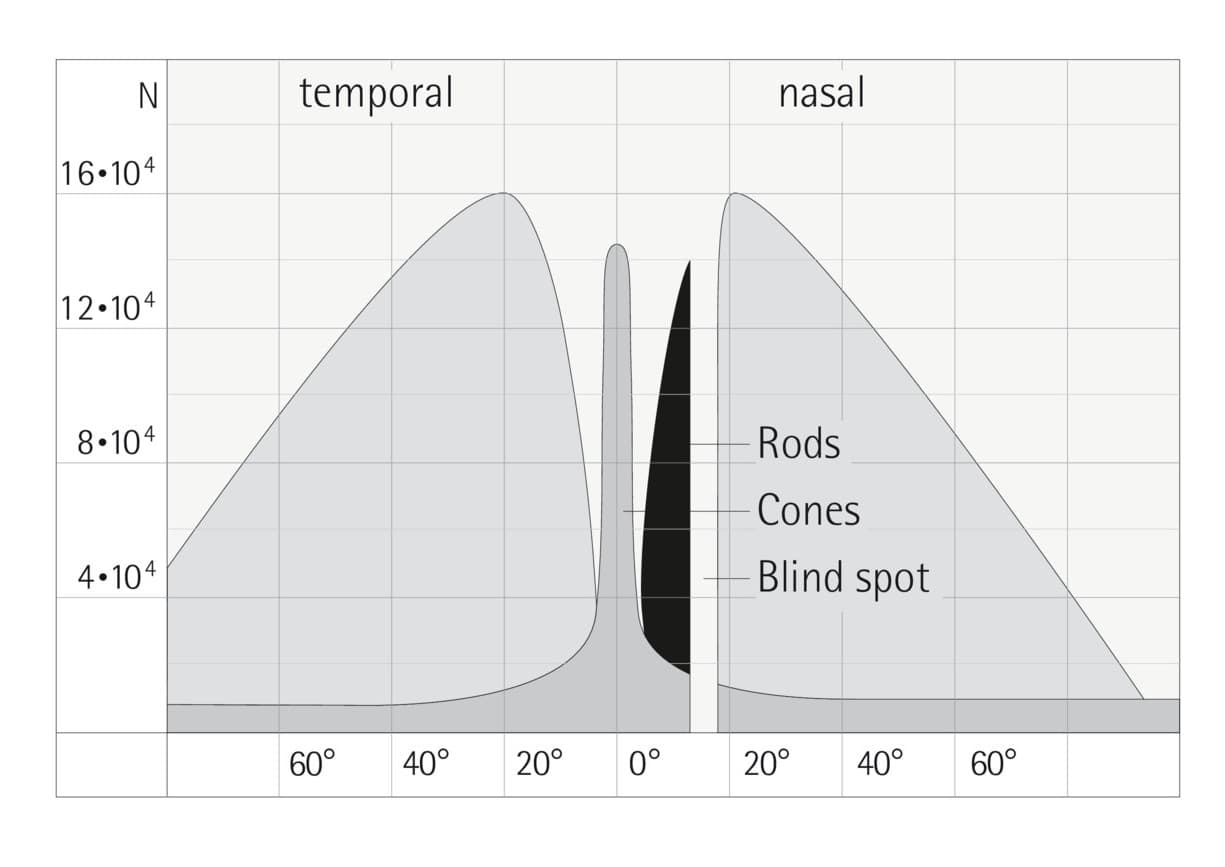
Rods belong to the photoreceptors and are sensory cells for the visual perception of light. The retina has about 120 million rods. The highest density of rods is in a ring-shaped zone around the fovea centralis, the area of sharpest vision. The fovea centralis itself has no rods.
The rods in the eye are used to perceive light and dark and can also register very weak light pulses. With increasing twilight (mesopic vision) and at night (scotopic vision), the eye changes from cone vision (photopic vision, day vision) to rod vision. Unlike cones, no color vision is possible with rods.
Proper fixation on objects through rod vision is not achieved: high visual acuity is only present in the area of the fovea centralis. The cones, that enable sharp vision, are concentrated in this fovea (area of sharpest vision). The rods, on the other hand, are distributed over the entire surface of the retina. This means there is a greater ability to perceive movement in the entire field of vision. We thus see even the slightest movements in the corner of the eye, although perhaps blurred.


