Visual acuity (Visus): how we perceive details
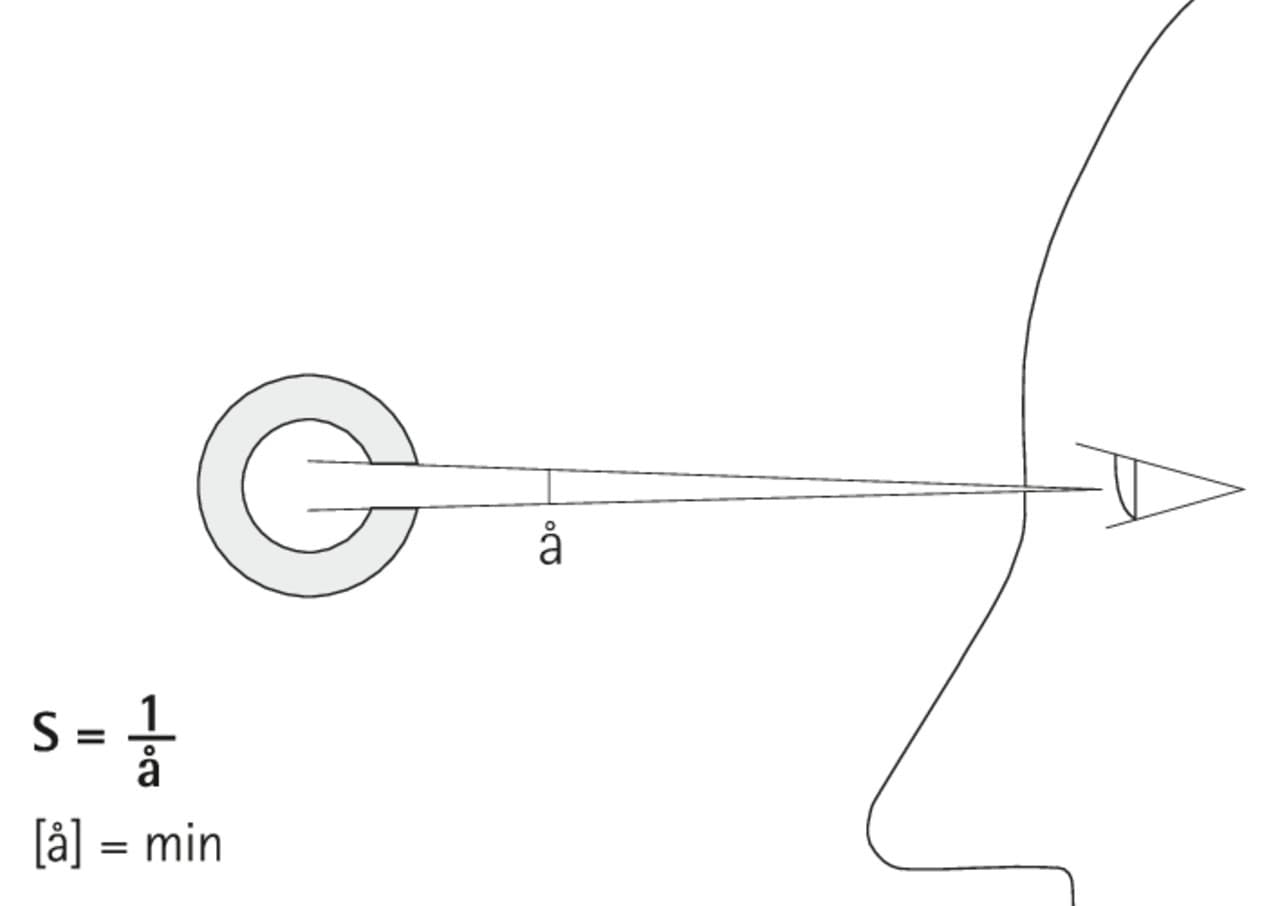
Visual acuity means the ability of the eye to see contours and patterns in a detailed and sharply delineated way. Visus is the medical term for this. The sharper the visual impression, the higher the Visus. The adjustment of visual acuity and differently distanced objects is called accommodation.
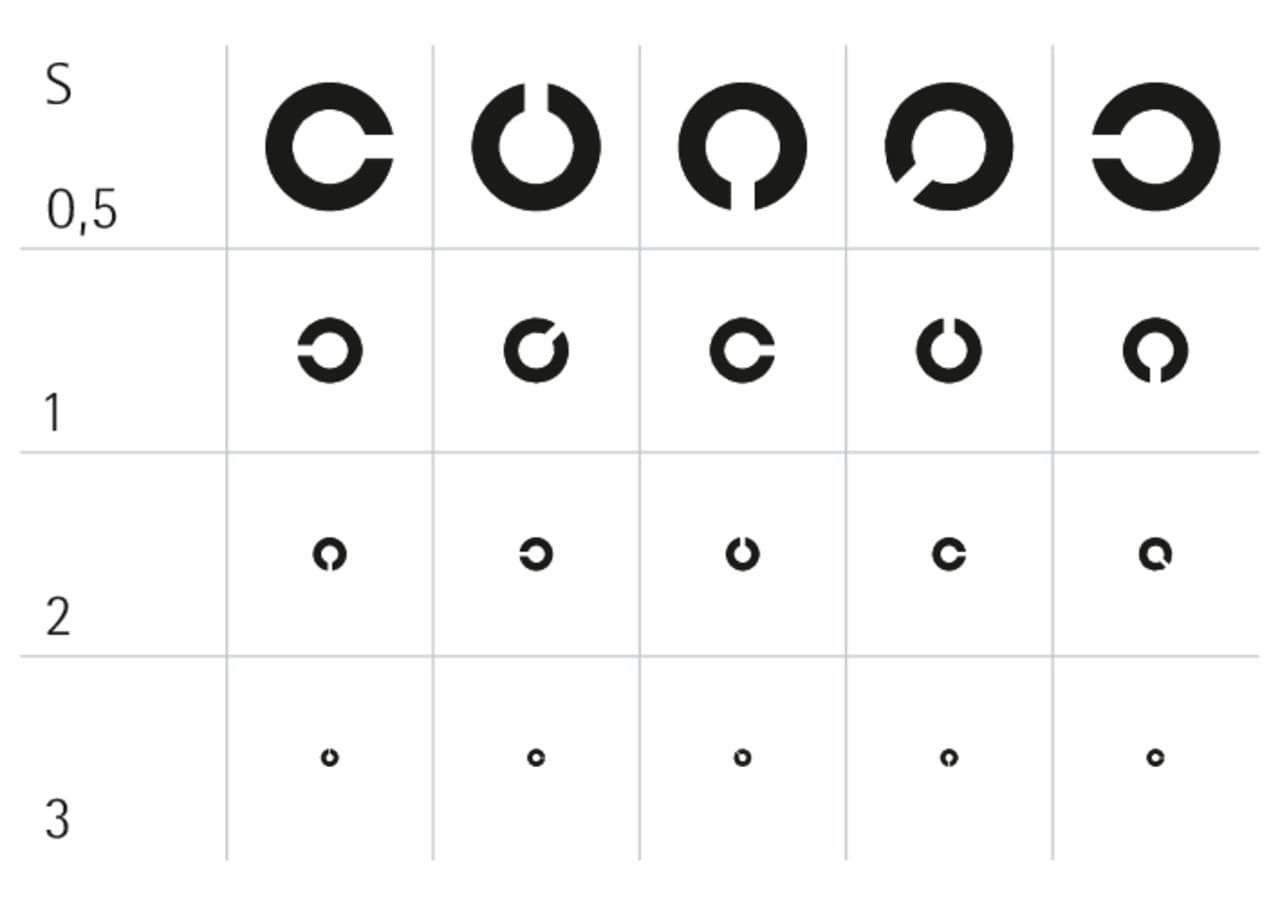
Tests are carried out with vision charts, e.g. with letters or special ring shapes with gaps (Landolt rings). Visual acuity, visual power, visual strength or, in medical terms, Visus – there are several terms for the eye's ability to see something in detail.
Would you like to find out more?
Handbook of Lighting Design


How is visual acuity measured?
To determine visual acuity, projection charts or reading sample boards with individual visual signs are used during an eye test. These signs must be identified at a certain distance. For example, letters, numbers, pictures, E-shapes or so-called Landolt rings are used as visual signs. Landolt rings are circular rings with a clearly defined opening pointing in different directions.
100 percent visual acuity corresponds to a Visus of 1. To determine the Visus, the viewer must recognize the alignment of the gap in the Landolt ring. The distance and size of the Landolt ring determine the angle of vision, used to calculate the Visus.
In addition to visual acuity, contrast vision is essential for seeing objects. Visual acuity and contrast vision function independently of each other. This means that objects may be seen sharply but recognition is still difficult because the objects are not clearly distinguished from their surroundings, i.e. with high contrast. Perception can be even more difficult if the lighting conditions are also insufficient.

What is normal visual acuity?
Visual acuity varies from person to person and there is no "normal case". Visual acuity also changes with age: a Visus value of 1.0 to 1.6 is often considered optimal for a 20-year-old, and 0.6 to 1.0 for 80-year-olds.
Good to know:
Our eyes support each other during the process of seeing. When the visual acuity of one eye decreases due to illness or age, the other eye compensates for this. Those affected usually don't notice it, and sometimes only a visual acuity test can reveal this.


