Light spectrum: definition and explanation
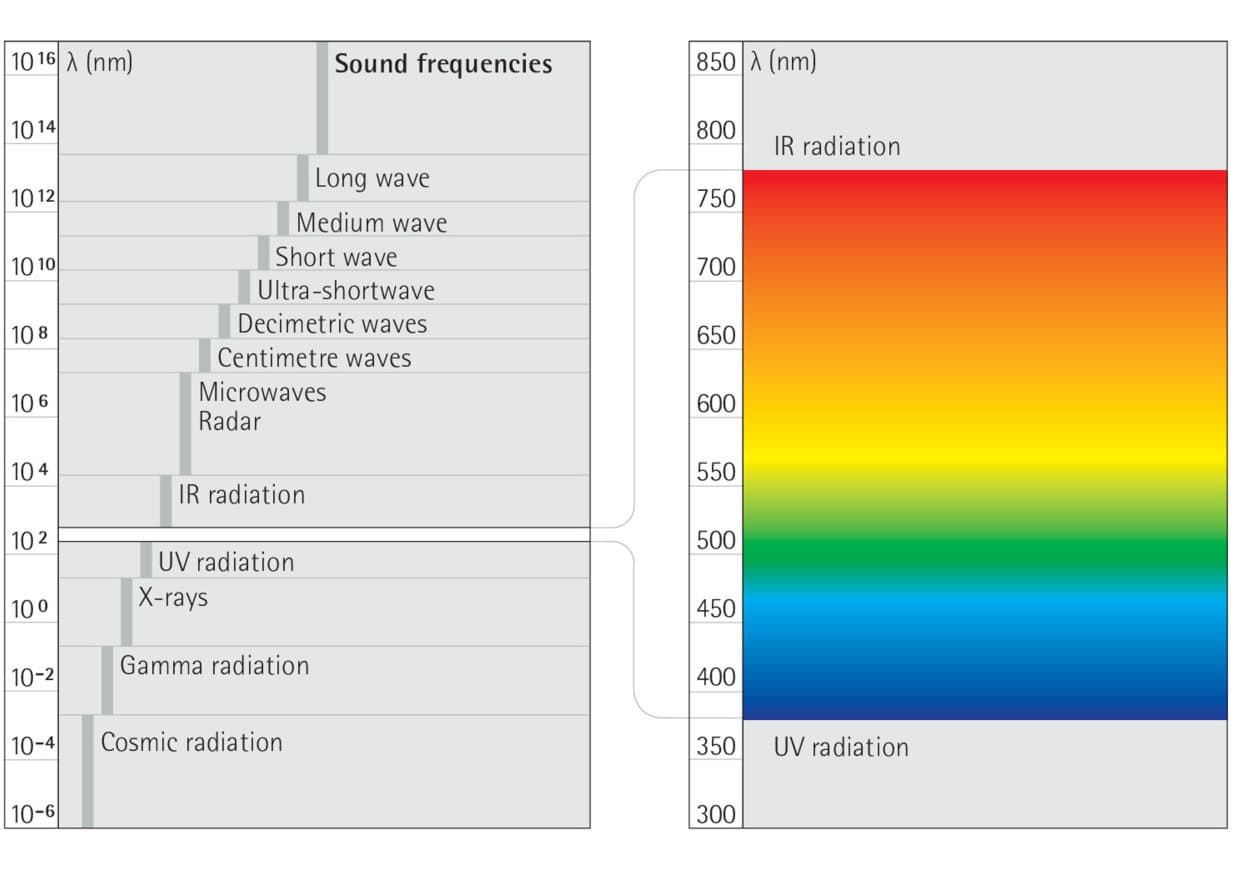
Spectrum is the term used to describe the distribution of electromagnetic waves. Only a small part is visible to humans in the range between 380 and 780 nanometres (nm) – this is what we call light. Colloquially, we talk about "visible light". The spectral distribution of a light source determines its light colour and its colour rendering. Depending on the method of generation of the light, basic types of spectra can be distinguished between: the continuous light spectrum (daylight, thermal radiators and white LEDs), the line spectrum (low pressure discharge lamps) and the band spectrum (high pressure discharge lamps).


What is the visible range of the spectrum?
Light is only a small section of the much broader spectrum of electromagnetic waves which ranges from cosmic rays to radio waves.
The fact that the range from 380 to 780nm forms the basis of human vision is not a coincidence. It is precisely this range that is available relatively regularly on Earth as solar radiation and can thus serve as a reliable basis for perception.
Interesting:
Adjacent to the light spectrum visible to the human eye is the short-wave UV range (ultraviolet radiation) on the one side, and the long-wave IR range (infrared radiation) on the other. These contrasting peripheral areas are partly visible to other organisms.
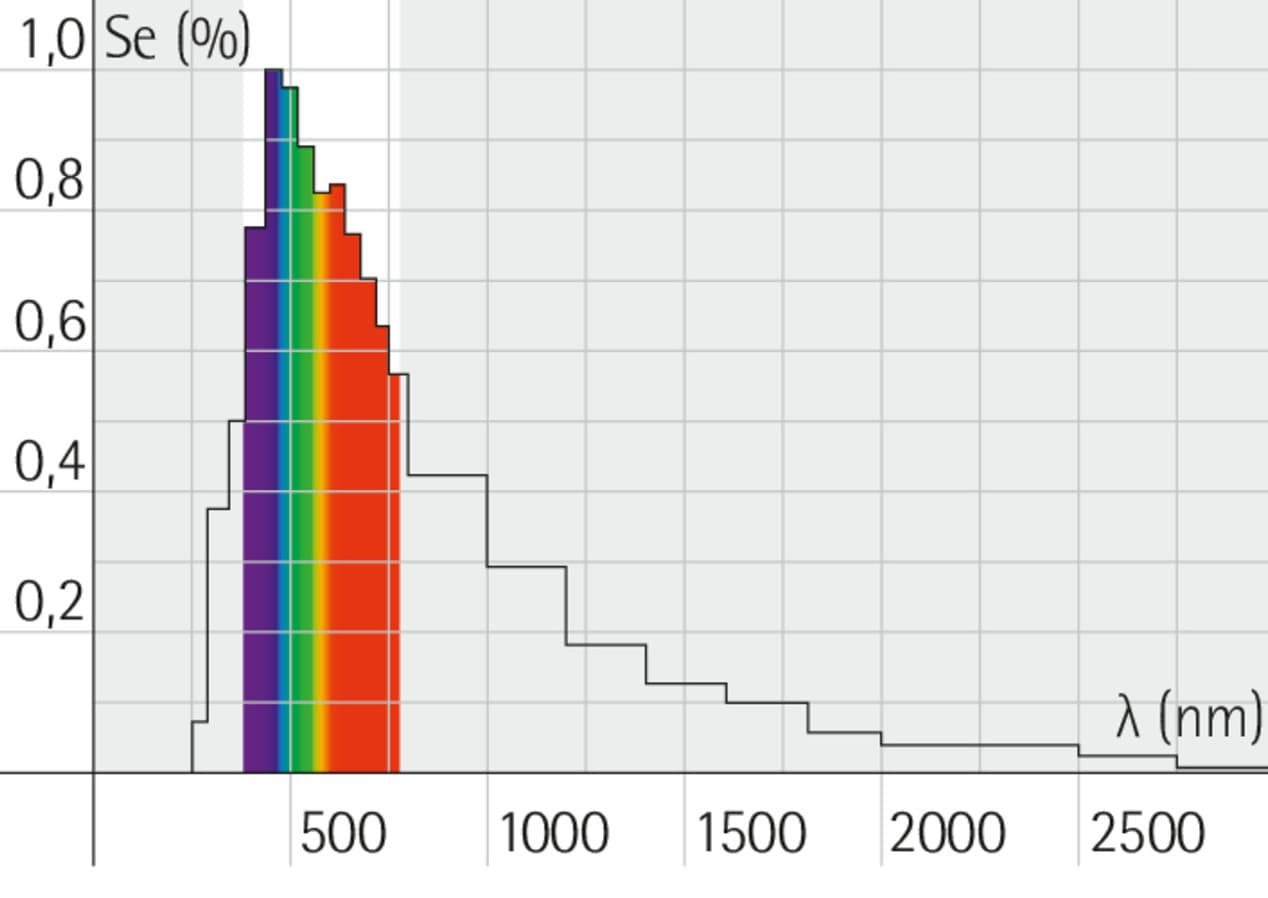
The human eye perceives the spectral distribution and intensity of electromagnetic waves. Via evolution, the eye has adapted to the only source of light that was available to it for millions of years – the sun. As a consequence, spectral sensitivity is highest in the range in which maximum solar radiation is also present. Our perception of colour is also matched to the continuous spectrum of sunlight. White light is a colour impression made up of the combined spectrum of rainbow colours. In principle, red, green and blue are sufficient to achieve a white impression of colour via additive colour mixing. How the different wavelengths of light are perceived as colours is determined by the highly complex human visual organ.

What types of spectra exist?
A continuous spectrum exists when the light is emitted from thermal radiators, meaning incandescent light sources. The term continuous is used when all wavelengths are contained in the light. Continuous spectra can also be generated with LEDs. The first artificial source of light was the self-luminous flame of fire. The glowing carbon particles generate a light that, just like sunlight, has a continuous spectrum. For a long time the technology of light generation was based on this principle, which was exploited increasingly effectively from torch, kindling and candle through to oil lamp and gas light. With LEDs, a technology exists today that converts electrical energy into light via electroluminescence and can generate a continuous spectrum in the process.
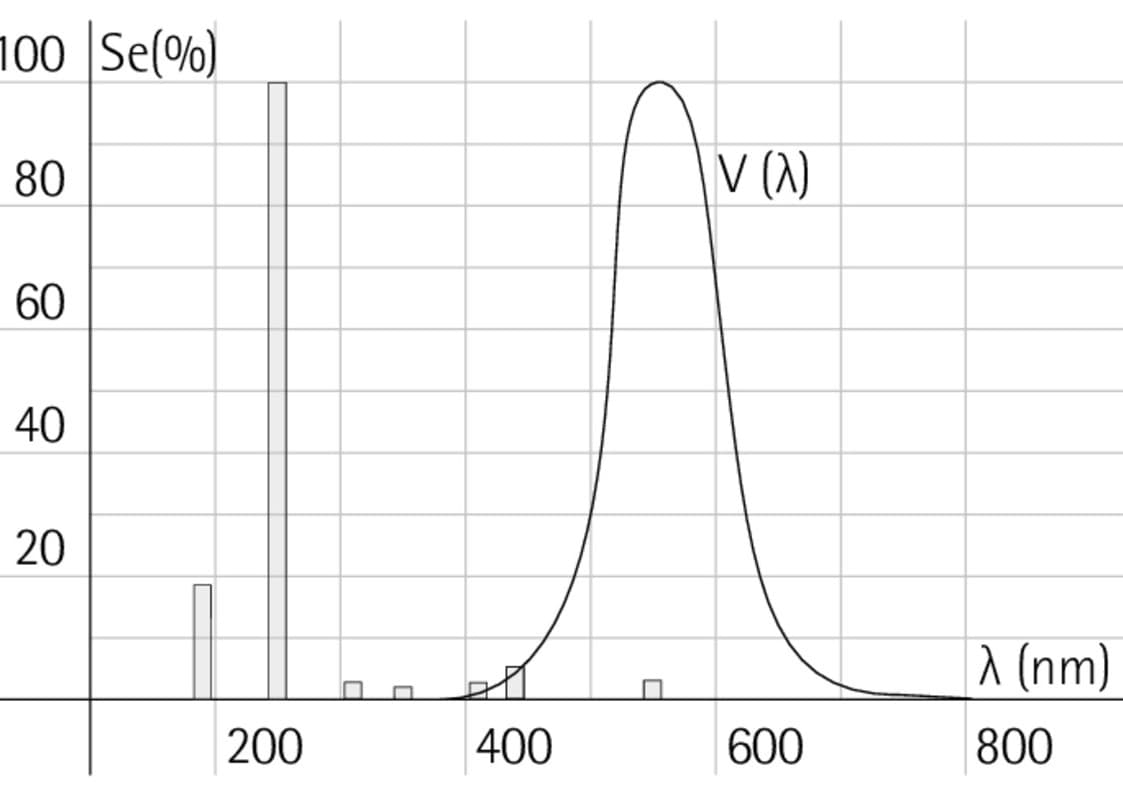
The term line spectrum is used if the light contains only certain wavelengths. The targeted combination of discrete wavelengths creates a spectrum that produces a white colour impression. One example is the orange light from low pressure discharge lamps, as used in streetlighting.
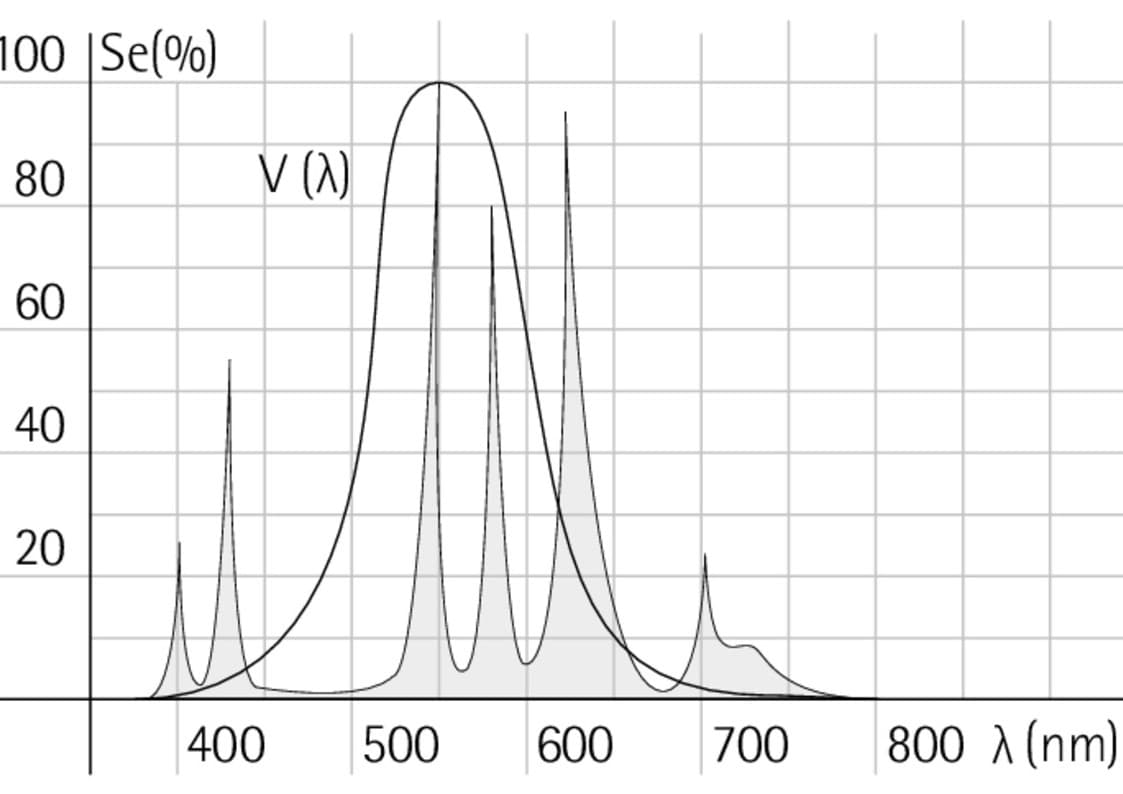
A band spectrum is a spectrum with numerous, overlapping spectral lines arranged in a band-like manner. Examples are e.g. the 'northern lights' and high pressure discharge lamps.
Good to know:
In line and band spectra, gaps exist that separate individual radiation areas from each other.


